KISS
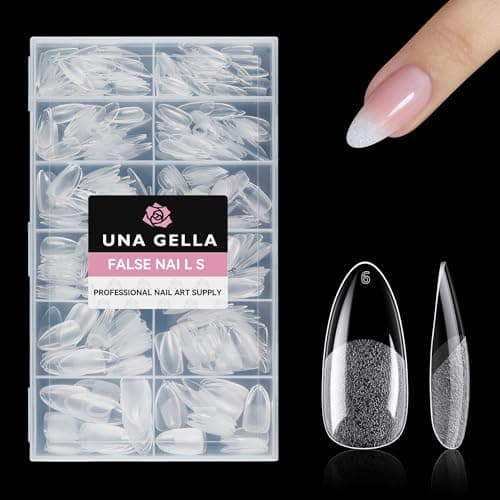
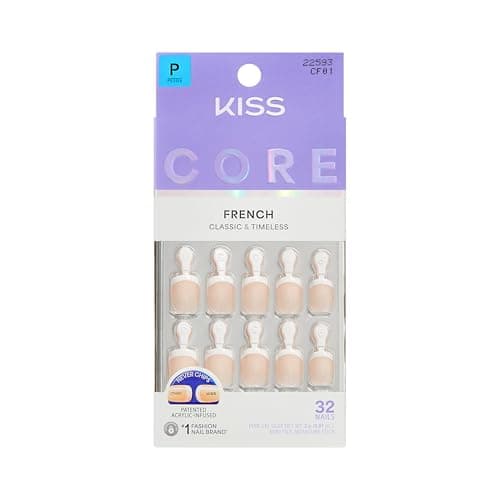
KISS Core 'Perfection', Petite Squoval White
$8.974.4 (335)
Best squovalOne of very few pre-made squoval Frenches — square with softened corners, and a petite size range for narrow nail beds.
Shop on AmazonFrench tip nails category
squoval french tip nails
Squoval french tip nails are a square with softened corners — the shape most salon 'squares' actually are, and why the smile line sits differently.
Squoval french tip nails are the shape most people are already wearing when they think they are wearing square. Ask for a square French at most salons and the technician will file the free edge straight, then — almost without thinking — take three strokes off each corner so the set does not snag on the way out of the door. That is a squoval. The word is a portmanteau nobody loves, the shape is the most flattering everyday French there is, and the queries for it in this site's search data are specific about one thing: medium length.
This page is the case for asking for squoval on purpose.
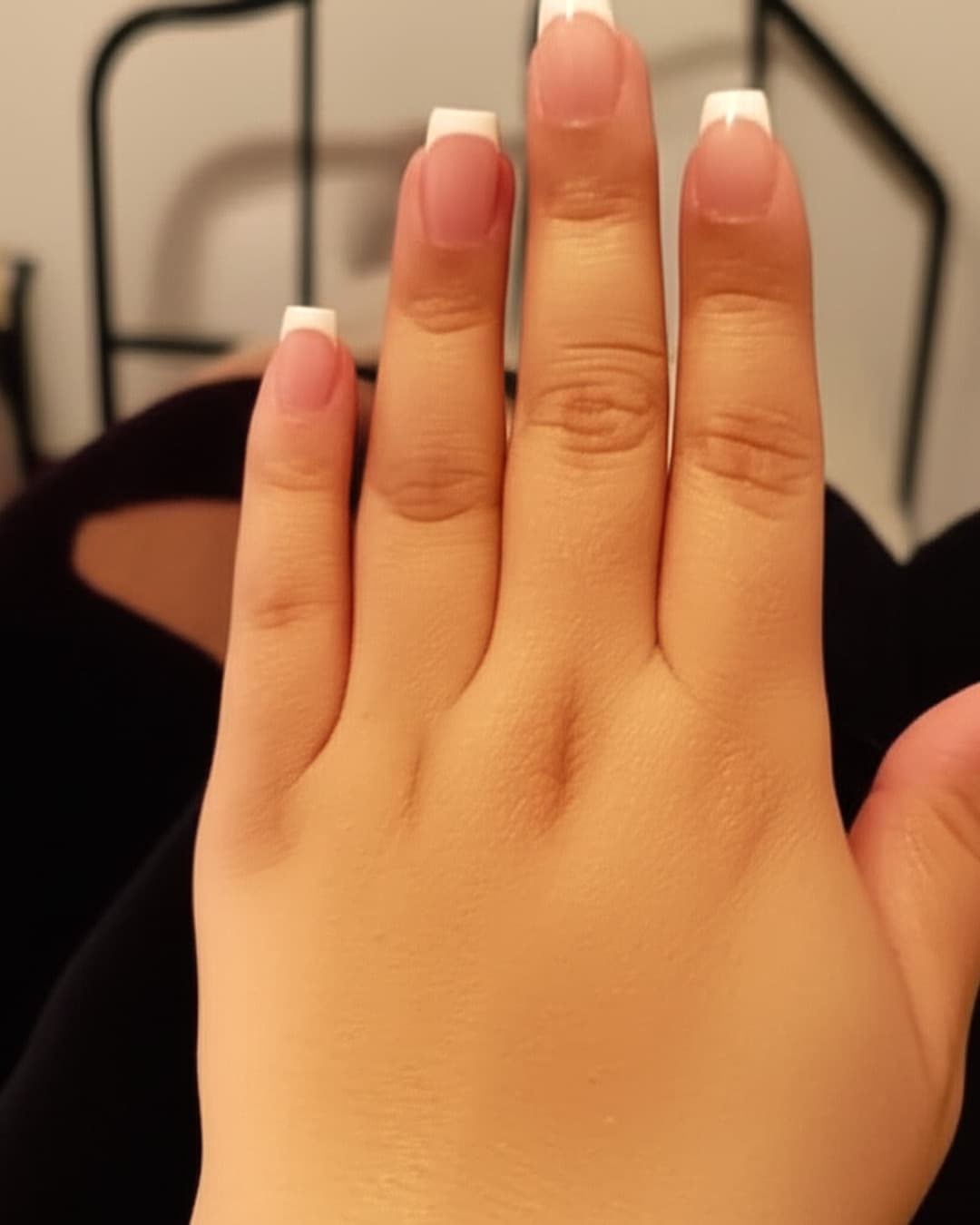
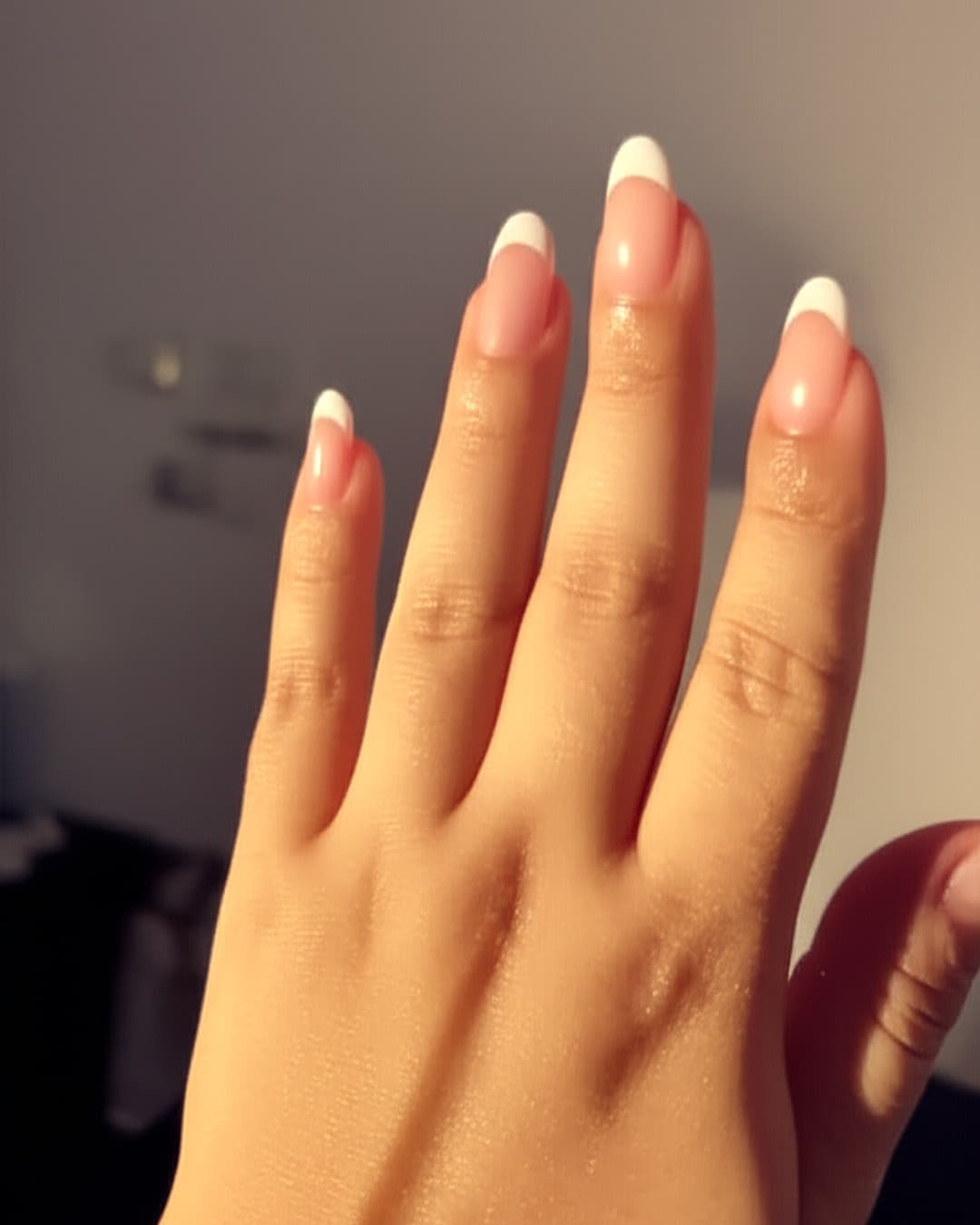
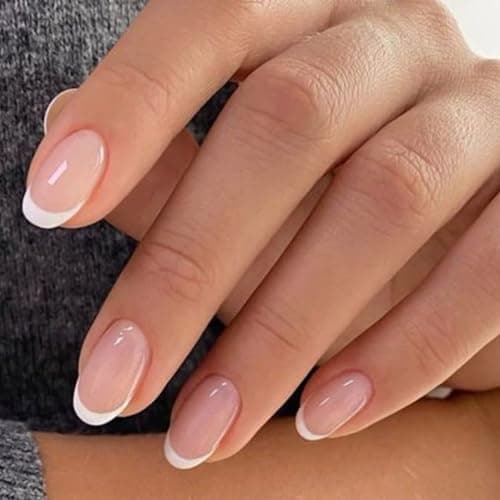
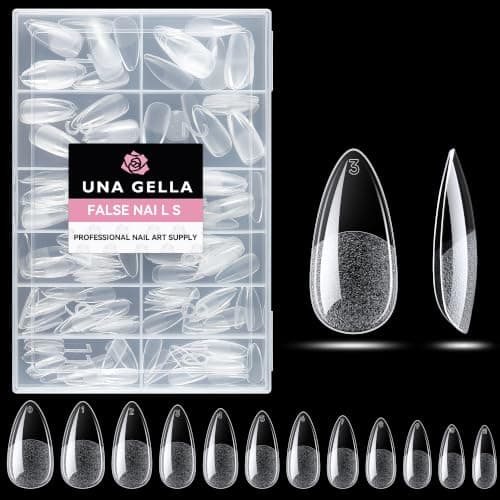
One of very few pre-made squoval Frenches — square with softened corners, and a petite size range for narrow nail beds.
Shop on AmazonThe most natural-looking set — reads as a good manicure, not as press-ons.
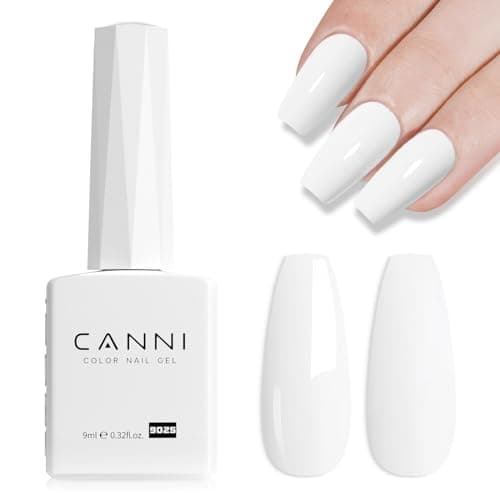
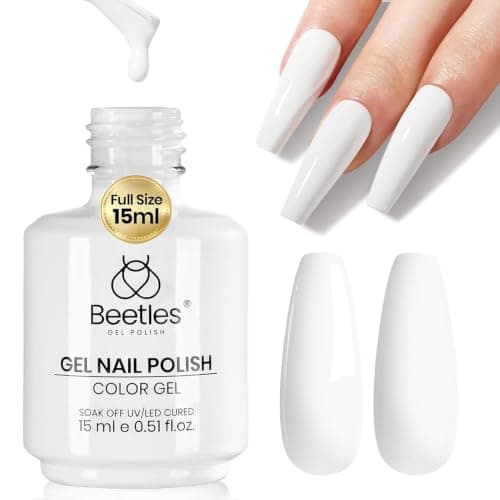
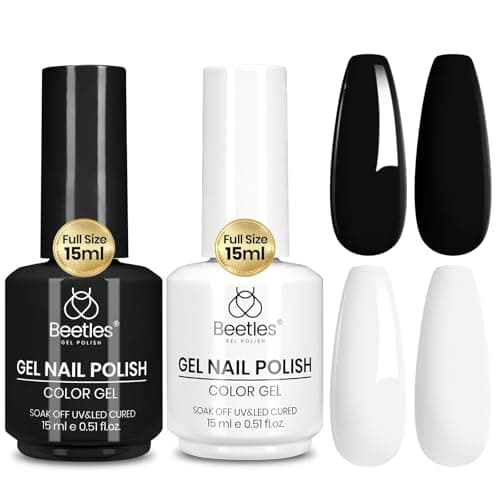
Shop on AmazonA HEMA-free pure white in a 9 ml bottle — the white for anyone who reacts to standard gel, at the lowest price per bottle here.
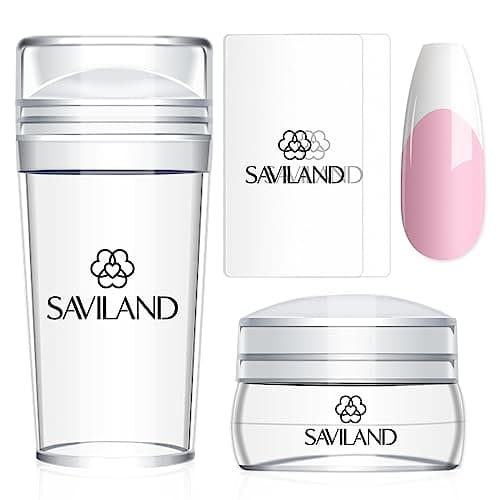
Shop on AmazonPresses the curve on in one motion — the fix for shaky freehand.
Shop on AmazonProduct prices and availability are accurate as of October 21, 2026 and are subject to change. Any price and availability information displayed on Amazon at the time of purchase will apply. As an Amazon Associate we earn from qualifying purchases. Star ratings reflect Amazon customer reviews at the time of our last check.
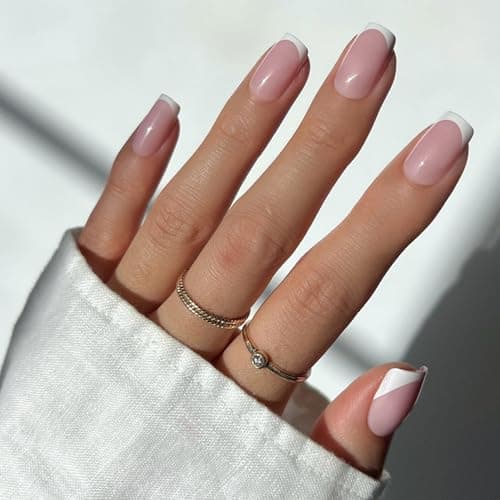
A square nail has a straight free edge and two sharp corners. A squoval keeps the straight edge across the middle of the nail and softens the corners into short curves. It is not an oval, which rounds the whole edge; the flat centre is the point. From the front, a squoval reads as square. From the side, and to the fabric of every jumper, it reads as round.
The French tip follows the filed shape exactly: a straight bar across the flat centre, curving up gently in the last millimetre or two at each corner. That gentle curve at the ends is what distinguishes a squoval French from a square one, and it is also what makes it the easiest smile line to draw well — the eye forgives a soft curve far more readily than it forgives a straight line that is slightly off.
Over-rounding is the only mistake, and it is easy, because the shape looks finished a stroke before it is and looks like an oval a stroke after. Three strokes per corner is the usual number on a medium nail; two on a short one.
Squoval keeps a square's width. Width is what makes a short nail look longer — a wide free edge reads as more nail — and an oval gives that width away by rounding it off. So on a short natural nail, squoval is the shape that looks longest without being longer, and the thin French bar across it adds a second visual edge that lengthens it again. That is why most of the photos on the short French tip nails page are squoval whether or not the caption says so.
At medium length the shape is at its best: enough edge for a proper tip, a flat centre that carries a straight line, and no corners to catch. The medium-length squoval French is, by the numbers, the version people search for most, and it is the salon default for a reason.
At long lengths the soft corners begin to look like a blunt oval, and the graphic shapes — square, coffin — carry length better. Squoval is a short-to-medium shape and is happiest there.
If a set has to survive a fortnight of hands-on work, squoval is the honest choice of the three. If it is for a photograph, square.
Because the edge is straight in the middle, the smile line should be too. Draw it as a bar across the flat centre, then let the last millimetre or two at each end curve gently up to follow the softened corner. Two strokes — left side wall to centre, right side wall to centre — with the curve happening at the start of each stroke.
The error is drawing a full curve, as for an almond, on a squoval nail. The line then lifts away from the flat edge in the middle and the tip looks like a crescent floating above the shape. Follow the shape. If the corners were filed soft, the line curves soft; if they were filed barely, the line barely curves.
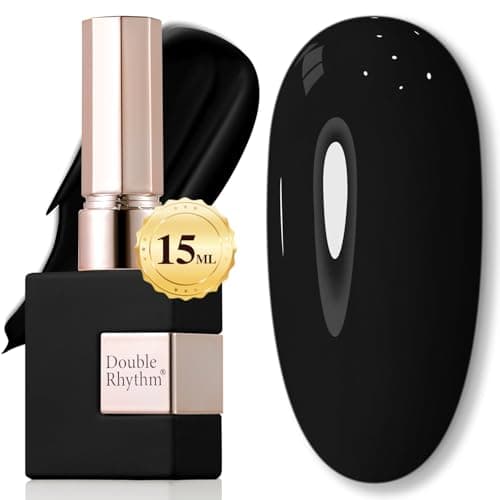
Depth: thin to medium. Squoval is a quiet shape and a deep tip is loud. One to three millimetres, thinner on short nails. For the liner white and the brush, the white gel polish and liner brushes categories have the thin-line options; a French stamper from the guides and stamps page handles a squoval well, because the stamped curve is gentle.
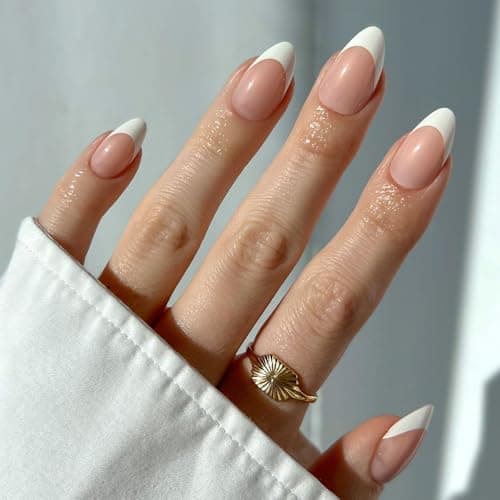
Squoval is a natural shape and it takes the natural Frenches best: classic white over sheer pink, the nude-on-nude low-contrast version, a milky base with a soft white line. It carries colour too — a pale pink or pastel tip on a short squoval is an office-safe coloured French — but the graphic colours, black and cobalt, want the sharper edge of a true square.
Finishes: a glossy top coat is the default. Matte on a squoval softens an already soft shape into something quite plain, so if you want matte, keep the tip glossy for contrast. Chrome over a white squoval tip is the one finish that adds drama without changing the shape's character.
Stock squoval French press-ons barely exist; almost every set is square, almond, oval or coffin. KISS's Core line makes one — a white squoval French in a petite size range — and it is the single squoval set in this site's press-on category. If your nail beds are average or wide, it will not fit.
The workaround is the same three strokes. Buy a short square French set, apply it, then file each corner soft. Thirty seconds per hand, and the set is a squoval that catches on nothing — which is also the fix for any square press-on set that keeps snagging. The pre-painted tip line on a square set is straight across; softening the corners under it leaves a bar that ends a hair before the corner, which reads as a deliberate squoval French from arm's length.
Most technicians know the word. "Squoval, medium, French, thin tip" is a complete order; "square with the corners rounded off" is the fallback. If you want the smile line to follow the corners, say "follow the shape". The salon wording guide has the rest; the cost guide has what a squoval French runs — it is priced as a square, since it is one.
Squoval is also the shape most often recommended for nail health, because it removes the sharp corners that split and the deep side-wall filing that weakens an oval; the American Academy of Dermatology's nail care basics say the same in plainer words. For the technique on your own nails, how to do French tips at home and French tips on short nails cover it. Everything starts from the french tip nails homepage.
What French tip shoppers are buying this week, across every category.
What are squoval french tip nails?
A French manicure on a squoval shape — a square nail with the two corners filed soft, so the free edge is straight in the middle and rounds at the ends. The white tip follows that edge: a straight bar that curves gently at each corner. It is the shape most salon 'square' French manicures actually are.
Squoval vs square French tips — what is the difference?
The corners. A square has sharp ninety-degree corners and a dead-straight edge; a squoval takes those corners off with a few file strokes so the edge is straight across the middle and rounded at the sides. Squoval catches on far less, chips at the corners less, and suits more hand shapes; square is more graphic.
Squoval vs oval French tips?
Oval is rounded all the way across the free edge, like an egg. Squoval keeps a flat section in the middle of the edge and rounds only the corners. On a French, an oval tip is a full curve and a squoval tip is a straight bar with soft ends — squoval reads closer to the classic French.
Is squoval good for short nails?
It is the best shape for short natural nails. A short square looks blunt and catches; a short oval loses length visually. Squoval keeps the width of a square, which makes a short nail look longer, and the soft corners keep it from snagging. Most 'short French tip' photos are squoval whether the caption says so or not.
What length suits squoval French tips?
Short and medium, where it is the most flattering everyday shape. At long lengths the soft corners start to read as a slightly blunt oval, and square or coffin carry the length better. Medium-length squoval is the sweet spot the search data for this site keeps asking about — enough edge for a proper tip, no corners to catch.
How do I file a squoval shape?
File straight across the free edge first, as for a square. Then hold the file at about forty-five degrees to each corner and take three or four light strokes, checking after each, until the corner is soft but the middle of the edge is still straight. Stop early — the shape is easy to over-round into an oval.
How deep should the French tip be on squoval?
Thin to medium. Squoval is a natural, low-drama shape and a deep tip fights that. A one-to-three millimetre bar with a very gentle curve at the corners, following the filed shape, is the classic. On short squoval keep it thin; on medium it can go a little deeper.
Does the smile line curve on squoval?
Slightly, at the ends only. The line runs straight across the middle of the nail — matching the flat centre of the edge — and curves up gently in the last millimetre or two on each side to follow the softened corners. A fully curved smile line on a squoval looks like an oval French drawn on the wrong shape.
Are there squoval French tip press-ons?
Very few. KISS's Core line sells a white squoval French in a petite size range, which is the one stock squoval French press-on in this site's shop. The workaround for any square press-on set is thirty seconds with a file on the corners after application — square becomes squoval, and catches far less.
What do I ask for at the salon?
'Squoval, French, thin tip' is usually enough — most technicians know the word. If not, 'square with the corners rounded off' gets the same result. Say the length, and if you want the smile line to follow the corners, say 'follow the shape' rather than 'curved'.
Almond French Tip Nails
almond french tip nails
Black French Tip Nails
black french tip nails
Blue French Tip Nails
blue french tip nails
Brown French Tip Nails
brown french tip nails
Burgundy French Tip Nails
burgundy french tip nails
Chrome Coffin French Tip Nails
chrome coffin french tip nails
Chrome French Tip Nails
chrome french tip nails
Coffin French Tip Nails
coffin french tip nails