essie
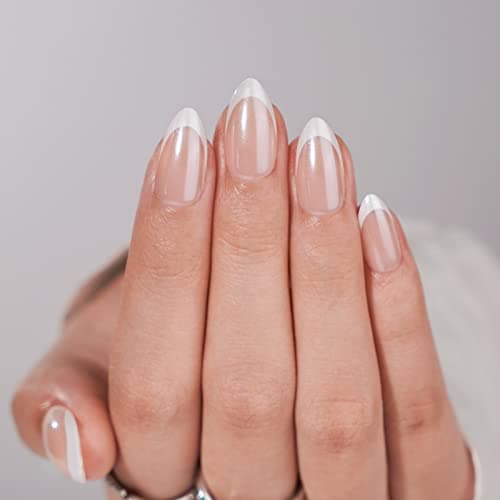
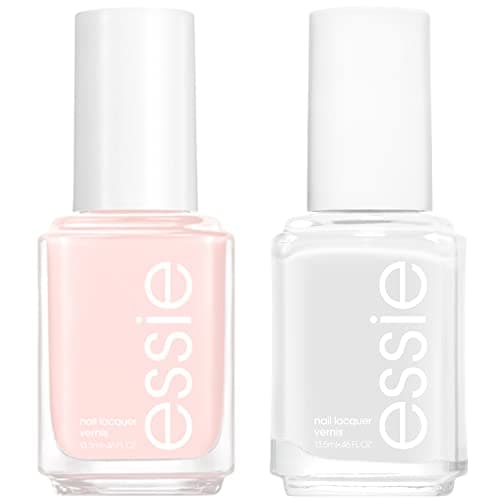
essie Ballet French Manicure Kit
$17.204.4 (7,676)
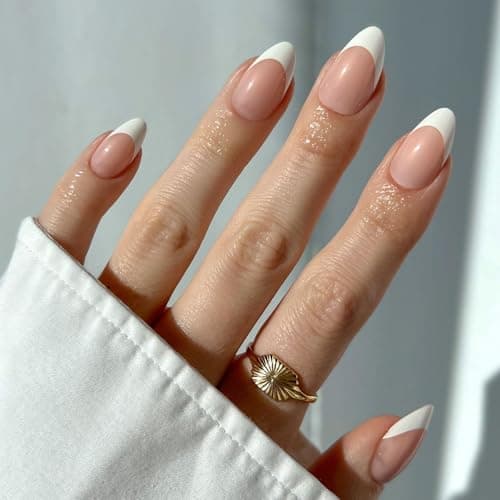
Bring-your-own classicRegular polish, no lamp needed — built around Ballet Slippers, the reference sheer pink of French manicures.
Shop on AmazonHow to ask for french tips at the salon so you get what you pictured — the five things to specify, scripts to copy, and what to say if it's wrong.
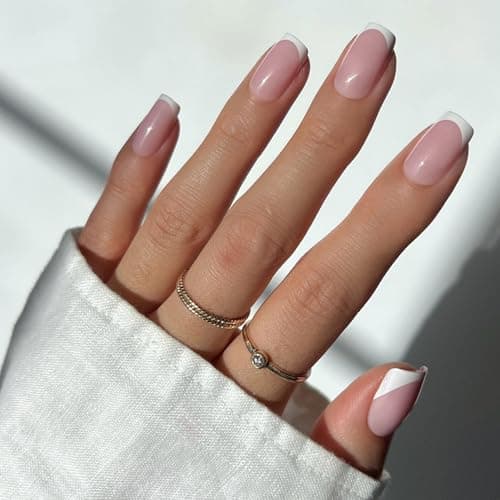
Most disappointing French manicures are communication failures, not skill failures. You pictured a barely-there micro-line in a soft cream; you asked for "French tips" and got a thick stark-white band because that is what the phrase means by default in most salons.
Five specifics fix this. Say all five and you will almost always get what you had in mind.
Regular polish, no lamp needed — built around Ballet Slippers, the reference sheer pink of French manicures.
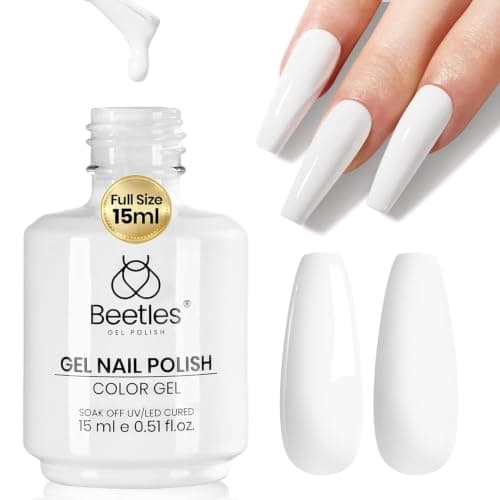
Shop on AmazonThe default one-coat white for tip lines — rank 200 across the whole nail category, and opacity is everything on a French tip.
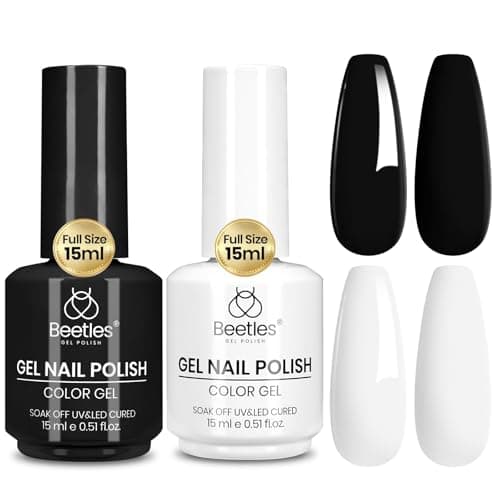
Shop on AmazonThe category's strongest seller — UV-cured finish that keeps its gloss.
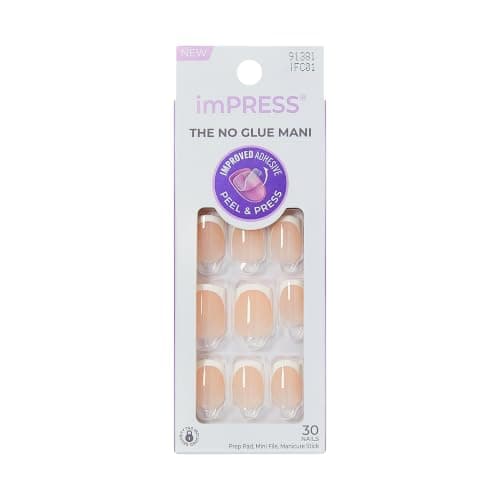
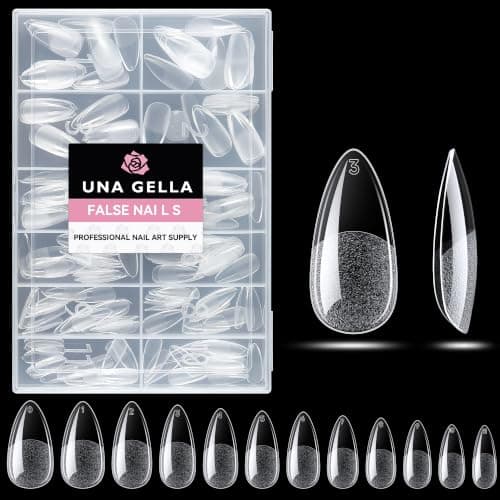
Shop on AmazonAdhesive tabs: no acetone, no crooked-glue risk — the weekend set.
Shop on AmazonProduct prices and availability are accurate as of October 17, 2026 and are subject to change. Any price and availability information displayed on Amazon at the time of purchase will apply. As an Amazon Associate we earn from qualifying purchases. Star ratings reflect Amazon customer reviews at the time of our last check.
1. The base service. Regular polish, gel, acrylic full set, or a fill. This is the single largest price variable and salons cannot quote without it.
2. Natural nails or extensions. "On my own nails" versus "with extensions" changes both the appointment length and the cost.
3. Shape and length. Say the shape by name — square, squoval, almond, oval, coffin — plus short, medium or long. "Medium almond" is unambiguous; "a bit longer and pointy" is not.
4. Tip thickness and colour. This is the one people leave out, and it is the one that most affects whether you like the result. Say "thin" or "micro" if you want the modern line. Say the colour: white, off-white, cream, nude, black.
5. Removal. If you are wearing an existing set, say so when booking so they allot the time.
Classic gel French, natural nails:
"Gel manicure on my natural nails, short squoval, classic white French tips, no removal please."
The modern thin line:
"Gel manicure, medium almond, micro French tips in off-white — as thin as you can make them."
Acrylic full set:
"Acrylic full set, medium coffin, white French tips, and I'll need my old set soaked off first."
Something softer:
"Gel manicure, short oval, nude French tips — I'd like it very subtle, just a shade darker than the base."
With a finish:
"Gel manicure, medium almond, thin white French tips with a chrome glaze over the tip only."
Every word above is less precise than one image. Tip thickness in particular is almost impossible to convey verbally: "thin" spans a genuine range between technicians.
Bring two photos if you can — one showing the tip thickness and curve you want, one showing the shape and length. Say explicitly which aspect each photo is for, because otherwise a technician has to guess what you liked about it.
Screenshots from our white, nude or short pages work fine for this.
Using the right words shortens the conversation considerably.
Not rude, and standard practice. Add-ons stack quickly and are usually charged separately: shape upgrades, length tiers, chrome or glitter, removal, per-nail art.
A good question at the start: "That's the gel French with almond shape and removal — what does that come to?"
Full ranges are in how much are French tip nails, so you will know whether a quote is normal for your area.
The most useful thing in this entire guide: ask to see one nail before they do all ten.
"Could I see how the first one looks before you carry on?"
No competent technician minds. Fixing the thickness on nail one takes seconds; fixing it on all ten after the fact means removal and a redo. This one sentence prevents most French manicure disappointments.
If it is already wrong on several nails, say so plainly and kindly while you are still in the chair: "Could these be a bit thinner? I was hoping for a really fine line." Almost every salon would rather adjust than have you leave unhappy.
Call the same day or the next. Most salons will fix asymmetry or a thickness mistake free within a few days — it is normal and they expect it.
What is not usually covered is a change of mind about colour or shape, which will be charged as a new service. Reasonable, given the time involved.
Ask them to cap the free edge. Keep cuticle oil on daily. Book your fill on time rather than letting an acrylic set grow out badly, since a soak-off-and-rebuild costs more than a fill.
For gel on natural nails, two to three weeks is normal. Acrylic wants a fill every two to three weeks and lasts three to four before a full redo.
If you have specified all five things, brought a photo, and still not got what you wanted twice, the issue is fit rather than communication. Ask whether a different technician specialises in French work — smile lines are a genuine skill and not everyone is equally good at them.
Or learn it yourself: how to do French tips at home covers the method, and a decent brush plus an opaque white is the whole toolkit.
A surprising amount of disappointment comes from the appointment being too short rather than the technician being wrong.
A gel French on natural nails needs about an hour. An acrylic full set with a French needs 90 minutes to two hours. If removal is involved, add 20–30 minutes. When you book online and the system offers a 45-minute "gel manicure" slot, a French tip will not fit comfortably into it, and a rushed smile line is a bad smile line.
If the booking system has no French option, book the next slot up and mention it in the notes. Technicians would far rather have the extra fifteen minutes than have to rush the one part of the service that shows.
Avoid the last appointment of the day if you can. It is the one most likely to be hurried.
Clean-up is the step where the technician takes a small brush dipped in acetone or cleanser and tidies the edges — removing polish from the cuticle line and sharpening the smile line where it wandered.
It is the difference between a good French and a great one, and it is sometimes skipped when an appointment is running behind. Asking politely — "could you clean up the smile lines at the end?" — is entirely normal and is understood immediately as a request from someone who knows what they are looking at.
A few signals that correlate well with good French work:
If a salon's gallery is entirely solid colours and nail art with no French work, that is not a bad salon — it is just probably not the right one for this particular service.
Some people bring a specific white they trust, particularly if they have found one that covers in a single coat. Most salons are fine with this; a few charge a small fee, and a few decline outright because they cannot vouch for a product they did not buy.
Ask when booking rather than producing a bottle in the chair. If the answer is no, that is not unreasonable — salons carry liability for what they apply, and an unfamiliar gel that cures badly costs them the appointment.
Everything on this page compresses into a sentence with five slots. Fill it in before you call:
"[Base service] on [natural nails / extensions], [length] [shape], [thin / medium / deep] French tips in [colour], [no removal / with removal]."
Two filled-in examples: "Gel manicure on my natural nails, short squoval, thin French tips in off-white, no removal." And: "Acrylic full set, medium almond, deep white French tips, with removal." Read it out at booking and again in the chair. A brief with all five slots filled gets a firm quote and the right appointment length; a brief missing two of them gets a guess.
Ask nail technicians what makes a French appointment go well and the answers are consistent, and none of them are about being an easy client.
In the United States, "French tips" or "French manicure" means the sheer base and white tip on this page. In the United Kingdom, "French polish" is used for the same thing — while "French polish" in a furniture context is something else entirely, which is why British salons usually say "French manicure." In parts of Europe and Australia, "baby boomer" is the term for the ombré version and is sometimes what a salon assumes if you say "soft French." If you are booking somewhere new, "white tips on a sheer base, with a line" is the description that survives every dialect.
One outside reference worth keeping: the American Academy of Dermatology's healthy nail tips, which say in plainer words what this site keeps repeating about removal and cuticle oil.
French tip nail shapes to choose the silhouette before you go. French tip acrylic vs gel to choose the system. What are French tip nails for the terminology.
Everything is reachable from the french tip nails homepage.
What French tip shoppers are buying this week, across every category.
Want to see this on real nails?
Every style page shows the finish close up, a creator video, and the products used to get it.
New Year French Tip Nails: The One Night Glitter Is Correct
New year french tip nails for the night and the weeks after — where metallic and glitter genuinely belong, and what you'll regret on January 2nd.
Christmas French Tip Nails Without the Costume
Christmas french tip nails that read festive rather than novelty — the colours and finishes that work in low winter light, and when to book.
Black Friday Nail Deals: What Is Actually Worth Buying
Black friday nail deals, filtered — which nail products genuinely discount, which never do, and how to build a French tip kit without buying filler.
French Tips for Kids: Safe, Simple and Actually Doable
French tips for kids on short little nails — which products are safe at which ages, the peel-off polishes, and a method for nails that won't sit still.
Thanksgiving French Tip Nails: Warm, Simple and Photograph-Ready
Thanksgiving french tip nails in the warm neutrals that suit the table and the photos — why to book earlier than you think, and what survives cooking.
How Long Do French Tip Nails Last? Every System, Honestly
How long do french tip nails last — polish, gel, acrylic, extensions and press-ons compared, and why a French grows out better than solid colour.