beetles Gel Polish
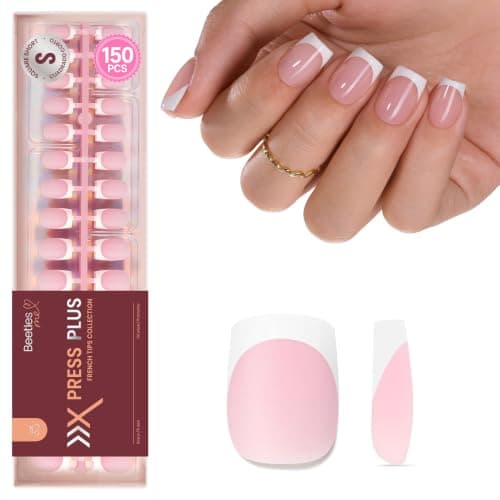
Beetles French Press-Ons, 150pc
$9.994.5 (7,462)
Short square, 150pcFive full applications under nine dollars — press-ons as a habit, not an occasion.
Shop on AmazonFrench tip nails category
short french tip nails
Short french tip nails can still elongate — the tip depth that works on a short bed, the shapes that add length, and the colours that cheat it.
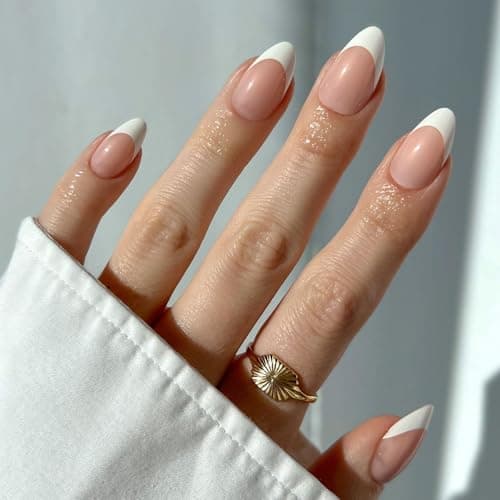
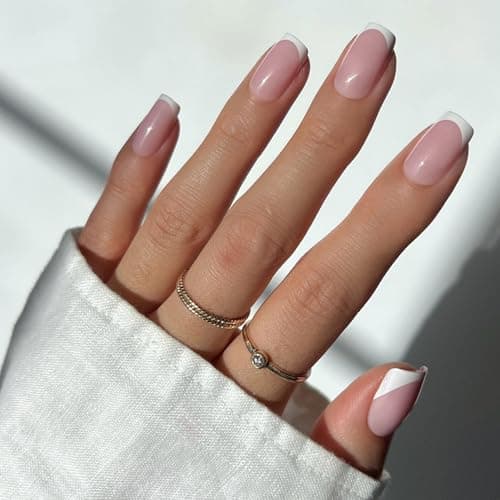
Short french tip nails are the version most people are actually wearing and the one the photographs least often show. They are proof you do not need long extensions for a polished, “put together” manicure. The key is proportion: on short nails, a thinner tip makes the nail bed look longer and keeps the design clean. If you’ve avoided French tips because they felt bulky, start here.
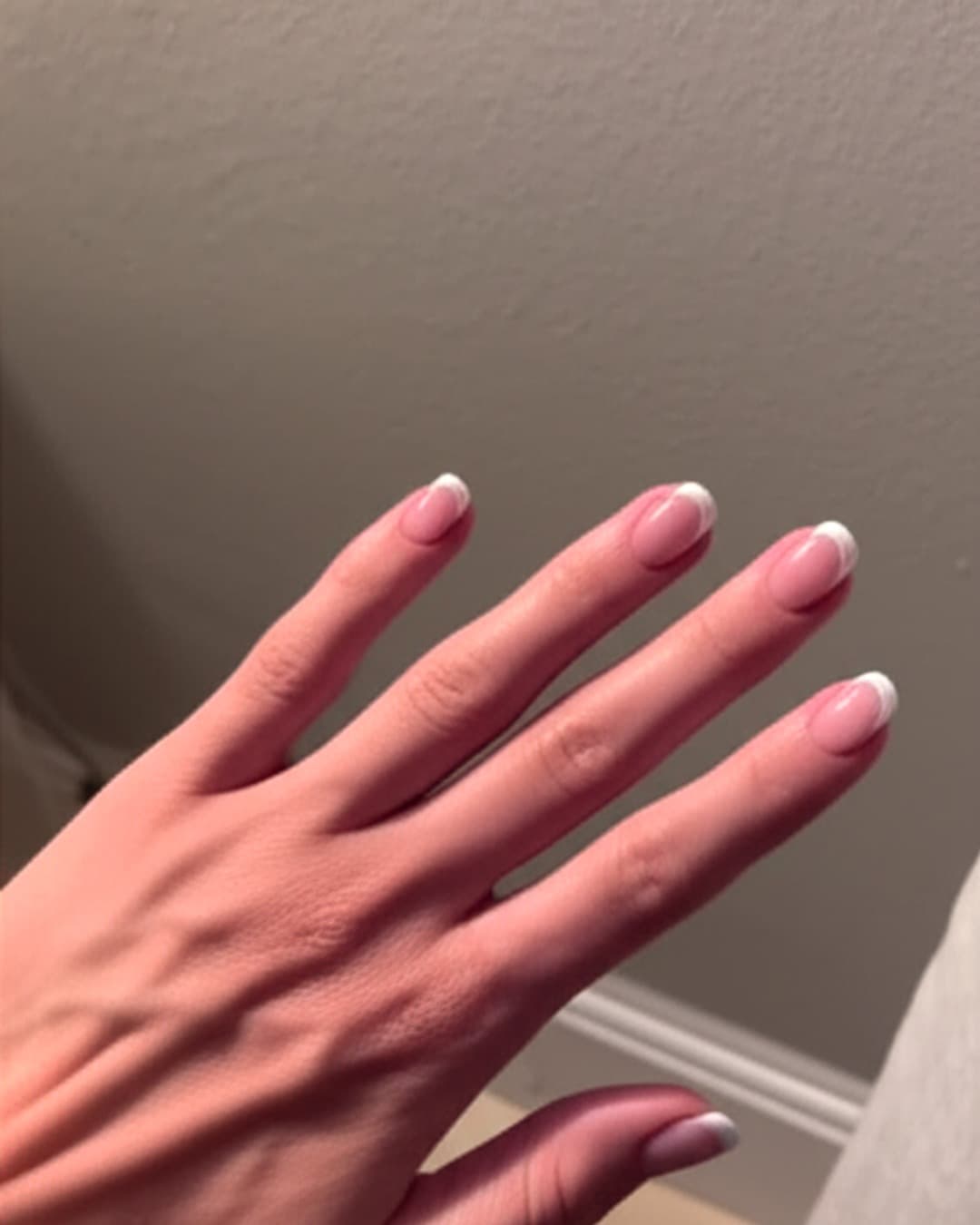
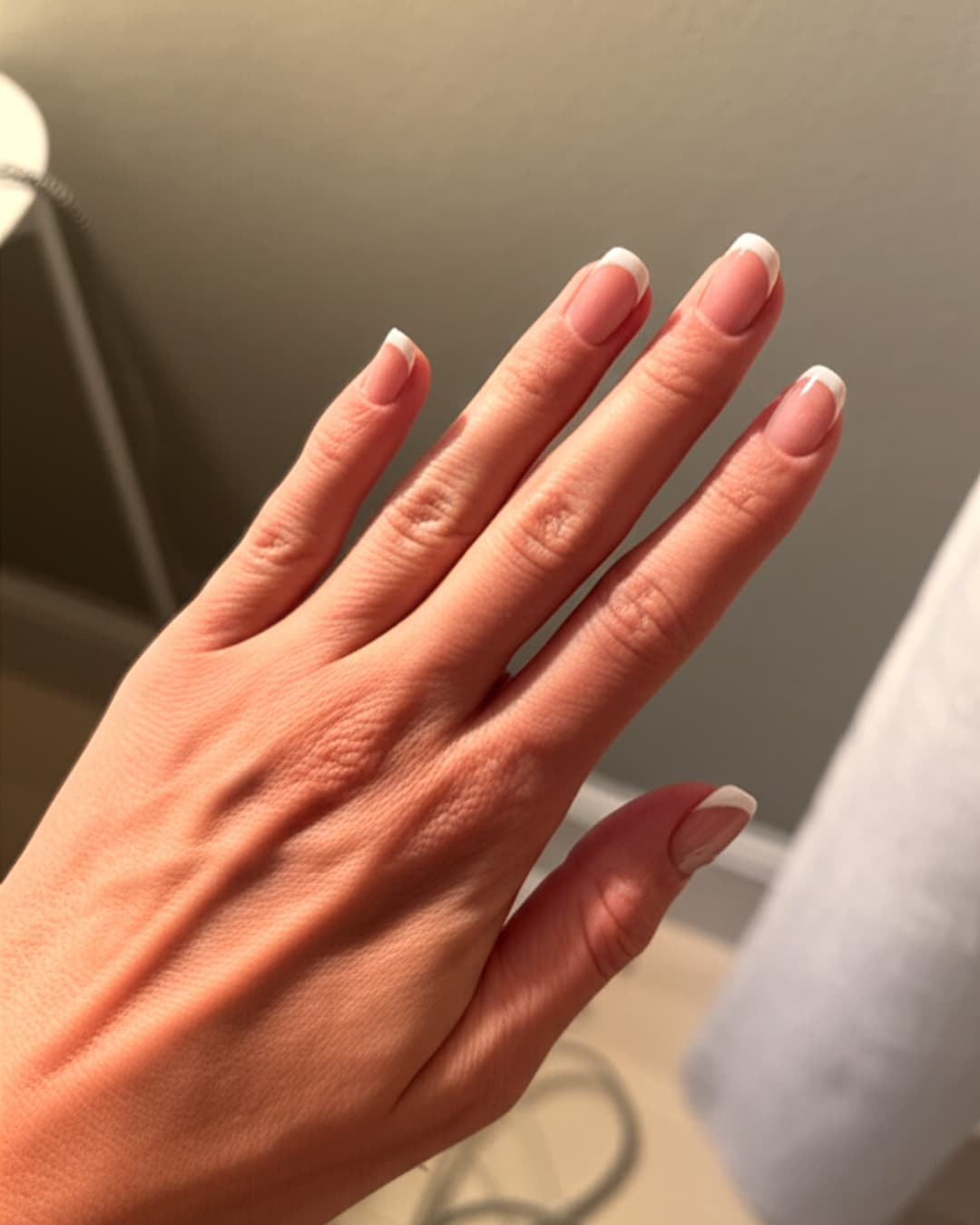
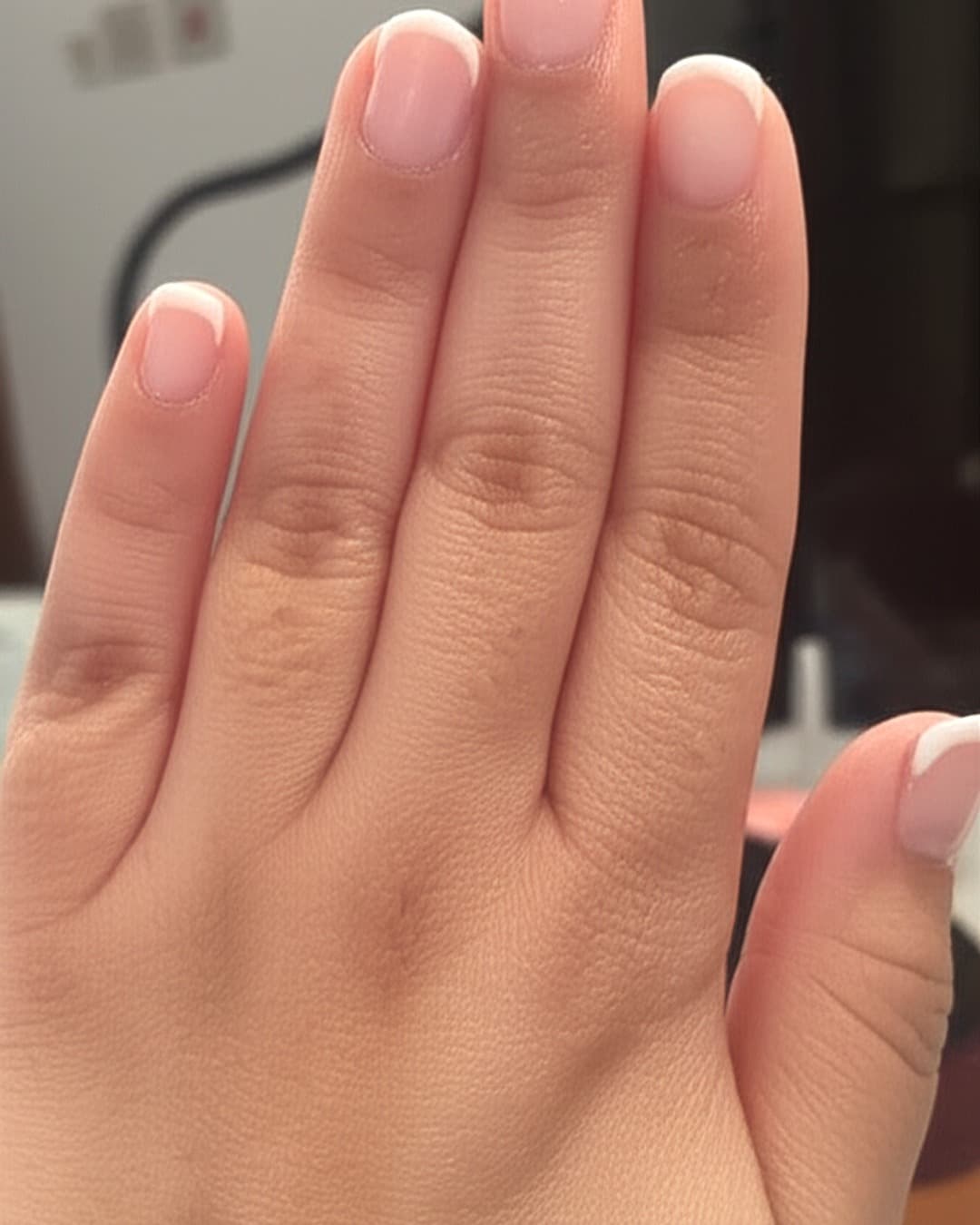
Five full applications under nine dollars — press-ons as a habit, not an occasion.
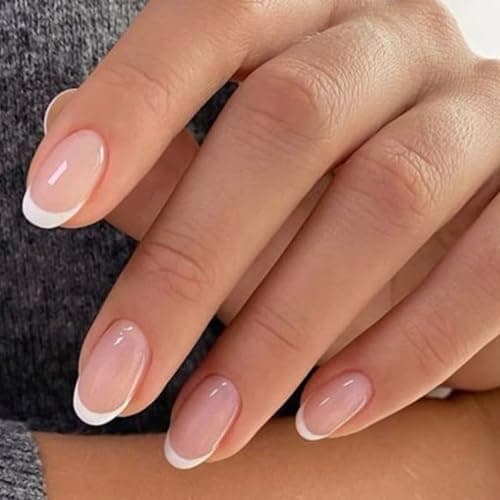
Shop on AmazonThe most natural-looking set — reads as a good manicure, not as press-ons.
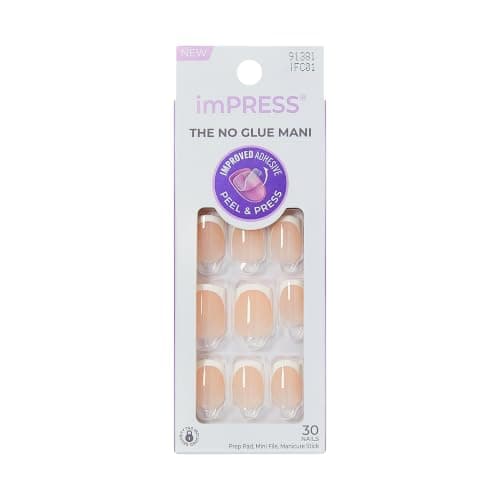
Shop on AmazonAdhesive tabs: no acetone, no crooked-glue risk — the weekend set.
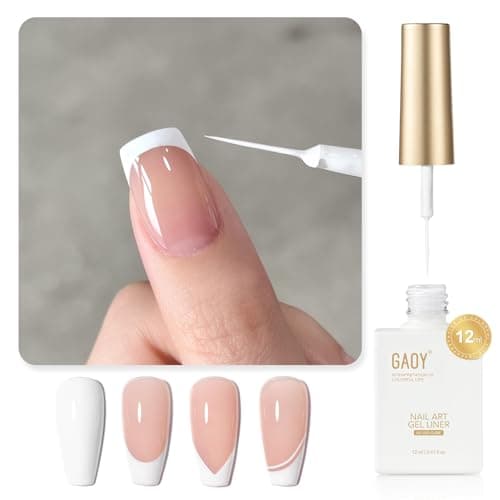
Shop on AmazonWhite with a long thin liner brush built into the cap — polish and applicator matched for micro lines out of the box.
Shop on AmazonProduct prices and availability are accurate as of October 17, 2026 and are subject to change. Any price and availability information displayed on Amazon at the time of purchase will apply. As an Amazon Associate we earn from qualifying purchases. Star ratings reflect Amazon customer reviews at the time of our last check.
| Visible nail | Tip | Curve | Shape | Colour |
|---|---|---|---|---|
| Very short (under 3 mm past the fingertip) | A hairline | None — a straight line | Round or squoval | Nude or off-white; anything else truncates |
| Short (3–5 mm) | 1 mm | Barely a lift at the side walls | Squoval, short oval | Off-white, milky white, nude |
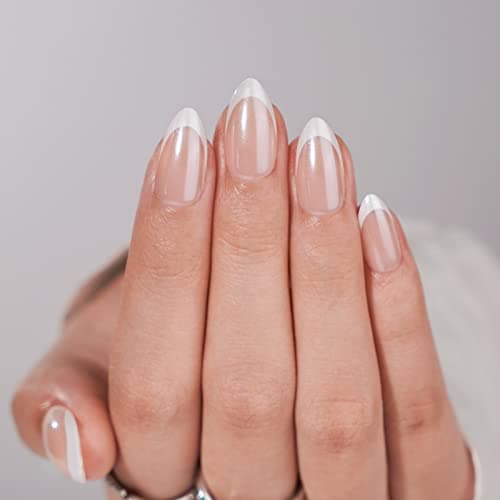
| Short almond | 1–2 mm | Shallow, following the taper | Short almond | White, black micro, pastel micro |
| Short square | 1 mm at most | Straight | Square, corners softened | White; the shape already reads wide |
A double micro tip or a side-French angle are the two variations that stay thin enough for a short nail; everything else on the design pages wants more plate than a short nail has.
Try this script:
Short French tips live or die on one number: the tip should cover no more than about 15% of the visible nail, which on a short bed means one to two millimetres.
The reason is how the eye reads the manicure. The white band signals "the nail ends here". On a long nail there is plenty of pink left over, so a generous tip costs nothing. On a short nail every millimetre of tip is taken directly off the part that reads as length.
A 3mm band on a 12mm nail costs a quarter of your visible bed. The same band on a 20mm nail costs a seventh. Same tip, entirely different result.
A deep, dramatic smile line needs nail length to sit in. On a short bed the two side points travel almost to the cuticle and the nail looks swallowed.
A shallow, almost-straight curve with a slight lift at each side wall is what flatters short nails — it suggests the shape without consuming the plate.
If you cannot fit the curve you want, that is the nail telling you the curve is too deep for the length available, not a failure of technique.
Ranked, most to least flattering on a short nail: almond, oval, squoval, round, square.
Almond and oval taper, and taper continues the line of the finger. Square does the opposite — its flat edge plus a horizontal band creates two parallel lines, and parallel lines emphasise width.
Coffin and stiletto need length that is not there.
Contrast is what truncates. The lower the contrast between base and tip, the longer the nail reads.
Nude and beige tips are the most flattering choice on short nails by a clear margin — see nude French tips.
Off-white and cream give you the classic look with a softer edge than stark white.
Milky white over sheer pink is the modern, quiet version.
A thin chrome line draws the eye through reflectivity rather than width, so it adds interest without adding bulk.
What to avoid: wide bands of bright, high-contrast colour, which truncate hardest.
Leave a hairline of bare nail at each side wall. Not painting quite to the edge narrows the painted area, and a narrower nail reads as longer. Same effect as filing the sides inward, without removing any nail.
Match your base to your skin tone. The less contrast between finger and nail bed, the more they read as one continuous line.
Adhesive guides are the standard beginner recommendation and the worst-suited tool for short nails specifically. Most guide curves are cut for medium-to-long beds, so on a short nail the sticker either will not sit flat or masks off far too much plate.
If your guides keep producing tips that are too thick, the guides are wrong for your nails. A stamper or clean-up brush gives you control over depth that a pre-cut sticker cannot.
Short is the length least likely to be quoted as an upgrade, which makes a short French one of the better-value salon manicures — you pay the base service plus the French upcharge and nothing else.
Specify "micro French" or "as thin as you can" when booking. Left unspecified, most technicians default to a standard band width calibrated for medium nails, which on a short nail is too thick.
Ask to see the first nail before they do all ten. On short nails the thickness error is the one that matters most, and correcting it on nail one takes seconds.
The hand that short French suits least is a wide, short nail bed, and it is also the hand that most often wears it. Three adjustments recover it: file the side walls a fraction inward so the nail reads narrower before any polish goes on; leave a hairline of bare nail at each side wall unpainted; and keep the tip to a true hairline in a low-contrast colour, because a wide white band on a wide short nail draws the exact horizontal line you are trying to avoid. Almond, even at short length, does more for a wide bed than any colour choice.
Short sets are where press-ons are best, because there is the least length to lever off and the sizing gap that shows on a long nail is hidden on a short one. The modelones short oval, BTArtbox short almond and short square, and Beetles' extra-short square kit in the press-on French tip nails category are all proportioned for a short bed, with the tip band already scaled — which solves the one thing home short Frenches get wrong most, a band the same width on every nail regardless of the nail's size.
A reasonable question: should you wait until your nails are longer before wearing a French?
Usually not. Nails grow about 3mm a month, so meaningful extra length is a two-to-three month project — and the shape of your nail bed, which is what actually determines whether a French flatters you, does not change at all in that time.
Better to file to a flattering shape now, wear a thin tip, and let length happen in the background. If you want length sooner, press-on French tips come in short and medium sizes.
What genuinely helps while growing out: cuticle oil daily, keeping the free edge sealed, and filing in one direction rather than sawing. Short nails break at the side walls, and sawing is what weakens them.
The practical case for short is stronger than the aesthetic one, and it is why the style has become the default.
A short French survives cooking, typing, cleaning and childcare in a way no long set manages. There is less nail projecting past the fingertip, so there is less to catch, lever and break. The tip colour still wears at the free edge — that is unavoidable — but the nail underneath stays intact.
It is also the fastest manicure to do and to remove, at home or in a salon, simply because there is less surface area involved.
Three diagnoses cover almost every case.
It looks stubby. The band is too thick. Thin it, and consider filing the side walls very slightly inward.
It looks unfinished. The contrast is too low for the length. On a very short nail a barely-there nude can read as no manicure at all — go one shade deeper on the tip.
It looks uneven across the hand. Short nails vary more in visible length than long ones, because the difference between a 3mm and a 5mm nail bed is proportionally huge. Match the band to each nail's own proportion rather than using the same absolute width on all ten.
That last point is the one almost nobody gets told, and it is why home French manicures on short nails often look slightly off even when each individual line is clean.
If you want the look without the technique, short press-on sets are genuinely good now — soft gel construction, realistic proportions, and tip bands already scaled correctly for a short nail.
They also solve the matching problem above, since each nail in the set is proportioned to its size. See the best press-on French tips.
The dermatologists' view of all this — soak rather than peel, oil the cuticles, file in one direction — is the American Academy of Dermatology's nail care basics.
How to do French tips on short nails has the full step-by-step. Simple French tips for the everyday version and micro French tips for the line width short nails want. Almond French tips for the most lengthening shape. Once the proportion is right, compare colours on pink or blue French tips. Back to french tip nails.
What French tip shoppers are buying this week, across every category.
Do French tips look good on short nails?
Yes—short nails look best with a micro or thin tip so the nail bed still appears long. A sheer base also helps keep the look natural.
What is a micro French tip?
A micro French tip is an ultra-thin line at the edge of the nail. It’s subtle, modern, and one of the most flattering options for short nails.
Which shape is best for short French tips?
Squoval (square with rounded corners) and round are the easiest and most durable. Short almond can also look elongating if you have enough free edge.
How do I stop short French tips from chipping?
Ask your tech to cap the free edge and use a strong top coat. At home, reapply top coat every few days and avoid using nails as tools.
What colors work best for short French tips?
White and nude are the most classic, but black, pink, and pastel tips look great when kept thin.
How short is too short for a French tip?
There is no minimum; there is a proportion. With under three millimetres of nail past the fingertip the tip becomes a hairline in a low-contrast colour and the curve becomes a straight line, and it still reads as a French from arm's length. What does not work on a very short nail is a white band of any real width, which reads as the end of the nail.
Short Coffin French Tip Nails
short coffin french tip nails
Almond French Tip Nails
almond french tip nails
Black French Tip Nails
black french tip nails
Blue French Tip Nails
blue french tip nails
Brown French Tip Nails
brown french tip nails
Burgundy French Tip Nails
burgundy french tip nails
Chrome Coffin French Tip Nails
chrome coffin french tip nails
Chrome French Tip Nails
chrome french tip nails