Vanfa
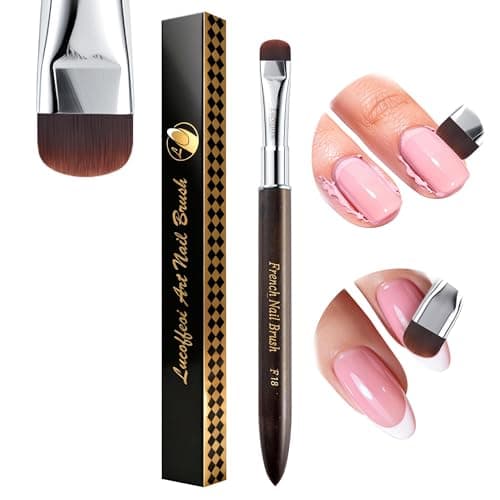
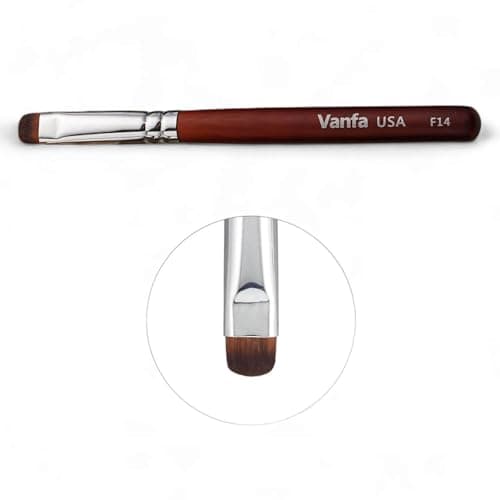
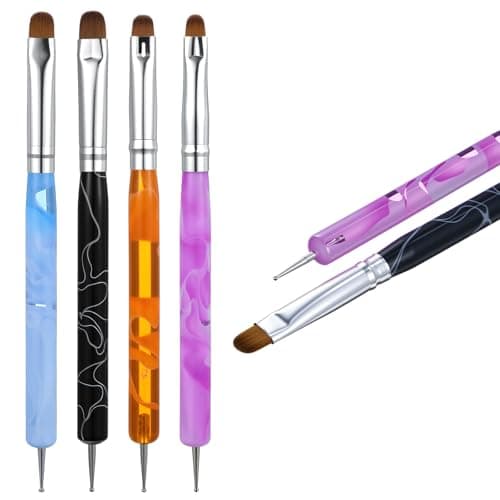
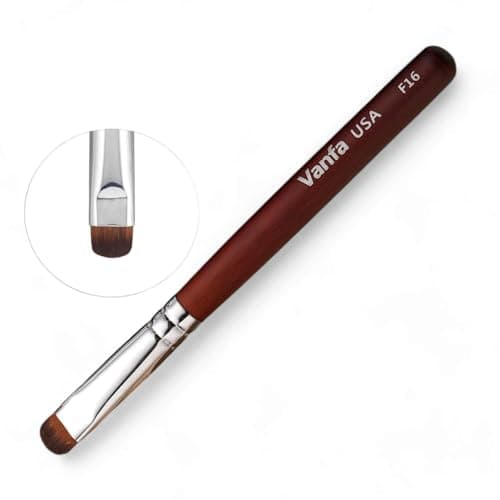
Vanfa French + Clean-Up Brush
$9.994.8 (570)
Best for the smile lineThe carve-the-line-back tool — the most forgiving smile-line technique there is lives on this brush.
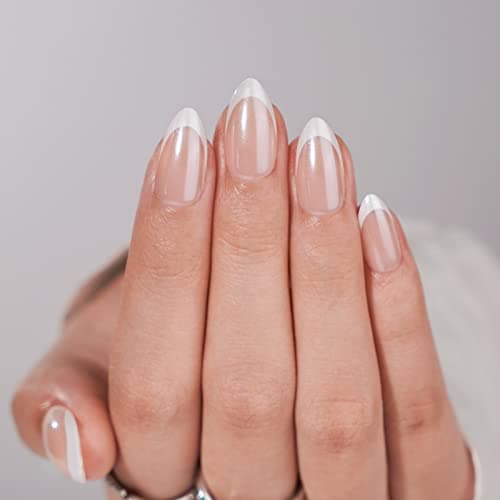
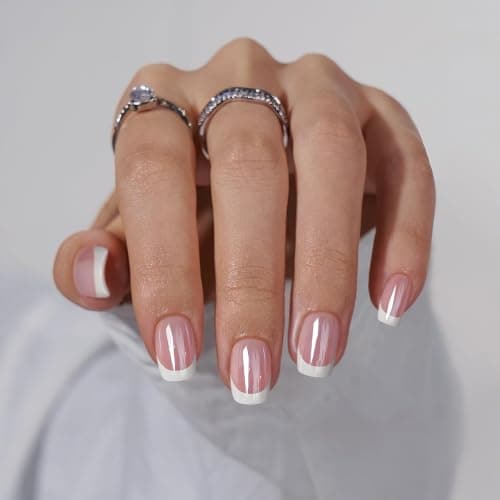
Shop on AmazonAsk why a home French tip does not look like a salon one and the answer is almost never the polish. It is a french tip nail brush problem — a two-dollar tooling problem. A standard polish brush is about three millimetres wide with a rounded tip — you are trying to draw a precise arc with the wrong end of a marker pen.
Three tools solve it, and they work in genuinely different ways.
Three techniques are represented here — drawing, painting-and-shaping, and carving the line back — and which brush you want depends entirely on which one you plan to use.
$3.99 – $19.99
19 products
The carve-the-line-back tool — the most forgiving smile-line technique there is lives on this brush.
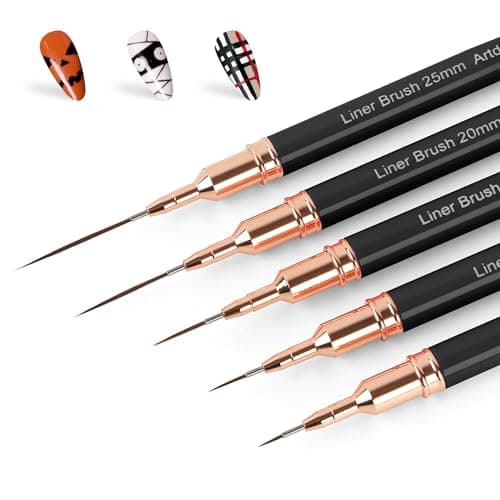
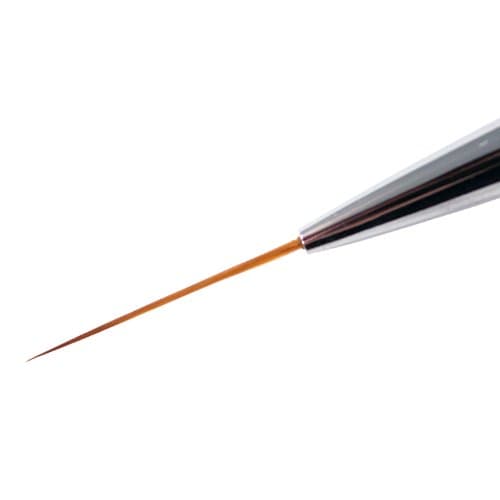
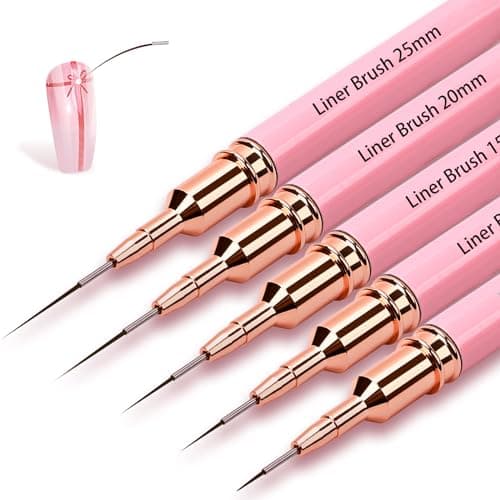
Shop on AmazonBest-selling liner set — long bristles hold enough polish to pull a full curve without reloading.
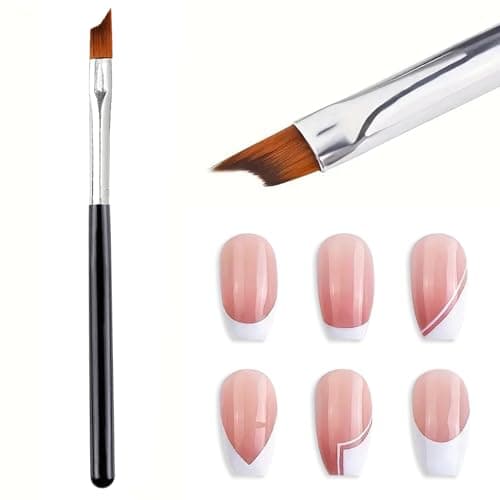
Shop on AmazonPurpose-cut oblique brush for the smile line specifically.
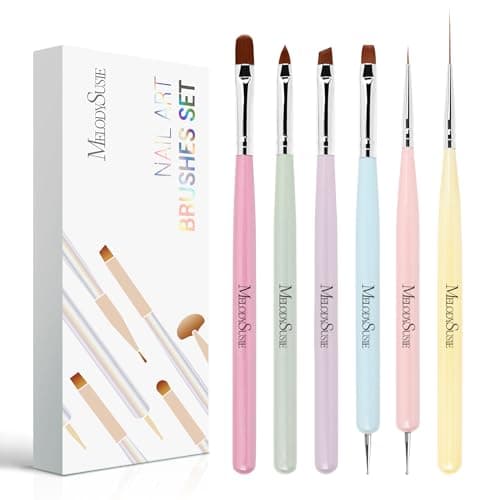
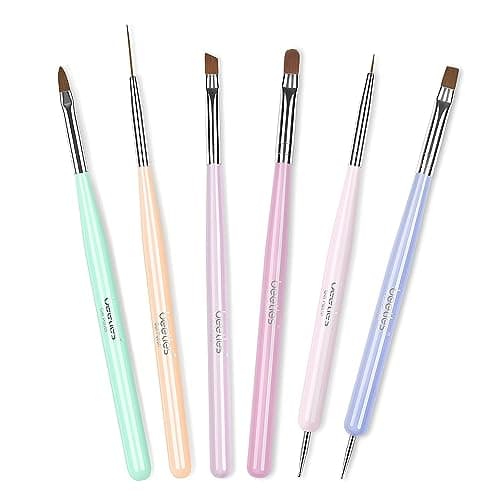
Shop on AmazonLiner, detail and clean-up shapes in one starter buy.
Shop on AmazonThe cheapest dedicated French brush.
Shop on AmazonBeetles' own liner-and-detail set — matched to their gel viscosity.
Shop on AmazonThe size-14 sibling of the site's favourite carve-back brush — a narrower flat tongue for short nails and tighter smile lines.
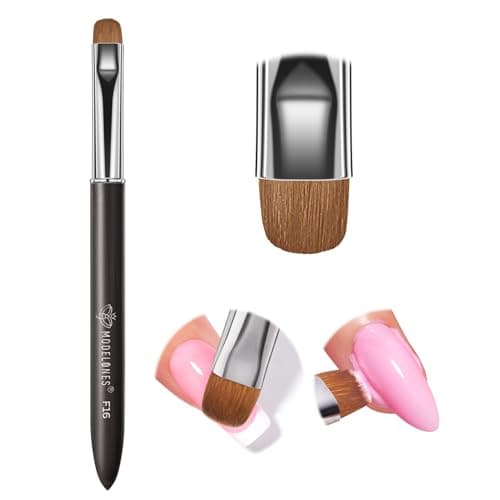
Shop on AmazonA curved-tip Kolinsky-hair size 16 shaped to follow the smile line — natural hair holds cleanser better than nylon for the carve-back method.
Shop on AmazonFive liners from 5 mm to 20 mm-plus — short ones for micro tips, long ones to pull a full smile line in one stroke without reloading.
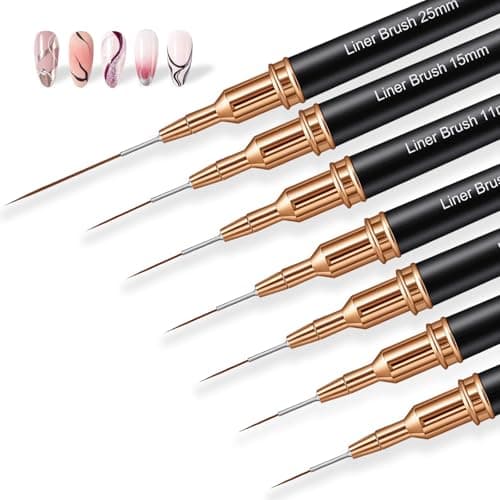
Shop on AmazonSeven liners across 7–21 mm for under four dollars — two of each short size, which matters because short liners are the ones that get ruined first.
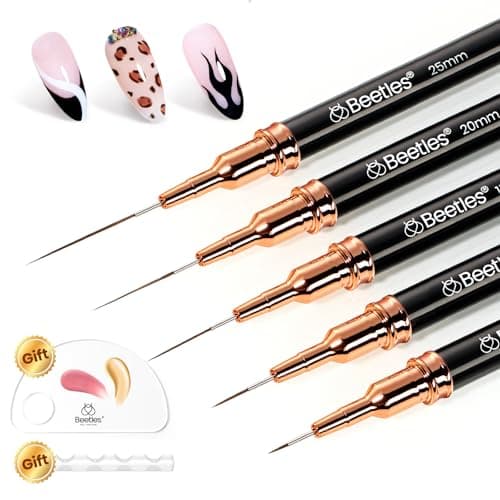
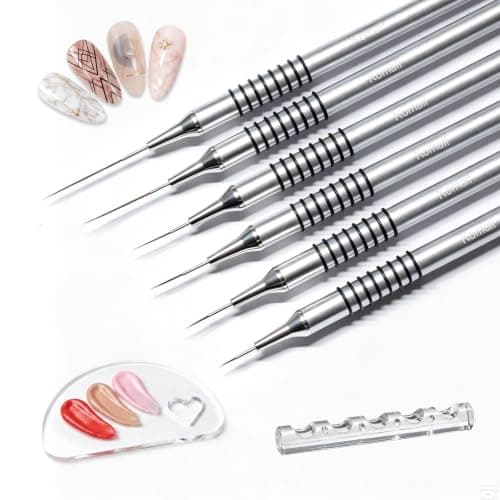
Shop on AmazonSix liners from 5 mm to 25 mm on non-slip metal handles — the set for anyone whose brush turns in a gloved or oily hand.
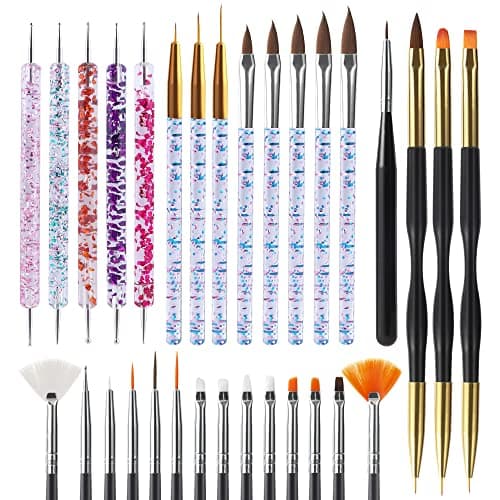
Shop on AmazonFifteen brushes, five dotting tools, liner pens and double-ended liners — the whole nail-art kit, from the brand behind the best-selling liner set.
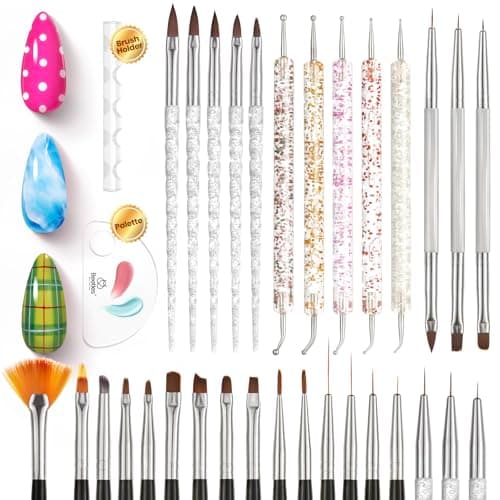
Shop on AmazonBeetles' 31-piece equivalent — same mix of brushes, dotters and liners, with a dust brush, matched to Beetles gel viscosity.
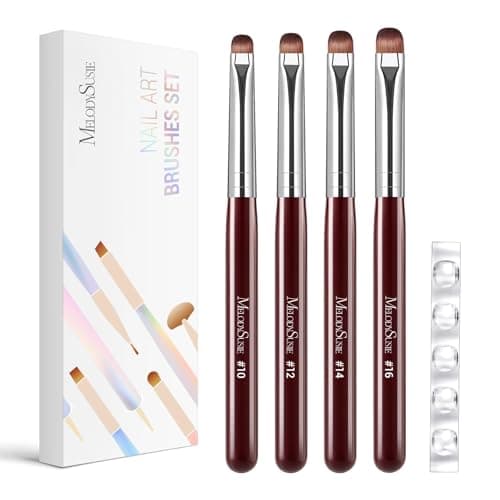
Shop on AmazonFour flat round-tip French brushes in sizes 10 to 16 with a stand — the pro-style set for people doing builder gel and extensions as well as Frenches.
Shop on AmazonA 22 mm striping brush on an acetone-proof acrylic handle — for the straight-across and diagonal French where you pull one long line rather than a curve.
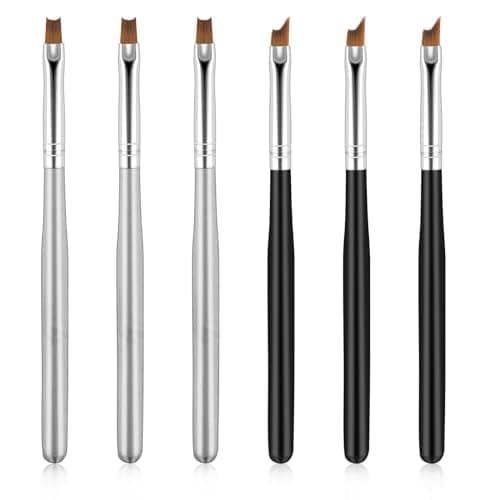
Shop on AmazonThree oblique and three half-moon heads — brushes pre-cut to the two smile-line shapes, so the curve comes from the brush instead of your wrist.
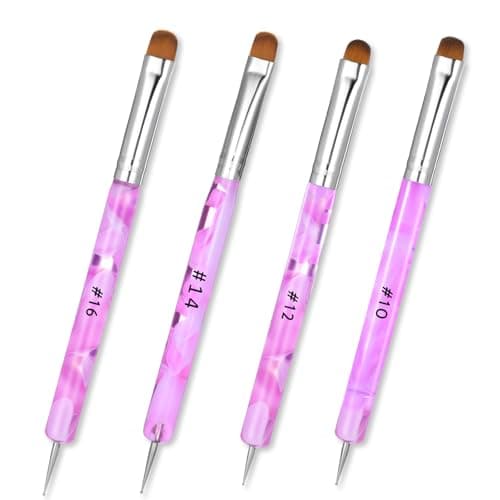
Shop on AmazonFour double-headed brushes covering sizes 10 to 16 with dotting ends — a French brush at one end, a dotting tool at the other.
Shop on AmazonFrench brushes sized for builder gel and extensions — the set for tips-and-forms Frenches rather than polish ones.
Shop on AmazonFive nylon liners for four dollars — the disposable-tier set for practising the smile line until the muscle memory arrives.
Shop on AmazonProduct prices and availability are accurate as of October 25, 2026 and are subject to change. Any price and availability information displayed on Amazon at the time of purchase will apply. As an Amazon Associate we earn from qualifying purchases. Star ratings reflect Amazon customer reviews at the time of our last check.
The liner (drawing). A long striping brush, sometimes 7–12mm of bristle, that holds a large reservoir of polish. You draw the curve directly. This produces the sharpest, thinnest line available and is what most nail artists use. It also has the steepest learning curve, because a long brush amplifies every tremor in your hand.
The oblique (painting and shaping). An angled flat brush. You paint the tip roughly and use the angled edge to define the curve. Middle ground on both control and difficulty.
The clean-up brush (subtracting). A flat, firm brush dipped in acetone or cleanser. You paint the tip carelessly, then carve the smile line back out by wiping colour away. This is the most forgiving technique by a wide margin, because you are correcting rather than committing — and it is the one almost nobody tells beginners about.
If you have tried and failed at French tips freehand, start with the clean-up method. It changes the problem from "can you draw a perfect arc" to "can you wipe a curve," which is far easier.
Whichever brush you use, the motion is the same and it is not one continuous sweep.
Load the brush properly — flood it, then wipe one side only. Place the tip at the side wall, roughly where the natural nail begins to curve. Pull toward the centre of the nail in one steady motion and lift off. Now do the same from the other side wall, meeting your first stroke in the middle.
Two strokes. Not one. Trying to sweep the entire arc continuously means changing direction mid-stroke, and that direction change is exactly where the wobble appears.
Longer bristles hold more polish, which means fewer reloads, which means fewer wobbles. Longer bristles are also harder to control, because small movements at your fingertips become large movements at the brush tip.
The practical answer: if you are new, buy a set that includes several lengths and find out which suits your hand rather than buying one brush on someone else's recommendation. Beetles' five-length set runs 5 mm to 20 mm-plus, vivinin's seven-piece doubles up on the short sizes that wear out first, and MelodySusie's six-piece mixes liner, detail and clean-up shapes. At four to eight dollars the set costs about the same as a single good brush.
For gel, synthetic. Gel is thick and pigment-heavy; natural hair absorbs it, gets sticky at the base, and splays within a few uses. For regular polish either works, though synthetic still cleans more easily.
Almost everything in this price bracket is synthetic regardless of what the listing says, which is fine — this is one case where the cheap material is also the correct one.
Because the three techniques need different brushes, the grid above sorts most usefully by what you plan to do, not by price.
Drawing the line wants a liner: Artdone's five-piece, Beetles' five lengths, vivinin, Komall, Voiluk. The variable is bristle length, and a set with several is the right first buy. Winstonia's 22 mm striper is the specialist for the straight-across and diagonal French, where you pull one long line rather than a curve; it is too long for a smile line.
Painting and shaping wants an oblique or half-moon head — Honey Joy, Lucoffeoi, the Trinkrittey six-piece with three of each shape. The curve comes from the cut of the brush, which suits people whose wrist will not draw one. The Ouligay set is the builder-gel version of the same idea, for tips-and-forms Frenches.
Carving the line back wants a flat clean-up brush that holds cleanser: Vanfa's F16 and the smaller F14, modelones' Kolinsky size 16, MelodySusie's four-size rosewood set. Natural Kolinsky hair holds more cleanser than nylon, which is why the modelones brush costs more; it also needs rinsing and reshaping or it splays.
Everything sets — the two 31-piece boxes from Artdone and Beetles — are worth it only if you also do dots, flowers and stripes. For a French alone, a handful of the 31 pieces are relevant.
The double-ended Xthrotsenk set is the compromise: a French brush at one end and a dotting tool at the other, covering the classic tip and the cute French accents from one handle.
Brushes in this category are inexpensive enough that people treat them as disposable, then wonder why the line quality degrades after a month.
Never let gel cure in the bristles. If UV or sunlight reaches a loaded brush it hardens permanently and the brush is finished. Clean immediately after use with brush cleaner or 99% isopropyl, working it right through to the ferrule. Never stand a brush bristles-down in acetone — it dissolves the adhesive holding the bristles and shedding starts. Reshape the tip while damp, and store flat.
A well-kept five-dollar liner outlasts a neglected fifteen-dollar one.
It is worth being clear about the limits, because buying a better brush will not solve every bad French tip.
A brush cannot compensate for polish that is too sheer. If your white needs three coats to cover, no applicator will give you a crisp edge — you will be laying the second coat inside a line you can no longer see, and the edge softens with every pass. Opacity is upstream of technique.
A brush also cannot fix a nail that has not been prepped. Polish beads and drags on an oily plate, and a dragging brush wobbles regardless of how good it is. Thirty seconds with an alcohol wipe does more for line quality than upgrading from a five-dollar brush to a fifteen-dollar one.
And a brush cannot make a deep curve work on a short nail bed. If there is only a few millimetres of nail past the cuticle, a deep smile line consumes the whole plate and the manicure reads as a solid tip rather than a French. That is a design constraint, not a tooling one — the answer is a shallower curve, not a better brush.
The fastest way to get comfortable is to stop practising on your own nails.
Buy a bag of cheap plastic practice tips, or use the lids of the polish bottles you already own. Draw the curve twenty times in a row on something disposable. What you are training is a specific muscle memory: the pressure at which the bristles splay just enough to lay a line of the width you want, and the speed at which polish flows evenly rather than pooling or skipping.
Twenty repetitions on plastic will teach you more than five manicures will, because you are isolating the one motion instead of doing it once per nail with ten minutes of other work in between.
One more practical note: work on your non-dominant hand first. It is the harder hand, and doing it while your patience and your polish are both fresh produces a noticeably better result than saving it for last.
A liner brush is ruined by neglect faster than by use. Gel left to cure in the ferrule spreads the bristles permanently, and once a liner splays it will never draw a clean line again, regardless of price. Wipe the brush on lint-free paper and reshape the tip to a point after every use, and keep it away from the lamp while you work.
For gel brushes, clean with the brush cleaner the manufacturer specifies rather than acetone — acetone dries out natural hair and will shorten the life of a Kolinsky brush considerably. Store liners flat or bristle-up in a cap; left tip-down in a pot, the bristles bend and the brush becomes a clean-up brush whether you wanted one or not.
For the clean-up technique — the most forgiving, and our recommendation if you have struggled — the Vanfa French brush. For the sharpest freehand line and the strongest sales rank in the category, the Artdone liner set. For trying all three techniques without committing, the MelodySusie six-piece.
The brush is only half of it: the polish has to be opaque enough to cover in one pass, or it floods the line while you build coverage. See our picks for white gel polish for French tips. If drawing freehand is not for you, guides and stamps sidestep the problem entirely.
For the full technique, start with how to do French tips at home, and if your nails are short, French tips on short nails covers the adjustments that shape needs. The micro French look is where a good liner brush pays off most.
The products here are cosmetics under US law, and the FDA's page on nail care products explains what that does and does not guarantee about the bottles. Every product link on this page is an Amazon affiliate link, disclosed under the FTC's endorsement guides; the commission never changes what is listed or how it is described.
Back to the shop or the french tip nails homepage.