Artdone
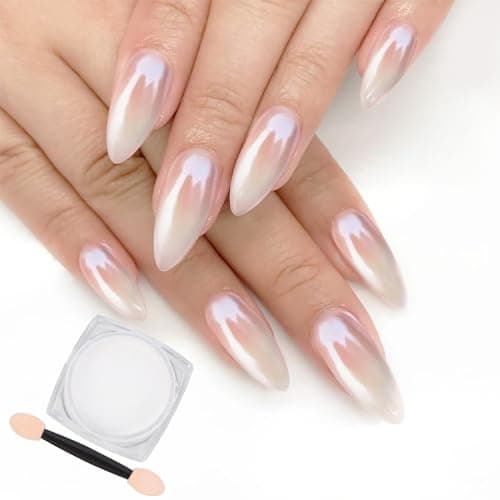
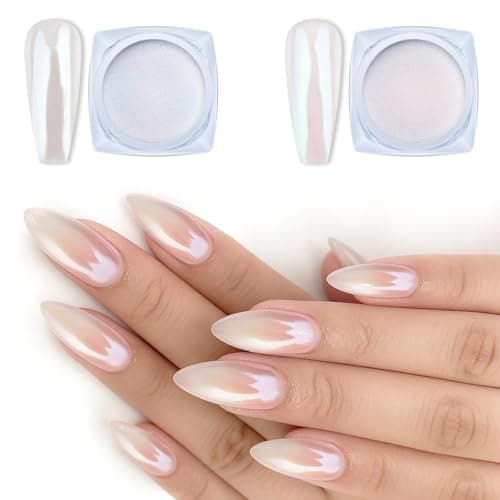
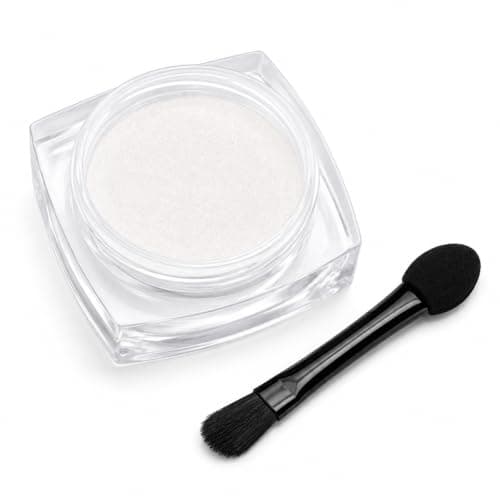
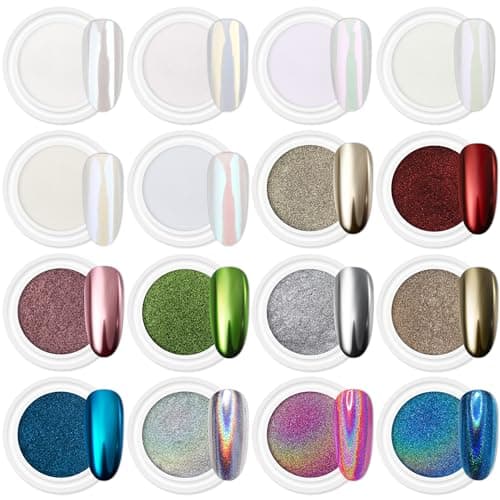
Artdone Chrome Powder, 16 Jars
$9.984.6 (15,883)
Best overallSixteen shades — the base-pairing is the real variable with chrome, and a set lets you find yours.
Shop on AmazonFrench tip nails category
chrome french tip nails
Chrome french tip nails in pearl, mirror and aurora — the powder-and-topcoat sequence that works, and the base each finish needs under it.
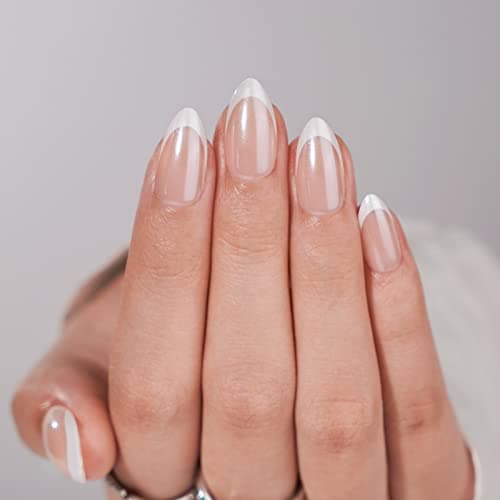
Chrome french tip nails are the one French where the finish, not the colour, is the design. They keep the clean French silhouette but add a reflective, glossy finish to the tips. Think “glazed donut” shine—either as a subtle pearl effect or a bright mirror metallic. Chrome tips look especially good in photos and are a popular option when you want something elevated without a busy design.
“I just want the chrome to be where the chrome's supposed to be — I don't like when chrome ends up in the nude area.”
Sukie's take: Her whole workflow is built around containing the powder — the burnish-inward rule from this page. Watch where she stops rubbing at the smile line: that lift-off is the moment that keeps the base clean.
Sixteen shades — the base-pairing is the real variable with chrome, and a set lets you find yours.
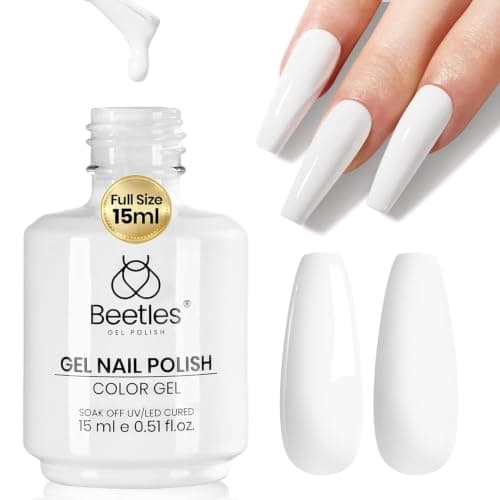
Shop on AmazonThe single jar that reads most as a modern French — pearl over white is the icy default.
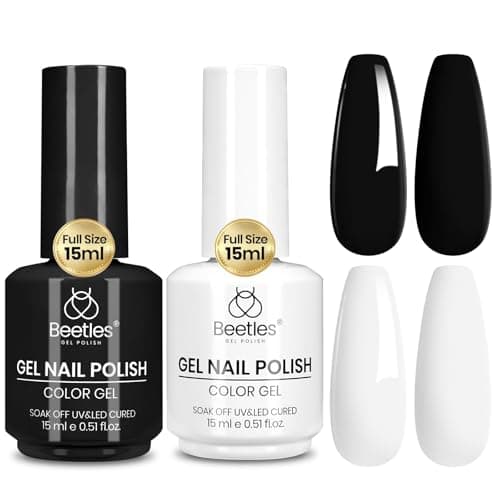
Shop on AmazonWhite for every day, red aurora for the holidays, without the 16-jar commitment.
Shop on AmazonThe cheapest way to find out whether chrome tips suit you.
Shop on AmazonLeans mirror rather than pearl — the sharper, more graphic chrome.
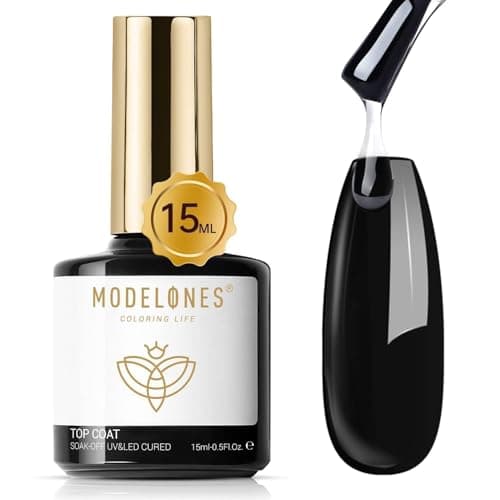
Shop on AmazonThe high-gloss seal — and the mandatory layer under any chrome powder.
Shop on AmazonProduct prices and availability are accurate as of October 18, 2026 and are subject to change. Any price and availability information displayed on Amazon at the time of purchase will apply. As an Amazon Associate we earn from qualifying purchases. Star ratings reflect Amazon customer reviews at the time of our last check.
Chrome is a finishing technique, so be specific:
Ask for edges to be sealed so the chrome stays smooth.
The searched question, and the answer is almost entirely layer order rather than skill. The rubbing motion takes twenty seconds to learn; the sequence underneath separates a mirror from a smudge.
Step three is where it goes wrong. A regular top coat leaves a tacky inhibition layer, and powder pressed into tack becomes a grainy paste rather than a mirror. It must be no-wipe, and it must be cured hard.
Worth understanding, because it explains a failure people blame on the powder.
On a full-nail chrome there is no boundary to smudge across. On a French tip there is, and the burnishing motion carries a little powder past the smile line onto the base colour — fuzzing exactly the edge that made the manicure worth doing.
The fix is directional: burnish inward only, from the free edge toward the smile line, lifting the applicator when you reach the line rather than pulling through it. Stray powder wipes off easily with a dry brush before sealing — but only if you have not already burnished it in.
Two families, routinely confused in listings.
Pearl and aurora powders are iridescent and shift with the light. Softer, more forgiving, and the iridescence disguises minor unevenness underneath. The safer choice for a tip.
Mirror chrome is a hard reflective silver-like finish — sharper and more graphic, but it reflects every ridge and brush stroke beneath it. If your nail plate is not perfectly smooth, choose pearl and skip the buffing.
The same jar produces genuinely different finishes depending what it sits on, which is why buying one jar and hoping is a gamble.
Over white, pearl chrome reads as a bright icy modern French — the version in most salon photos. Over nude or sheer pink, the same powder is far subtler, closer to a glazed-doughnut effect. Over black, it goes dramatic and mirror-like, striking but no longer really reading as a French.
Chrome is more fragile than the gel beneath it and wears at the very tip first, where impact concentrates. Expect a full mirror for about a week, then gradual dulling even while the gel underneath is still perfect.
Capping the free edge with the sealing top coat is what buys the second and third week. A refresh coat of no-wipe top coat restores some shine but never all of it.
Three usual causes, in order of likelihood: the layer underneath was not fully cured, you did not burnish long enough, or the base was not smooth.
If you are confident about the no-wipe step and it still dulls, suspect your lamp before the powder. An aging or underpowered lamp leaves the top coat looking dry while remaining slightly soft — and slightly soft is enough for powder to sink in rather than sit on top.
Silver mirror is the version everyone pictures, but it is not the most wearable.
White pearl is the shade that reads most clearly as a modern French tip rather than as metallic nail art. If you buy one chrome, this is it.
Rose gold is the warmest and most flattering across skin tones, and it sits beautifully over a nude base.
Gold is bolder and works best in autumn and around the holidays.
Aurora and unicorn shift through several colours with the light. Very striking, and the most forgiving of an imperfect base, since the colour shift disguises unevenness.
Black chrome over a black tip produces an almost oil-slick effect — dramatic, and the hardest to apply evenly.
| Powder family | Over a white tip | Over a nude tip | Over a black tip | Forgives a rough base? |
|---|---|---|---|---|
| White pearl | Icy, modern French — the salon-photo version | Glazed-donut, subtle | Grey-silver shift | Yes |
| Aurora, unicorn | Pastel colour shift | Barely there | Strongest shift; dramatic | Yes — the shift hides ridges |
| Silver mirror | Hard, graphic mirror | Reads as a metallic line | Oil-slick | No — shows everything |
| Rose gold | Warm pearl | Warm glaze; the most flattering | Bronze shift | Yes |
| Gold | Gilt edge | Warm metallic | Deep gold | Mostly |
The first row is the one to start with. The chrome powder for French tips page in the shop groups the jars by these families.
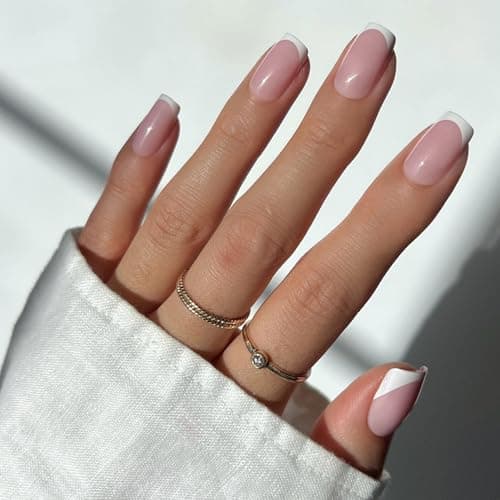
Square gives chrome a defined rectangle to sit in, which suits mirror finishes particularly well — the reflection has clean edges.
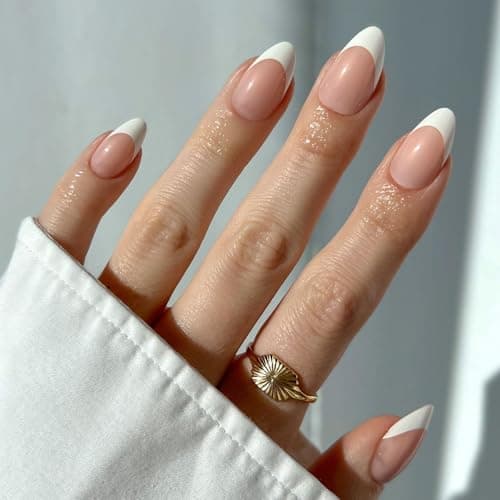
Almond softens the metallic effect and is the better choice for pearl and aurora powders, where the light shift benefits from a curved surface.
Short nails need the thinnest possible chrome band. Chrome draws the eye strongly, so on a small nail a wide band takes over completely — but a hairline of chrome on a short nail is genuinely one of the most flattering things you can do, because it adds interest without adding width.
At a salon, chrome is almost always a separate line item — typically $10–$20 on top of the base service, because it is its own application and curing step rather than a colour choice.
At home the jar costs a few dollars and covers dozens of tips, since you are only chroming a fraction of each nail. That makes chrome one of the widest gaps between salon and DIY cost in this entire category, and one of the better arguments for learning the technique.
Chrome fails more often on the top coat than on the powder. It needs a no-wipe glossy top coat cured hard underneath — the powder burnishes into that surface, and a regular top coat's tacky layer turns it to paste — and a second no-wipe seal on top, applied in one floating pass. A matte top coat over the seal turns a pearl tip into a soft velvet metallic, which is the third bottle worth owning. All three are in the shop's chrome category, listed after the powders, because the listing for the powder will not tell you that it does not work without them.
Using too much powder. The instinct to load the applicator is wrong. A tap of powder burnished thoroughly beats a heap applied lightly, and excess powder is what ends up smudged across the base.
Stopping the rub too early. Most people burnish for about ten seconds; thirty is closer to right. There is a distinct moment where the finish shifts from powdery to reflective — if you have not felt it, keep going.
Sealing too aggressively. Dragging the top coat brush back and forth across un-sealed chrome disturbs the powder and creates streaks. One floating pass, in one direction.
Skipping the seal entirely. It keeps maximum shine for an evening and is gone within a day or two. Always seal.
Chrome does not have to sit on white. Some of the better versions use it as a modifier rather than the main event.
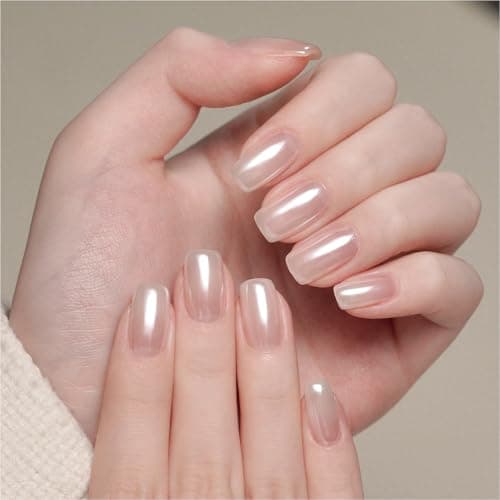
Over a nude tip it produces the glazed-doughnut effect that has been popular for several seasons — subtle, expensive, and the most wearable chrome there is.
Over navy or forest, chrome produces a deep metallic shift that reads as jewel-like rather than mirror-like.
Over a coloured base with a chrome tip only, you get the most controlled version: the colour does the identity, the chrome does the shine, and the smile line stays clearly readable.
Usually not. Shoes rub, and chrome wears by friction: a mirror tip on a big toe dulls in days where the gel under it lasts six weeks. If you want the effect on a pedicure, a pearl powder — the most forgiving family — on the big toe only, sealed twice, and expect it to soften to a glaze within the week. The French tip toe nails page covers what does last on feet.
If you want the regulator's version of the ingredient questions — HEMA, acrylates, what a label must say — the FDA's nail care products page is where to read it.
White French tips for the base chrome sits on best. Chrome coffin French tips for the shape that photographs it best. Glitter French tips for the other high-shine option, and black French tips for the oil-slick pairing. Our chrome powder picks cover which jars to buy. Home from french tip nails.
What French tip shoppers are buying this week, across every category.
What are chrome French tip nails?
Chrome French tips use a chrome powder or gel effect on the tip area, creating a reflective, “mirror” finish while keeping the base nude or sheer.
Do chrome tips work better with gel?
Chrome is easiest and longest-lasting over gel because the powder bonds well to a no-wipe top coat. Acrylic can still work if finished with gel top layers.
What chrome color is most popular for French tips?
Silver “glazed” chrome is the most common, but pearl, rose-gold, and colored chrome tips (like pink or blue) are also popular.
How do I keep chrome tips from dulling?
A strong top coat is key. Ask your tech to seal edges and reapply top coat every few days if you’re doing them at home.
Are chrome French tips too flashy?
Not necessarily. A thin chrome micro-tip can look minimal; it’s the thickness and color that determines how bold the result feels.
Can you put chrome powder over regular polish?
Not reliably. The powder needs a hard, cured, non-tacky surface to burnish against, and regular polish stays comparatively soft, so the powder drags into it instead of sitting on top as a mirror. Chrome is a gel technique: no-wipe gel top coat under it, cured hard, and another over it.
How long do chrome French tips last?
The gel underneath lasts two to three weeks; the mirror on top holds about a week at full shine and then dulls gradually from the very tip, where impact lands. Capping the free edge with the sealing top coat is what buys the second and third week, and a fresh no-wipe top coat at day ten restores some but not all of the shine.
What is a glazed donut French tip?
A white pearl chrome burnished over a nude or milky tip, so the tip glows rather than mirrors. It is the softest version of a chrome French and the most wearable, because the pearl forgives an imperfect base and reads as a finish rather than as metallic nail art.
Chrome Coffin French Tip Nails
chrome coffin french tip nails
Almond French Tip Nails
almond french tip nails
Black French Tip Nails
black french tip nails
Blue French Tip Nails
blue french tip nails
Brown French Tip Nails
brown french tip nails
Burgundy French Tip Nails
burgundy french tip nails
Coffin French Tip Nails
coffin french tip nails
Cute French Tip Nails
cute french tip nails