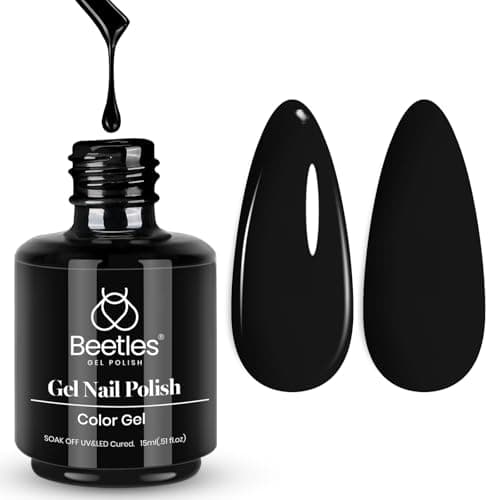
beetles Gel Polish
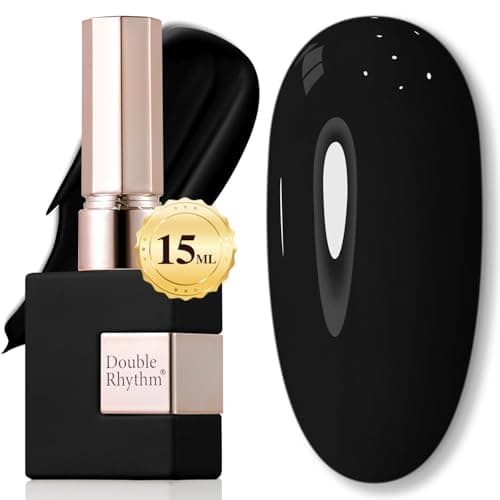
Beetles Audrey Black Gel
$5.394.4 (69,251)
The one-coat blackThe one-coat black — dense enough to cover a tip line in a single pass, which black absolutely must.
Shop on AmazonFrench tip nails category
black french tip nails
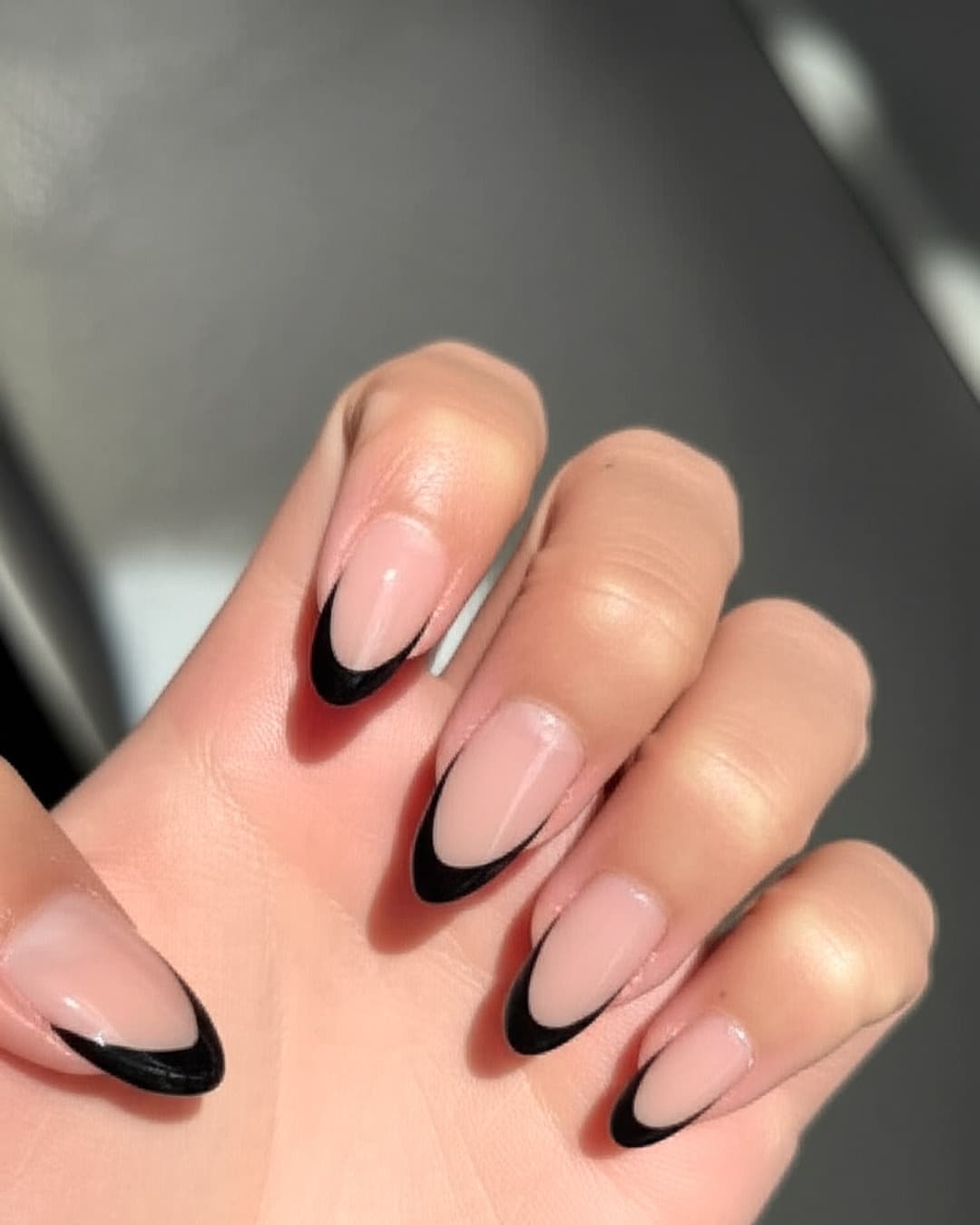
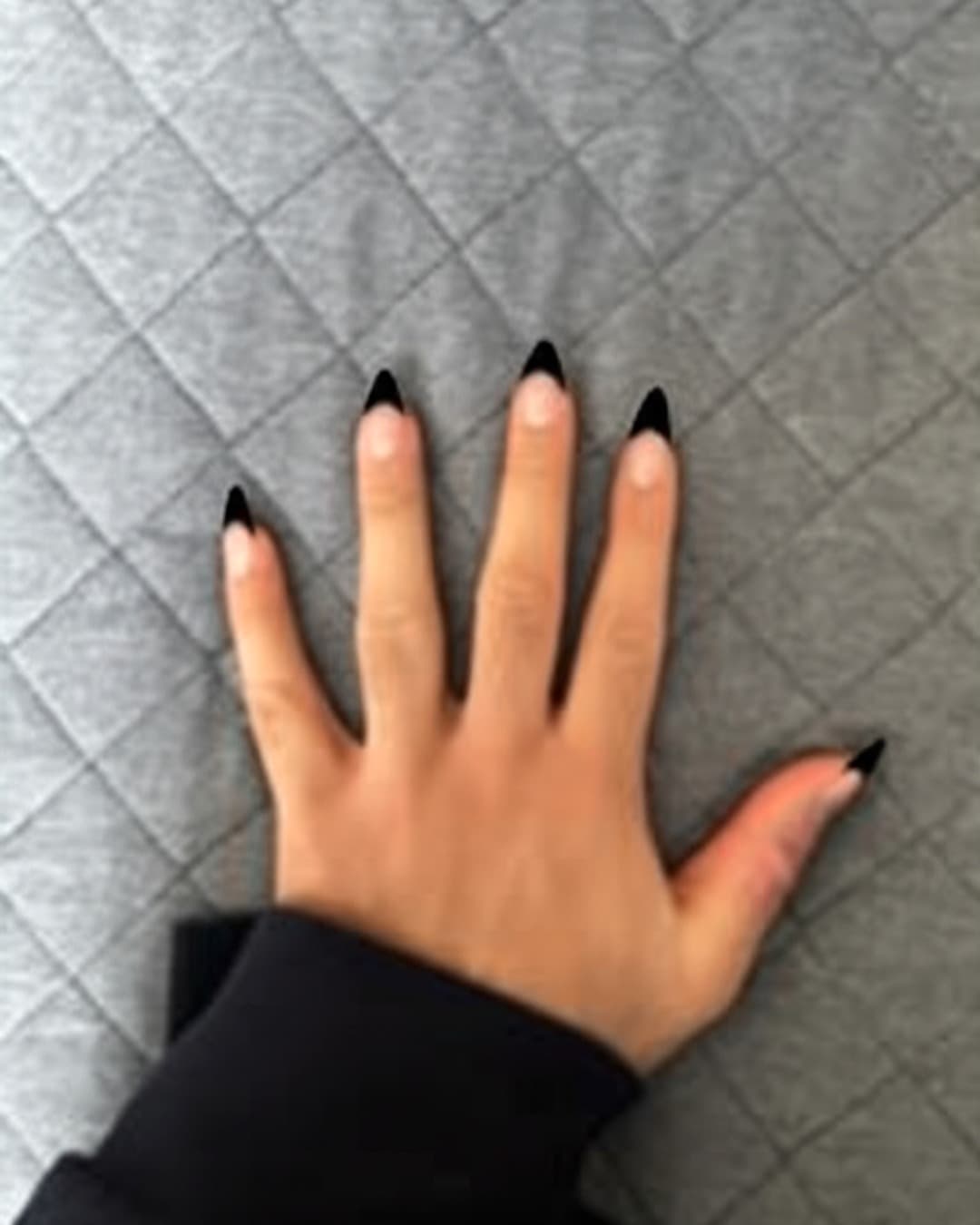
Black french tip nails in three widths — hairline micro, classic tip and graphic block — plus the liner and base that stop the edge bleeding.
Black french tip nails are what people mean when they say "a French, but modern." They take the structure of a classic French manicure and swap the white tip for glossy (or matte) black. The result is clean, modern, and a little edgy—without needing full black nails. If you like minimalist styles but want something that pops, black tips are one of the easiest upgrades.
The one-coat black — dense enough to cover a tip line in a single pass, which black absolutely must.
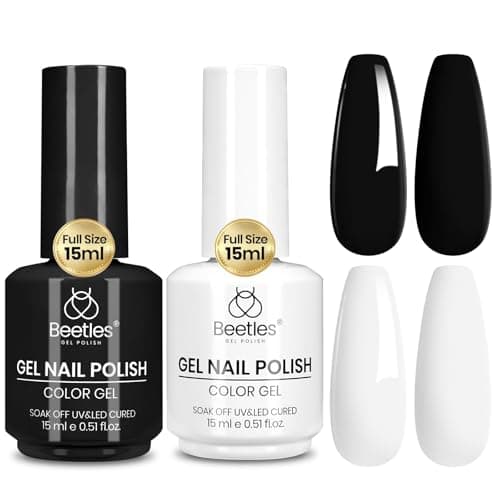
Shop on AmazonBlack and white 15ml pair — covers the graphic black-over-milky look and the classic in one purchase.
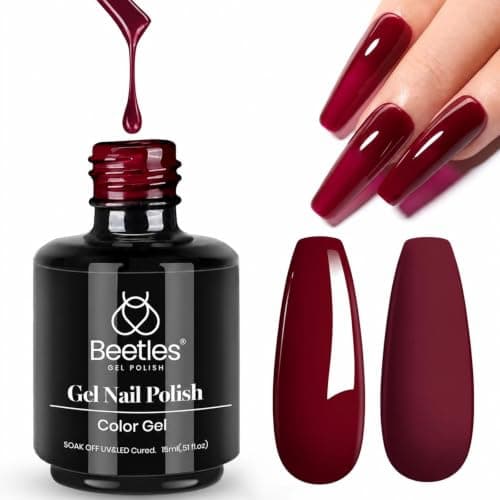
Shop on AmazonThe autumn tip in one bottle — deep, one-coat, reads rich in low light.
Shop on AmazonProduct prices and availability are accurate as of October 17, 2026 and are subject to change. Any price and availability information displayed on Amazon at the time of purchase will apply. As an Amazon Associate we earn from qualifying purchases. Star ratings reflect Amazon customer reviews at the time of our last check.
| Version | Tip | Base | Shape | Reads as |
|---|---|---|---|---|
| Micro black | A hairline, about 1 mm | Sheer pink or nude | Short round, oval, squoval | Minimal; passes almost anywhere |
| Classic black | 2–3 mm | Sheer pink | Medium almond or square | The everyday coloured French |
| Graphic black | A deep band, or a V or straight edge | Milky white | Square or coffin | Illustrative, high contrast |
| Negative space | Any width | Bare nail | Short oval | Very current, very minimal — strictly not a French |
| Black with gold | Any width, gold hairline along the line | Sheer pink or taupe | Almond | The most expensive-looking version |
If you are new to black tips, start in the first row: short-to-medium length, a thin line, a sheer base.
Bring a photo if you can, then say:
If you want extra sharpness: “Please keep the black fully opaque and the smile line crisp.”
The most-searched question here, and black has one technical problem no other colour has: it shows everything.
Opacity is non-negotiable. A black that goes on grey needs a second coat, and the second coat cannot land inside a line you have already drawn — it floods. Buy a black rated one-coat, or lay the line twice with the first pass deliberately thinner than the finished band.
Keep the line thinner than feels right. Black is the highest-contrast tip colour there is, so every millimetre reads as two. A band that looks moderate in white looks heavy in black.
Clean up before curing, not after. Black on skin or in the cuticle is far more visible than any other colour, and cured black gel must be filed off rather than wiped. Keep a flat brush and remover to hand and tidy the edges while the gel is still soft.
Wipe the brush more than usual. Black pigment is dense and the brush carries more product than it looks, which is how you get a thick blobby start to the stroke.
Black French tips read as deliberate in a way few colours manage. They are simultaneously the most graphic version of this manicure and — kept thin — one of the most understated, because the shape does the work rather than the colour.
They are also genuinely seasonless. Unlike pastels or festive shades, a thin black tip looks correct in February and August alike, which matters when a gel set stays on for three weeks.
Square is the strongest pairing. The flat edge gives the black band a clean rectangle to sit in, and the geometry and the colour reinforce each other.
Almond softens it — the taper stops black reading as a hard stripe, which is the version to choose if graphic is not the goal.
Short round or oval needs the thinnest possible line. On a small nail a thick black band takes over completely.
Over a sheer pink base, black tips are the classic high-contrast version — crisp and unmistakable.
Over a milky white base, they go more graphic and modern, almost illustrative.
Over a grey or taupe base, the contrast softens into something moodier and more expensive. This is the most underrated version, and the one for people who like the idea of black tips but find the classic too stark.
Over bare nail, a black tip alone reads as very current and very minimal — though without a base it is not strictly a French.
Black shows chips more than any other colour, because the exposed nail underneath is maximally different from the polish. Free-edge capping is essential rather than optional.
It also shows surface wear — micro-scratches invisible on a nude read as dullness on black. A fresh top coat over the tips at the one-week mark restores the gloss and carries the rest of the fortnight.
Black is the tip colour that supports the widest range of variations, because the high contrast keeps a shape readable even when it is unusual.
Micro black. A hairline of black at the very edge. The most current version and by far the most wearable — it reads as a graphic detail rather than a statement.
V-cut black. The line comes to a point in the centre rather than curving. Black is the only colour where this reads clearly at small scale.
Double line. Two thin black lines with a gap of bare nail between them. Fiddly to draw but very striking.
Black with a gold outline. A hairline of gold along the smile line. This is the version that looks most expensive and takes the least extra skill — the gold is drawn over the already-set black edge, so it hides rather than reveals unevenness.
Negative-space black. A black tip on an entirely bare nail. Minimal, modern, and the fastest of the lot to do.
Black is more universally flattering than its reputation suggests, because a thin band carries no skin-tone implications at all — it reads as a line rather than a colour.
Where it needs care is nail length. On very short nails a black band eats the visible plate faster than any other colour, so the thinner the line the better. On long nails black can go thicker without dominating.
There is also a context question worth being honest about. In some conservative workplaces black nails still read as a statement in a way a nude French does not. A micro black line is the version that passes almost anywhere.
Black is the tip colour most likely to leave a mark on the natural nail, and the culprit is almost always removal rather than wear.
Dragging a saturated acetone pad across the nail spreads dissolved black pigment over the plate and pushes it into the surface. The fix is to hold the pad still, let the polish break down, then lift it away in one motion rather than rubbing.
A base coat prevents nearly all of it. If staining has already happened, it grows out — buffing it away removes nail plate you would rather keep.
Black tips are more versatile than they look, and the pairing that works best is the least obvious one: they sit beautifully against warm neutrals — camel, cream, tan — where the contrast reads as deliberate styling rather than as a goth reference. Against all-black clothing they disappear into the outfit, which rather wastes them.
Black reads considerably heavier on toenails than on fingernails, because toenails are shorter and wider in proportion. A band that looks elegant on a finger can look like a solid block on a toe.
Halve the thickness you would use on your hands, keep the curve almost flat, and the effect stays graphic rather than blunt.
Everything on this page depends on a black that covers in one pass. A two-coat black cannot be corrected inside a thin line, so the bottle decides more than the brush does. The GAOY and Double Rhythm duos in the white gel polish and liners category pair a one-coat black with a white — the liner version is the one for a micro tip — and APRÉS' Super White & Rich Black duo is the salon-line pair. For the gold hairline, a fine liner from the brushes page and a gold gel; for the chrome-over-black version, the powders on the chrome page.
Gloss is the default and the more forgiving: reflections soften the edge a little and hide the micro-scratches black shows. Matte turns the same tip into velvet and sharpens the line to whatever you actually drew — the best black French there is when the line is reliable, and the most unforgiving when it is not. The split version, a matte black tip over a glossy nude base, gets the drama with a safety margin, because the eye reads the change in sheen as the edge before it audits the curve. The matte French tips page covers the top coats.
Whatever the style, the nail plate has to survive it: the American Academy of Dermatology's tips for healthy nails cover the soaking, filing and oiling habits every page on this site assumes.
White French tips for the opposite end of the contrast scale. Chrome French tips to add a metallic line over black. Square French tips for the shape that suits it best. If you want a softer alternative, nude French tips or brown French tips; the Halloween French tips guide is where the black tip gets its one night of drama. Back to french tip nails.
What French tip shoppers are buying this week, across every category.
Are black French tip nails too harsh for everyday?
Not if you keep the tip thin or choose a soft nude base. A micro-black tip reads minimalist and wearable, even for office-friendly looks.
What base color looks best with black tips?
Sheer pink and nude are the most flattering. A milky base gives contrast without looking stark, while clear base feels edgy and ultra-modern.
Which shape suits black French tips?
Almond and coffin are popular because they look sleek and elongating. Square gives a graphic, high-contrast look that feels very “classic but dark.”
How can I make black French tips look more expensive?
Ask for a crisp, thin smile line, fully opaque black, and a high-gloss top coat. Adding a subtle chrome or a fine metallic line can elevate the finish.
Almond French Tip Nails
almond french tip nails
Blue French Tip Nails
blue french tip nails
Brown French Tip Nails
brown french tip nails
Burgundy French Tip Nails
burgundy french tip nails
Chrome Coffin French Tip Nails
chrome coffin french tip nails
Chrome French Tip Nails
chrome french tip nails
Coffin French Tip Nails
coffin french tip nails
Cute French Tip Nails
cute french tip nails