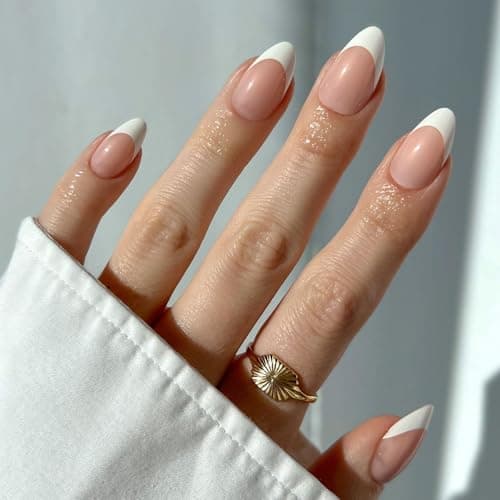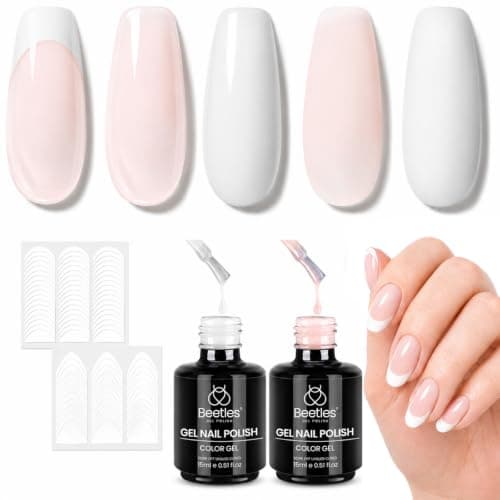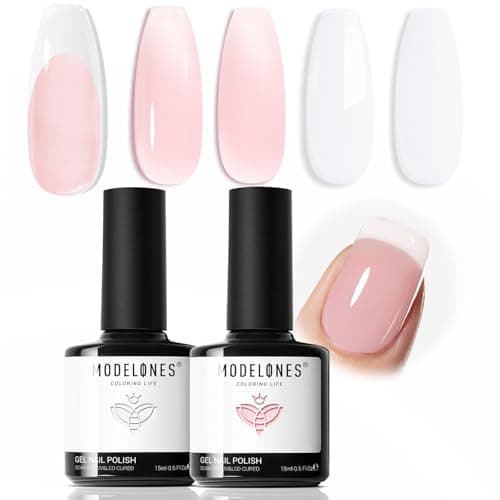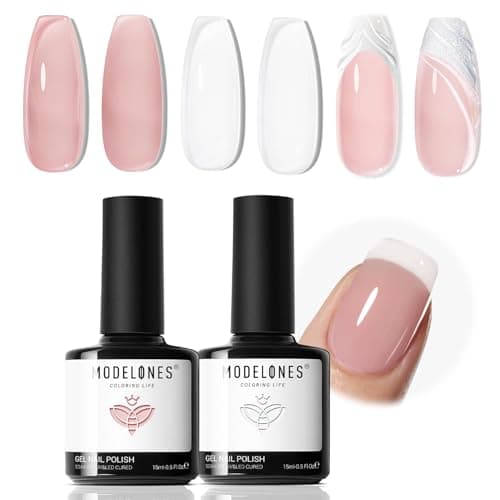
beetles Gel Polish
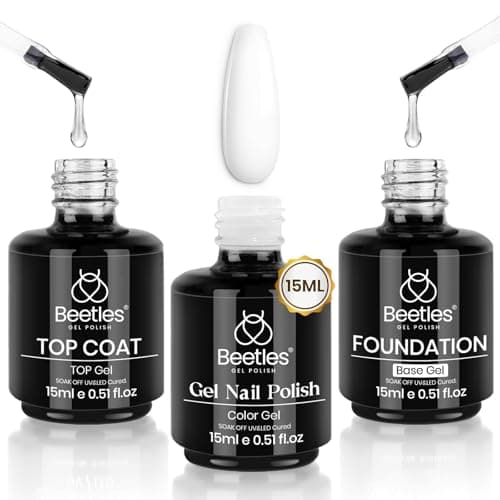
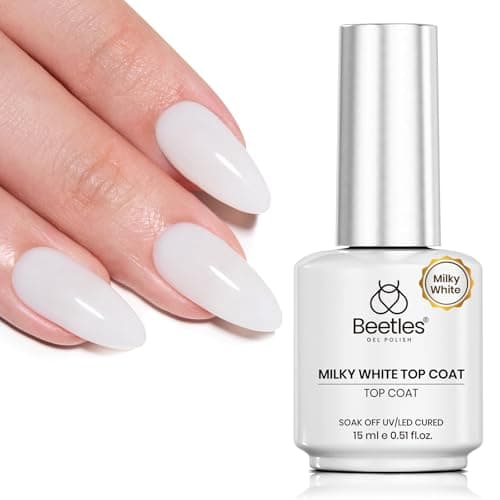
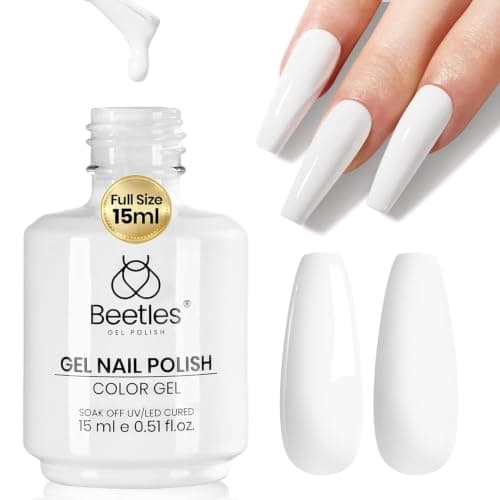
Beetles White Gel Polish, 15ml
$5.424.4 (69,346)
Best overallThe default one-coat white for tip lines — rank 200 across the whole nail category, and opacity is everything on a French tip.
Shop on AmazonEvery other property of a white gel polish for french tips is secondary to one question: does it cover in a single coat?
This matters more for French tips than for anything else you paint, and the reason is geometric. On a full nail, a second coat evens out a patchy first one. On a tip, the second coat has to land inside exactly the same smile line — and it will not. It floods over the edge by a fraction of a millimetre, and that fraction is the difference between a crisp line and a soft one.
So the ranking here is essentially an opacity ranking.
| What you need | Why it matters for a tip |
|---|---|
| One-coat opacity | A second coat blurs the smile line |
| Slow self-levelling | Time to correct before curing |
| Narrow or liner brush | A wide brush cannot lay a thin strip |
| No shrink-back on cure | Shrinkage pulls the edge away from the free edge |
Full-size whites for a deep tip, liner whites for a thin one, then the milky and top coats that finish either. Sorted by what matters on a tip line rather than for full-nail coverage — these are different problems.
$3.98 – $17.00
19 products
The default one-coat white for tip lines — rank 200 across the whole nail category, and opacity is everything on a French tip.
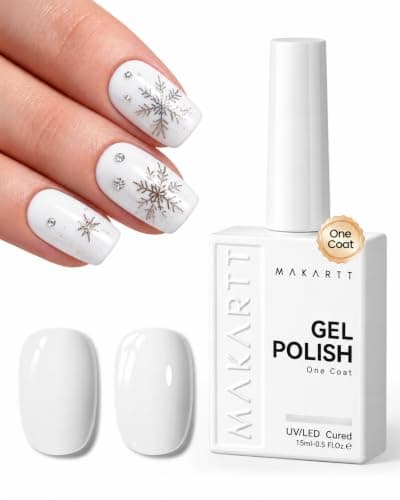
Shop on AmazonMarketed on pigment load and buyers confirm genuine one-coat coverage — the property that keeps a smile line crisp.
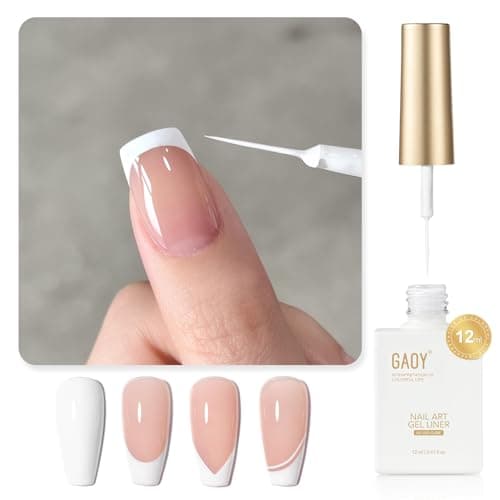
Shop on AmazonWhite with a long thin liner brush built into the cap — polish and applicator matched for micro lines out of the box.
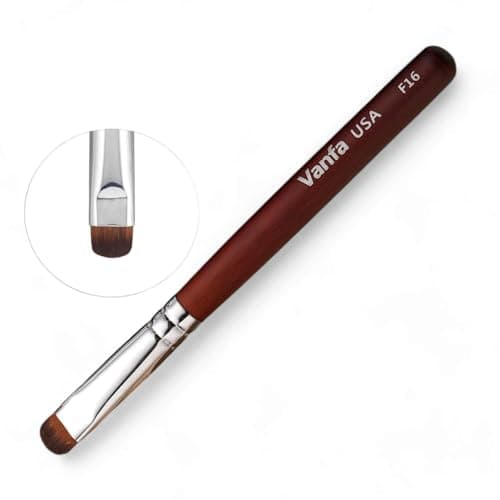
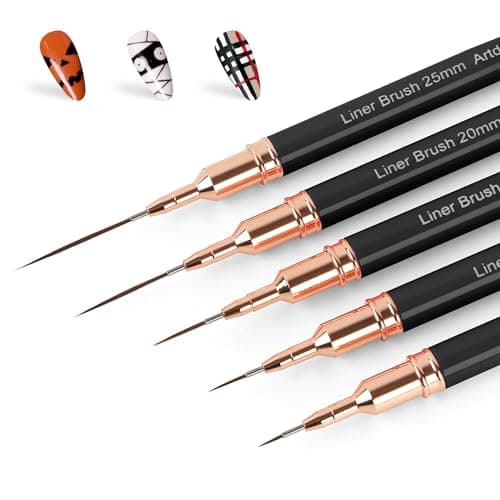
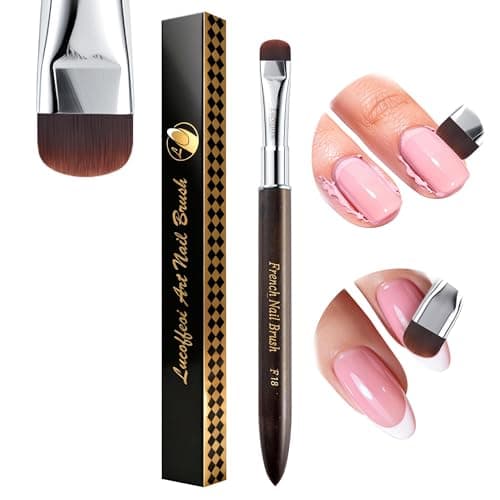
Shop on AmazonPrecision brush aimed squarely at the thin-line micro French.
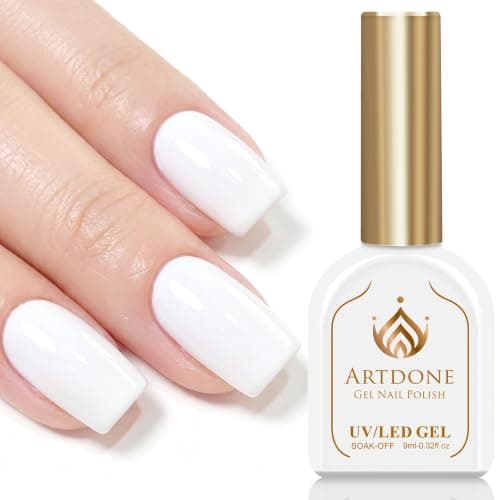
Shop on AmazonA HEMA-free pure white in a 9 ml bottle — the white for anyone who reacts to standard gel, at the lowest price per bottle here.
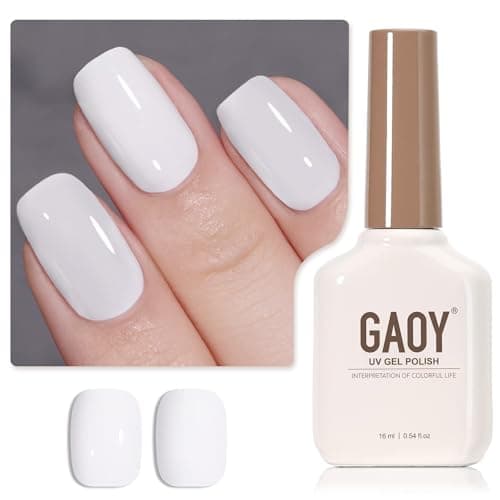
Shop on AmazonSixteen millilitres of a pure white — the most product per dollar among the full-size whites, from the brand whose liners are the site's micro-French default.
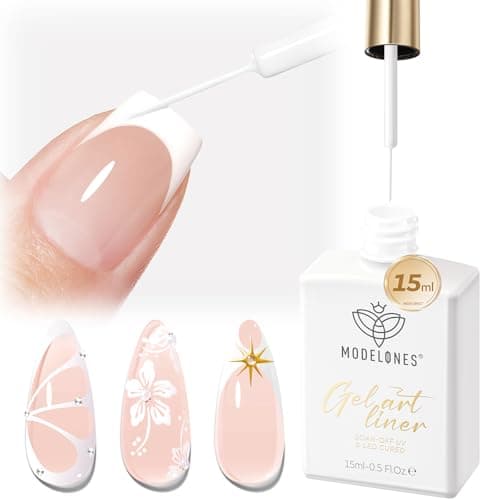
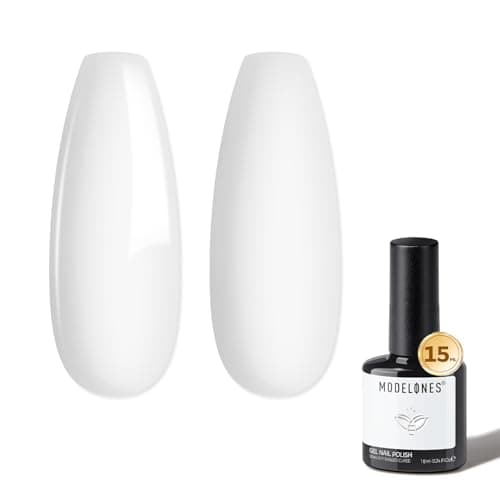
Shop on Amazonmodelones' full-size white — high-pigment, bubble-free formula per the listing, from the brand behind the French pair and the liner gel.
Shop on AmazonUnder four dollars for a HEMA-free white — the trial bottle for testing whether you prefer a full brush or a liner before spending more.
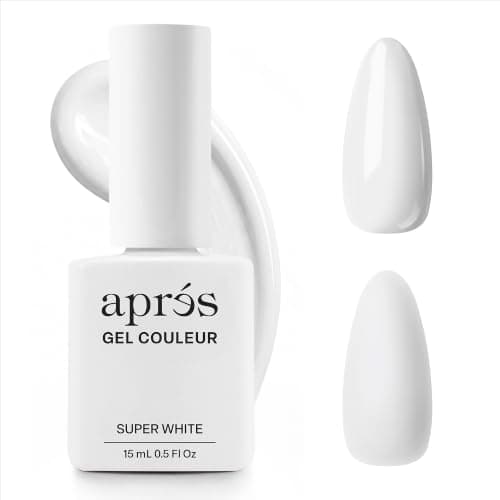
Shop on AmazonAPRÉS' one-coat, cool-toned white that the brand claims stays white after curing — the pro-line answer to the yellow cast cheaper whites can develop.
Shop on AmazonThe Beetles white with its own base and no-wipe top — the three gel layers of a French tip in one box, from the brand's most-bought white.
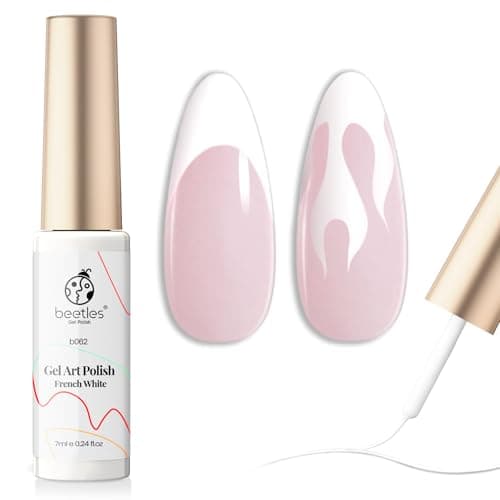
Shop on AmazonA liner-brush white built for swirls and French lines — the bottle for the wavy, double and abstract Frenches, not just the classic curve.
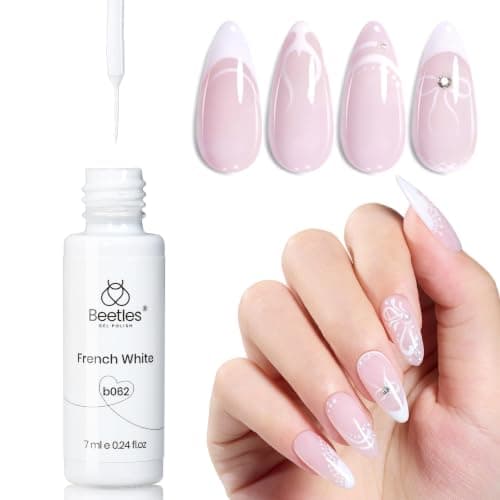
Shop on AmazonA 7 ml white liner with a scraper plug in the neck so the brush leaves the bottle clean — the four-dollar way into thin French lines.
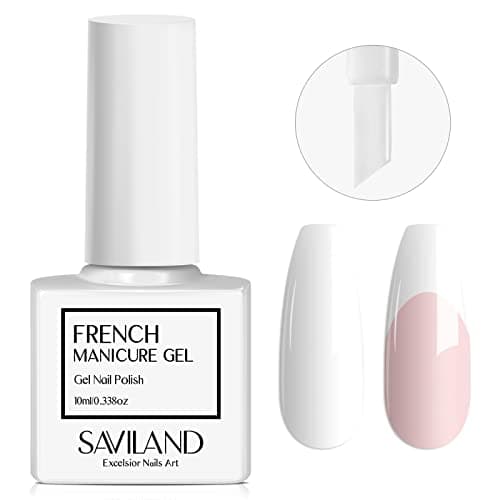
Shop on AmazonSAVILAND's white liner with an upgraded French brush, sold on the promise of a smile line in seconds — the beginner's liner with a beginner's price.
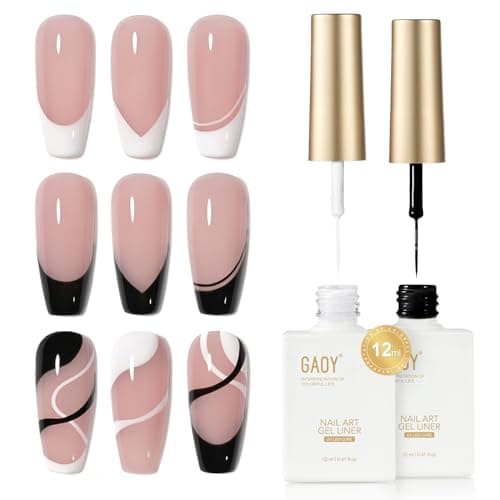
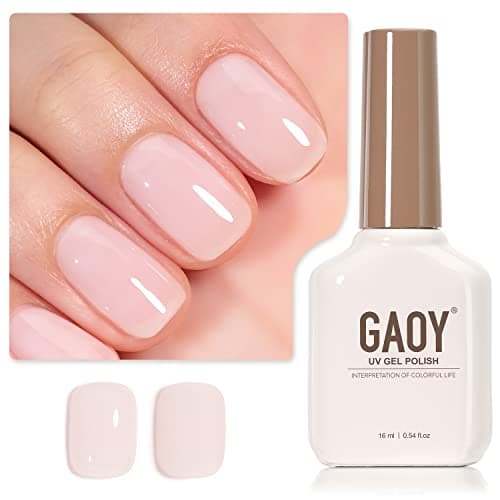
Shop on AmazonThe GAOY liner in white and black — the pair for a classic French and a graphic black French from the same precision brush.
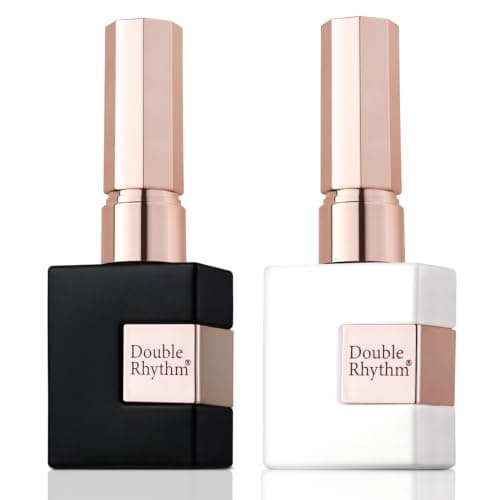
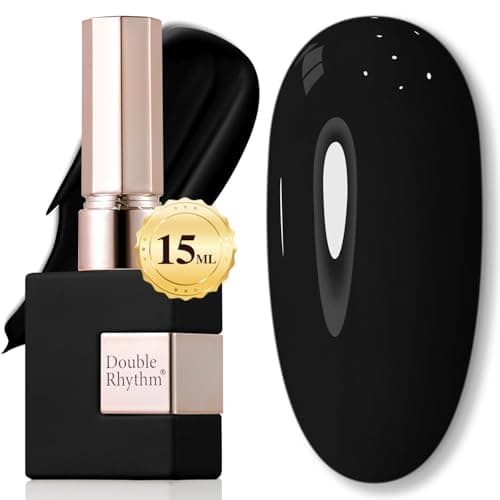
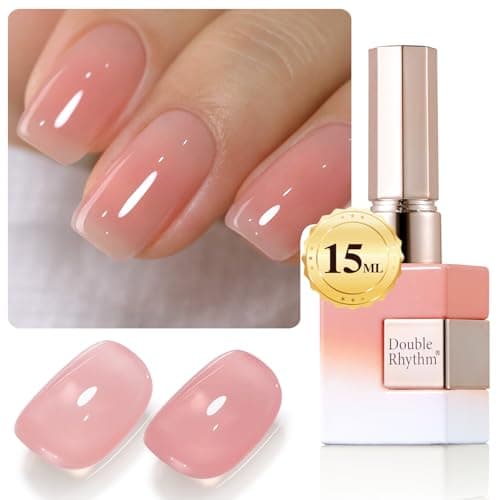
Shop on AmazonA pure white and a black in Double Rhythm's same-colour-bottle line — the duo from the brand whose sheer base is the site's reference nude.
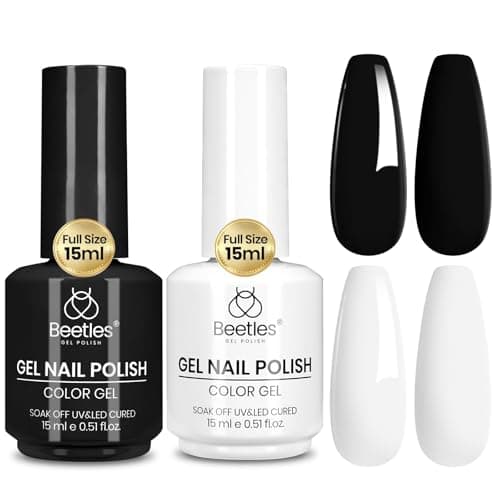
Shop on AmazonBlack and white 15ml pair — covers the graphic black-over-milky look and the classic in one purchase.
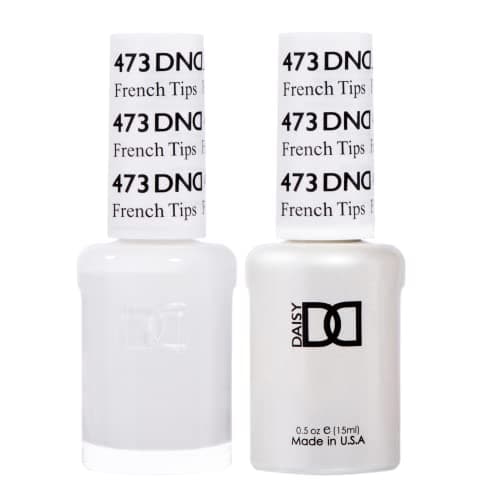
Shop on AmazonDND's 'French Tips' white with a blue undertone, sold as a gel and a matching air-dry lacquer — one shade for the lamp and the no-lamp days.
Shop on AmazonA translucent milky top coat that softens a cured French into the blurred, glazed look — one thin layer for a haze, two for a visible milky tint.
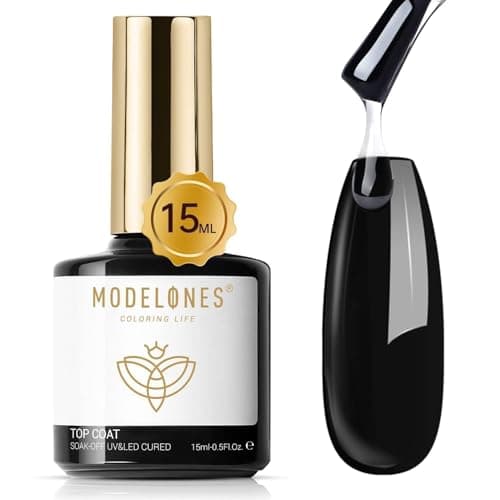
Shop on AmazonThe high-gloss seal — and the mandatory layer under any chrome powder.
Shop on AmazonProduct prices and availability are accurate as of October 25, 2026 and are subject to change. Any price and availability information displayed on Amazon at the time of purchase will apply. As an Amazon Associate we earn from qualifying purchases. Star ratings reflect Amazon customer reviews at the time of our last check.
Pigment load is the actual variable, and it is not something you can read off a label. What you can read is buyer feedback, and the language is consistent: people who are happy with a white for tip work describe it as covering "in one" and being "thick." People who are unhappy describe two or three coats.
Makartt markets specifically on pigment density and buyer feedback backs it up. Beetles' white carries one of the lowest Amazon sales ranks of any single-bottle white — the live rank is on its card above — and that scale of adoption is itself informative, because tip work is the main reason people buy a standalone white. APRÉS' Super White is the salon-line answer to the same question, marketed on staying cool-white after curing rather than drifting yellow.
The trade-off with heavy pigment is viscosity. Thick gel drags. Warming the bottle between your palms for a minute genuinely helps.
Some gels contract very slightly as they cure. On a full nail you never notice. On a French tip, contraction pulls the white edge back from the free edge and leaves a hairline of base colour showing right at the tip — which reads as sloppy application even though your line was perfect.
Two defences: cap the free edge deliberately by running the brush over the very end of the nail, and cure in two shorter bursts rather than one long one if your lamp allows it.
A growing number of whites now ship with a long thin liner brush in the cap rather than a standard polish brush. GAOY and modelones both do this.
This is more useful than it sounds. It removes the workflow of decanting polish onto a palette and picking it up with a separate brush, and it guarantees the brush suits the polish's viscosity. If you only ever intend to do French tips — not general nail art — a liner-in-cap white may be the only tool you need.
The limitation is reservoir size. A thin brush carries less product, so on long nails you may need two passes per side rather than one.
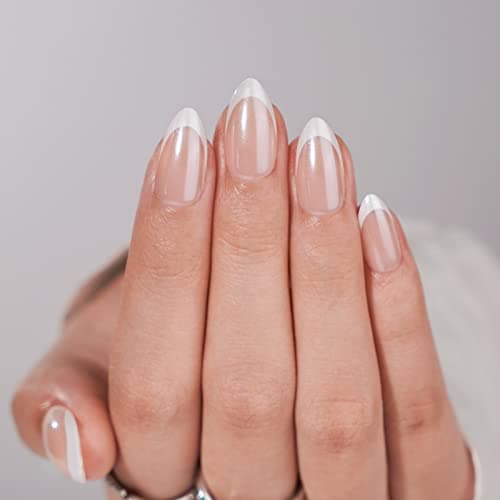
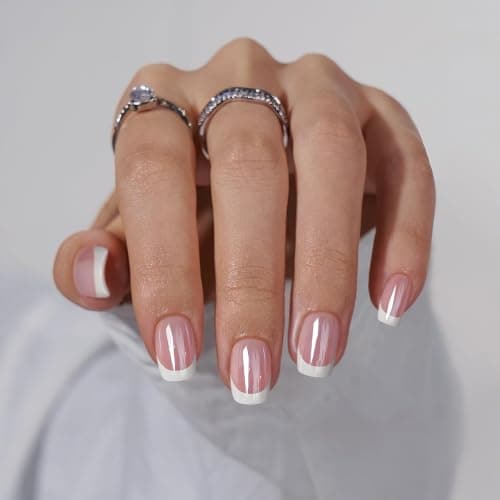
The classic French is a sheer pink base under an opaque white tip, and the contrast between them is what makes the look read correctly. Too sheer a base and the white looks stark; too opaque and you lose the natural-nail illusion entirely.
Buying a matched set removes this guesswork. The modelones two-bottle set pairs a sheer pink with the white, already balanced. The cost is flexibility — you are committed to their pink, which is limiting if you later want nude-on-nude tips rather than classic contrast.
The nineteen bottles above are really two products, and buying the wrong one is the single most common mistake in the category.
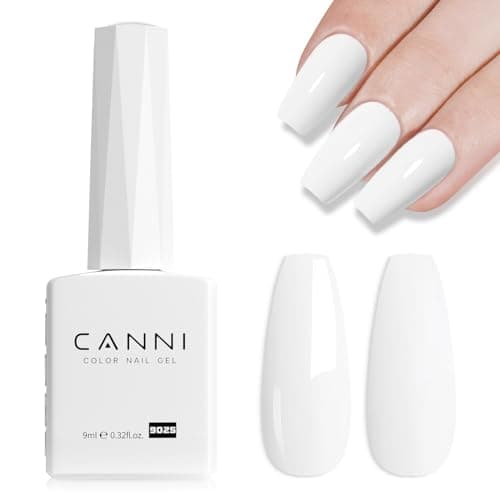
A full-size white — Beetles, Makartt, CANNI, GAOY 1002, modelones, Artdone, APRÉS, DND — comes in a 9–16 ml bottle with a standard polish brush. It is built for coverage: a deep classic tip, a full white nail, the base of a white French. On a tip under about 2 mm it is too much brush and too much product, and the line comes out thick.
A liner white — GAOY's swirl liner, modelones' French tip liner, beetles' swirl liner, Beetles' 7 ml liner, SAVILAND's, the GAOY and Double Rhythm duos — comes in a 7–12 ml bottle with a long thin brush in the cap. It is built for the line: a micro French, a double line, a wave. It is thinner by design, so a bold deep tip needs a second cured pass.
If you only buy one, the honest rule is: tip thicker than 2 mm, full-size; thinner, liner. If you do both, one of each — and the pair costs less than a single salon French.
Two bottles in the grid are not whites at all. Beetles' milky white top coat and the 2-in-1 milky finish sit over a cured French to soften it into the hazy, glazed look — one thin layer for a soft-focus effect, two for a visible milky tint. Pair either with a milky base from the nude and pink bases category and a liner white and you have the blurred French where the tip is a brighter haze over a softer one, rather than a hard edge. It is the look that most often gets described as "expensive" in salon photos, and it is three bottles.
A 15ml bottle of white used only for tips lasts a remarkably long time — you are covering perhaps a fifth of each nail, ten nails at a time. Realistically that is well over a hundred manicures.
This matters for two reasons. First, buying a large bottle of a mediocre white is a long commitment; it is better to buy one good bottle than two cheap ones. Second, gel does not last forever in the bottle. Pigment settles, and after a year or so a white can start to separate and apply unevenly no matter how well you shake it. If you only do French tips occasionally, the bottle will likely expire before it empties, which argues for a smaller size if one is available.
Store it away from light. A gel left on a sunny windowsill can partially cure in the bottle, and there is no recovering from that.
Three whites in the grid — CANNI, Artdone and, on the base side, Makartt — are labelled HEMA-free. HEMA is the monomer most often behind gel-polish skin reactions, and a white is the bottle most likely to touch skin, because it is the one drawn along the edge of the nail. If you have ever had redness or itching around the cuticle after a gel manicure, a HEMA-free white is the first swap to make; if you have not, the standard formulas cover slightly better per coat and cost less, and there is no reason to change. Either way, the fix for a white on the skin is a clean-up brush and cleanser before curing, not after — see the brush category for the carve-back tool.
There is a quick check that saves a ruined manicure.
Paint a single stripe of the white across a piece of white paper with a black line drawn under it. If the black line shows through the stripe, that polish will not cover in one coat on your nail either. It is a crude test but it correlates well, and it takes ten seconds.
If it fails, you have two options: accept a two-coat approach with a deliberately shallower first line, so the second coat has room to land inside the first without spilling over the edge; or use the white as a general colour and buy a dedicated high-pigment one for tips.
The two-coat-with-a-shallow-first-line trick is worth knowing regardless. It is how you get an acceptable tip out of a polish that was never designed for it — you are effectively drawing the line twice, and the second pass defines the final edge while the first provides the opacity behind it.
For the sharpest line and the safest default, Beetles' white — the adoption numbers are not an accident. For genuine one-coat coverage, Makartt. If you want the polish and the correct brush in one purchase, GAOY's liner. If you are starting from nothing, the modelones base-and-white pair.
Pair whichever you choose with the right applicator — see the best French tip nail brush — or sidestep freehand entirely with guides and stamps. For chrome over the top, chrome powder for French tips.
The application walkthrough is in how to do French tips at home. To see the finished look across styles, browse white French tip nails and, for a softer version, nude French tips. If you are deciding between doing this yourself and booking in, what French tips cost has the numbers.
If you want the regulator's version of the ingredient questions — HEMA, acrylates, what a label must say — the FDA's nail care products page is where to read it. Every product link on this page is an Amazon affiliate link, disclosed under the FTC's endorsement guides; the commission never changes what is listed or how it is described.
Back to the shop or the french tip nails homepage.