GAOY
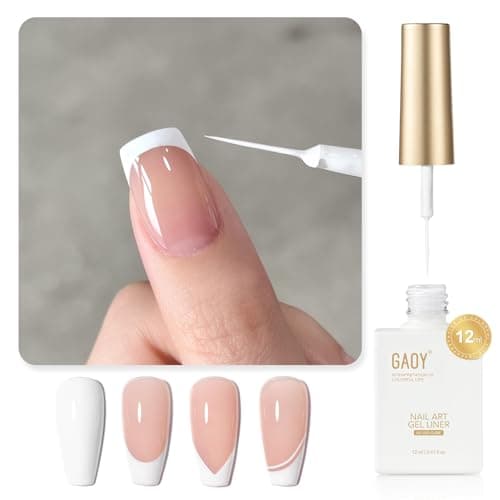
GAOY White Swirl Gel Liner, 12ml
$6.994.5 (2,060)
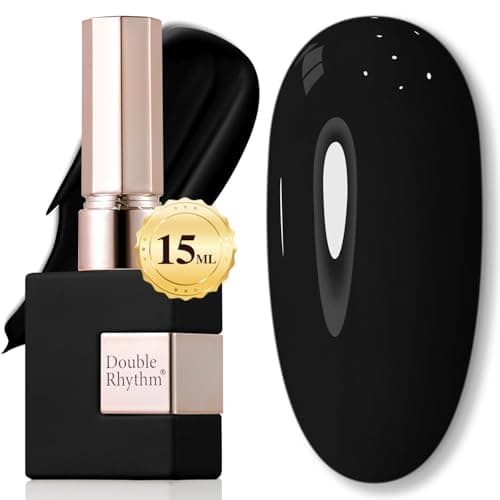
The micro-line whiteWhite with a long thin liner brush built into the cap — polish and applicator matched for micro lines out of the box.
Shop on AmazonHow to do french tips on short nails: the micro-tip method, the curve depth that flatters a short bed, and three mistakes that shorten them.
How you do French tips on short nails comes down to one measurement: the tip should cover no more than about 15% of the visible nail, which on a short bed usually means a band of one to two millimetres. Go thicker and you shorten the nail visually — the white band reads as the end of the nail, so the eye stops where the colour starts.
That single ratio is most of the technique. Everything below is either how to hit it or how to stop it going wrong.
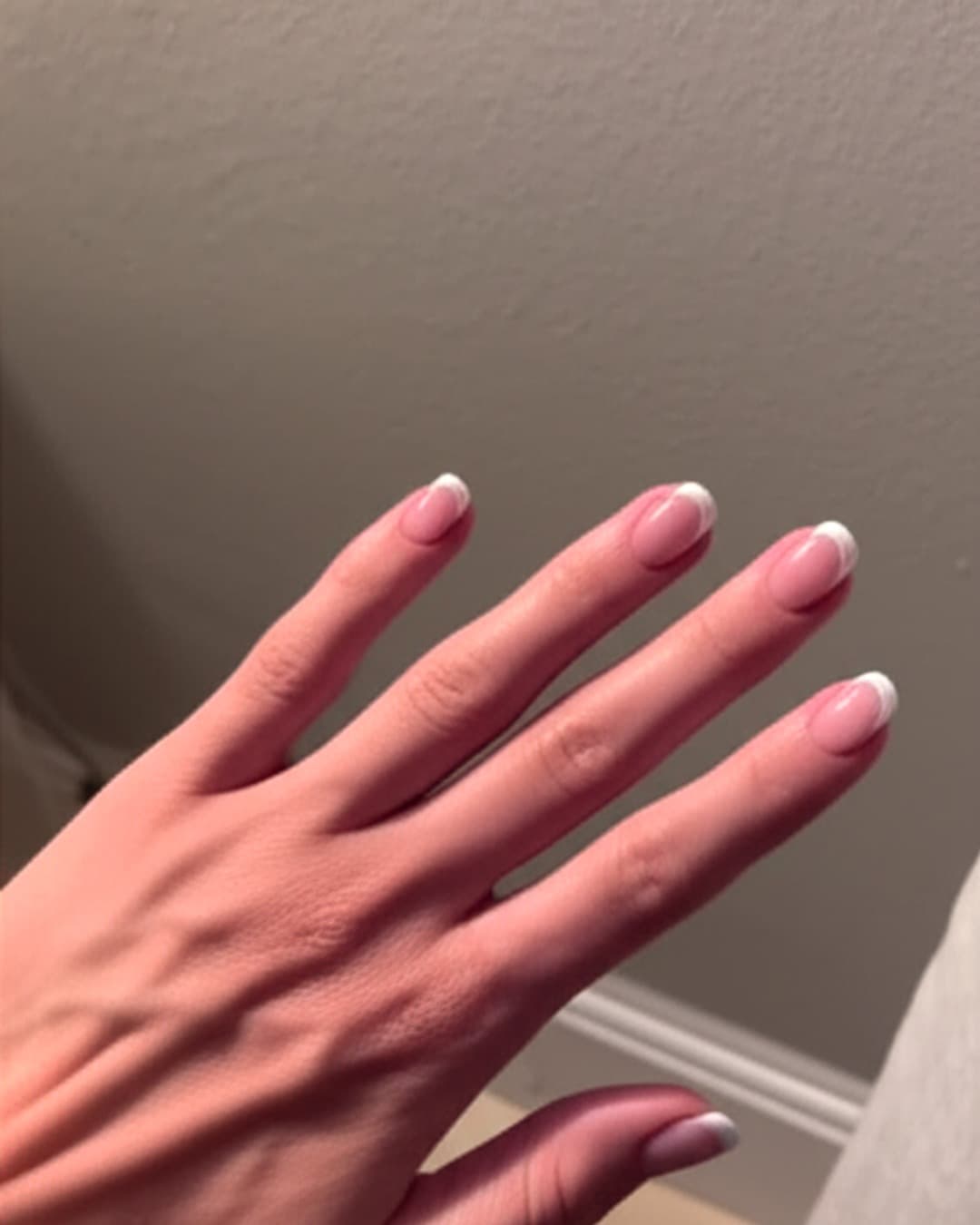
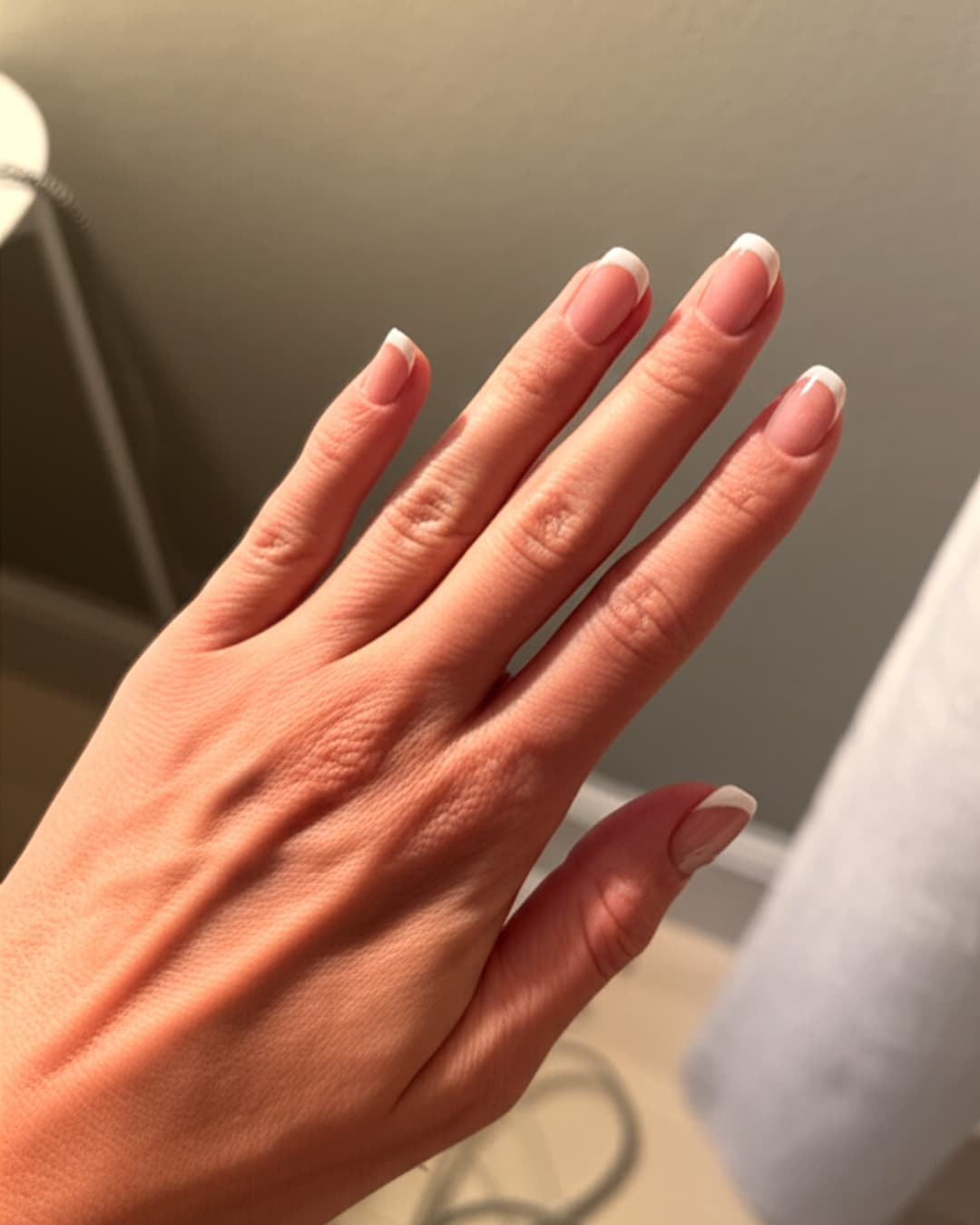
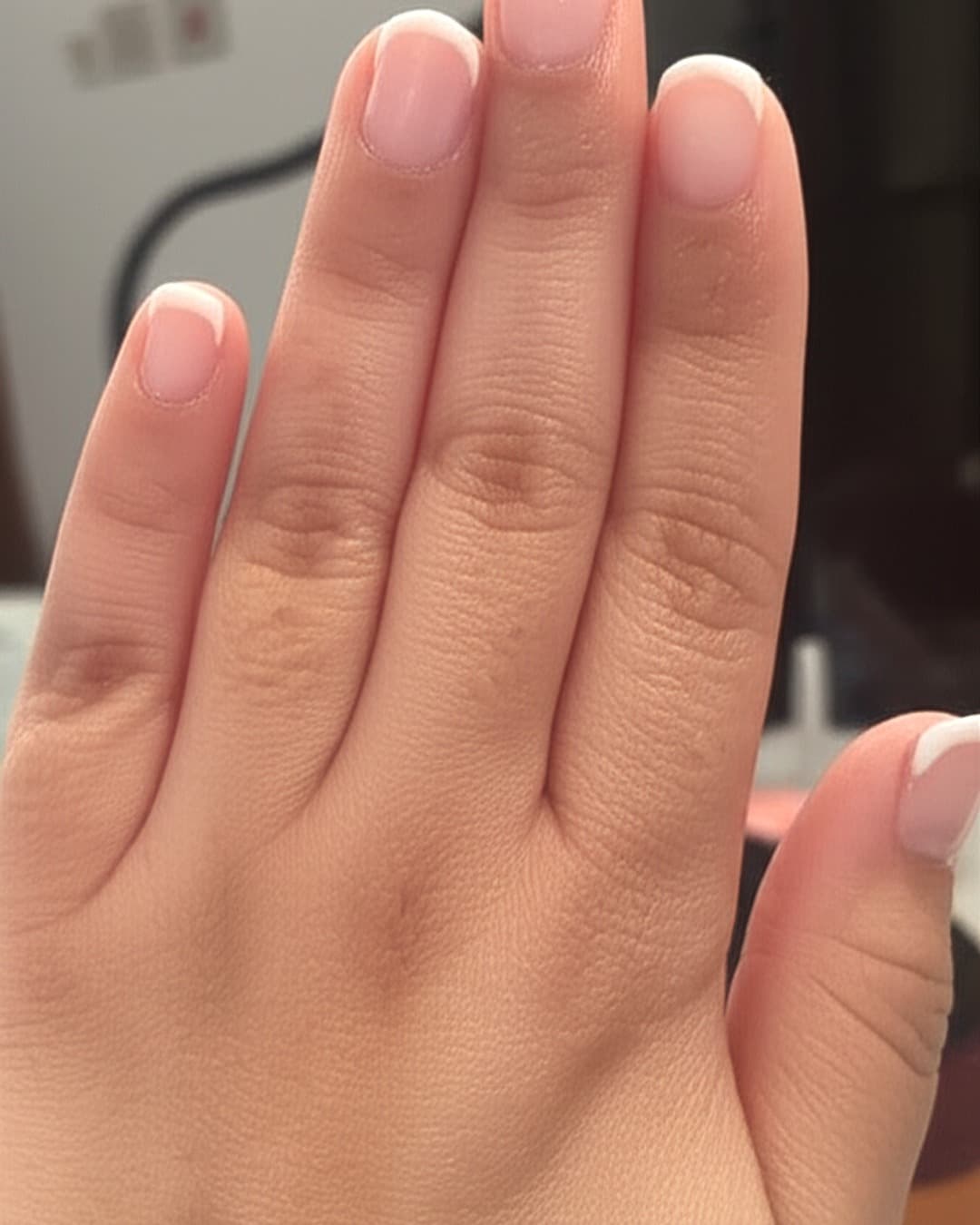
“So the gel polish doesn't transfer onto the pillowy part of your fingertip — you don't want to accidentally cure it onto your skin.”
Sukie's take: Short nails put the smile line right next to the fingertip, and her point about keeping gel off the skin is the short-nail-specific hazard written guides skip. Her band width is also exactly the thin proportion this page argues for.
White with a long thin liner brush built into the cap — polish and applicator matched for micro lines out of the box.
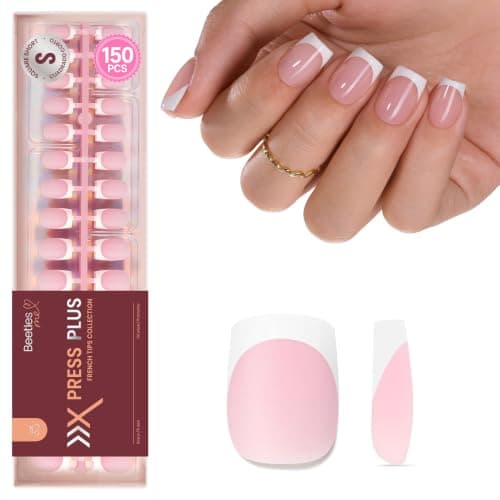
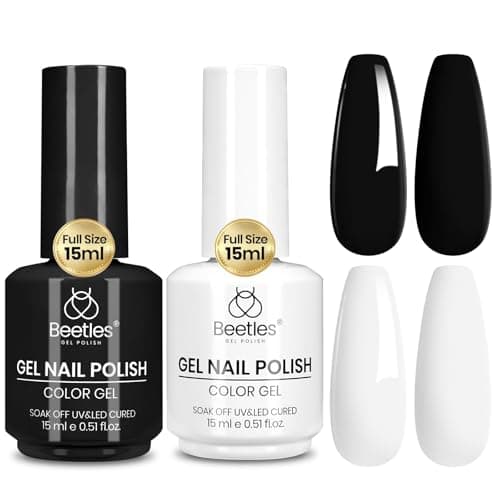
Shop on AmazonFive full applications under nine dollars — press-ons as a habit, not an occasion.
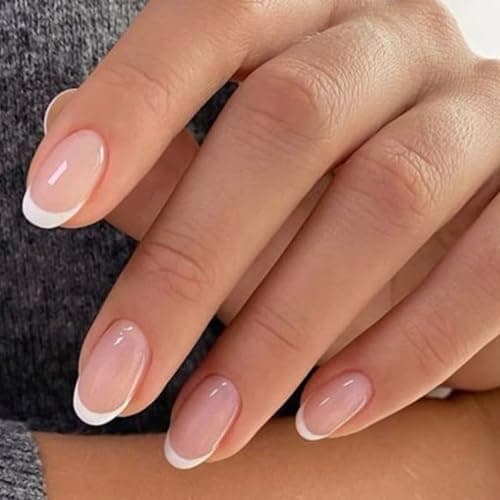
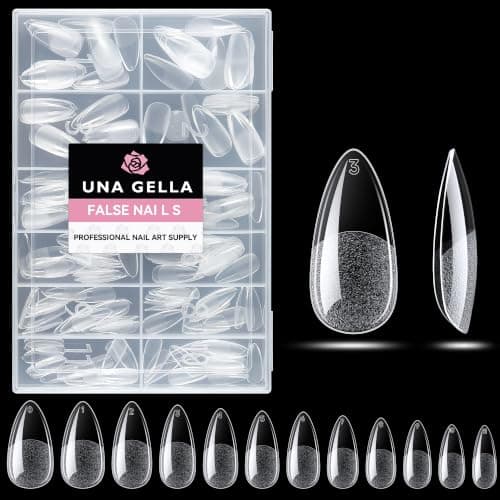
Shop on AmazonThe most natural-looking set — reads as a good manicure, not as press-ons.
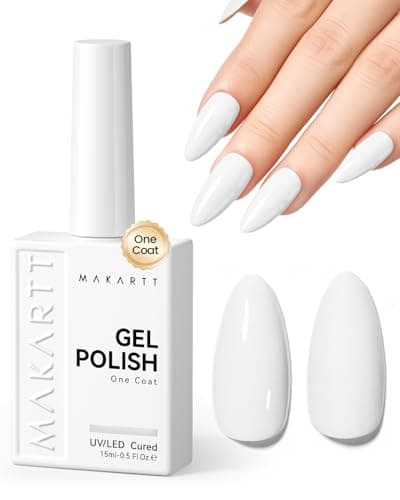
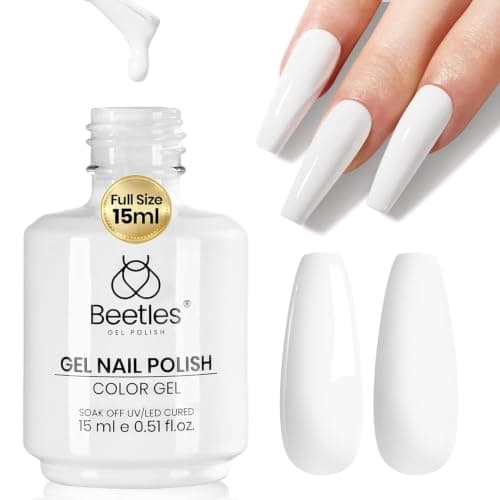
Shop on AmazonMarketed on pigment load and buyers confirm genuine one-coat coverage — the property that keeps a smile line crisp.
Shop on AmazonProduct prices and availability are accurate as of October 17, 2026 and are subject to change. Any price and availability information displayed on Amazon at the time of purchase will apply. As an Amazon Associate we earn from qualifying purchases. Star ratings reflect Amazon customer reviews at the time of our last check.
It helps to understand the illusion you are working with.
A French manicure works because the eye reads the pink or nude section as "nail" and the white section as "edge". On a long nail there is plenty of pink, so a generous white tip still leaves a long nail bed on show. On a short nail the pink section is already small — and every millimetre of white you add takes one directly off the part that reads as length.
A 3mm tip on a 12mm nail costs you a quarter of your visible bed. The same 3mm tip on a 20mm nail costs you a seventh. Same tip, completely different effect.
Depth is the other half of it, and it works in the opposite direction from what people expect.
A deep, dramatic smile line — the kind that curves high up the sides — needs nail length to sit in. On a short bed the two side points travel almost to the cuticle and the nail looks swallowed.
A shallow, almost-straight curve with a slight lift at each side wall is what flatters short nails. It suggests the shape without consuming the bed.
If you find yourself unable to fit the curve you want, that is not a technique failure. It is the nail telling you the curve is too deep for the length available.
Not all of them do, and the difference is significant on short nails.
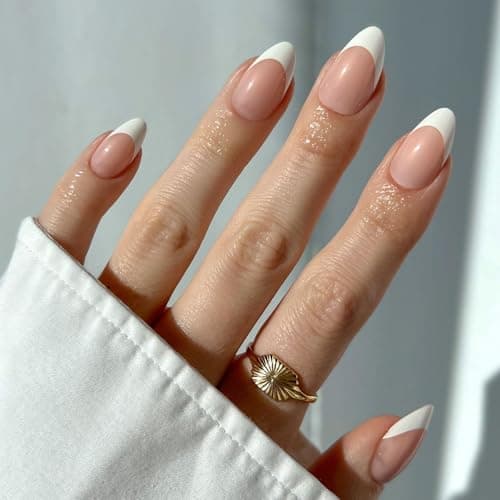
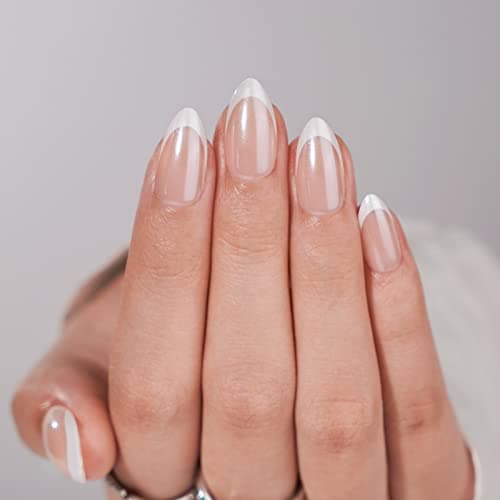
Almond and oval are the two that genuinely lengthen. The taper draws the eye down the finger, and a shallow tip on a tapered nail reads as considerably longer than the same tip on a squared one.
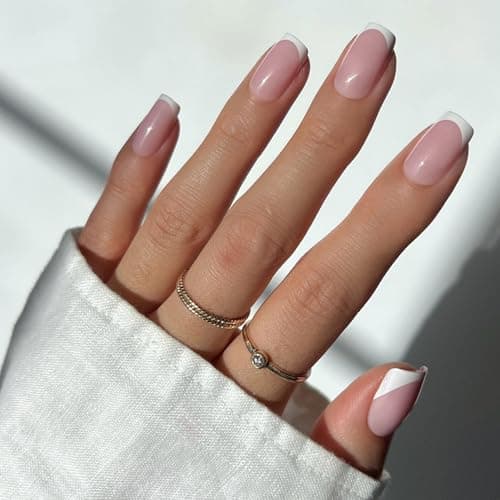
Squoval is the practical compromise — most of square's neatness with the corners softened, which stops the nail looking stubby.
Square is the hardest to make work short. The flat edge plus a horizontal white band creates two strong parallel lines, and parallel lines emphasise width. If you love square, compensate with the thinnest tip you can draw.
Coffin and stiletto need length that a short nail does not have. On a short bed the taper has nowhere to go and the shape reads as an accident.
Using pure white. Stark white maximises contrast, and maximum contrast maximises the visual break between bed and tip. A soft off-white, cream or pale nude gives you the French shape with a gentler edge — which is exactly why nude French tips are so flattering on short nails.
Painting the tip after the nail is already fully coated in opaque colour. You lose sight of where the natural smile line sits. Work sheer, so you can still see the nail underneath.
Trying to freehand a curve you cannot yet draw. If your line wobbles, the fix is not practice-on-your-own-nails. It is either a clean-up brush — paint the tip roughly, then carve the curve back with acetone — or a stamper, which presses the shape on in one motion.
Adhesive guides are the standard beginner recommendation and they are the worst-suited tool for short nails specifically. Most guide curves are cut for medium-to-long beds, so on a short nail the sticker either does not sit flat or masks off far too much of the plate.
If your guides keep producing tips that are too thick, the guides are wrong for your nails — not your technique. Stamping or the clean-up method both give you control over depth that a pre-cut sticker cannot.
The micro-French — a line barely a millimetre thick, sometimes just a hairline — is the version currently most in fashion and, conveniently, the most flattering on short nails.
It needs two things: a genuinely opaque polish that covers in one pass, and a narrow applicator. A polish that needs two coats will flood a hairline on the second pass, because the second coat cannot land inside a line that thin. Our white gel polish picks are ranked on exactly that property.
Beyond classic white, the ones that consistently flatter:
What to be careful with: wide bands of bright, high-contrast colour. The wider and brighter the band, the more it truncates the nail.
Short nails take more knocks per day than long ones, simply because the fingertip meets things first. Capping the free edge is not optional. Cuticle oil daily keeps the plate flexible and reduces the chipping that starts at the edges. And when the tip does start to wear, a fresh top coat over just the tip buys another few days.
A reasonable question: should you just wait until your nails are longer?
Usually not. Nails grow about 3mm a month, so meaningful extra length is a two-to-three month project, and in the meantime the shape of your nail bed — which is what actually determines whether a French flatters you — does not change at all.
The better move is to file to a flattering shape now, wear a thin tip, and let length happen in the background. If you specifically want length sooner, press-on French tips come in short and medium sizes, and gel extensions are the salon route.
What genuinely does help while growing them out: cuticle oil daily, keeping the free edge sealed with top coat, and filing in one direction rather than sawing back and forth. Short nails break at the side walls, and sawing is what weakens them.
Beyond thinning the tip, two adjustments to the base do a surprising amount of work.
Leave a hairline of bare nail at each side wall. Not painting quite to the edge makes the painted area narrower, and a narrower nail reads as longer. It is the same trick as filing the side walls inward, without removing any nail.
Use a base that is close to your skin tone. The less contrast between finger and nail bed, the more they read as one continuous line. A sheer pink on fair skin or a warm beige on deeper skin both do this; a stark milky white on deeper skin tones creates a break that shortens the finger visually.
Because a short-nail French is a thin line over a sheer base, it is the fastest French there is once the prep habit exists. The version that fits into a weeknight:
Ten minutes is the practised pace; the first attempt takes twice that, and the difference is entirely the tip step.
| Shape | Lengthens? | Tip depth that works | Curve |
|---|---|---|---|
| Almond | Most | 1–2 mm | Shallow to medium |
| Oval | Yes | 1–2 mm | Shallow |
| Squoval | Slightly | 1–2 mm | Very shallow |
| Round | Neutral | 1 mm | Barely any |
| Square | Widens | 1 mm at most | Straight |
The almond row is why so many "short French" photos are almond: the taper adds the length the tip takes away.
Before painting all ten, paint one nail — the index finger of your non-dominant hand — and look at it in a mirror at arm's length rather than up close. Close up, every tip looks thin; at arm's length, which is how everyone else sees your hands, a 2 mm tip on a short nail can already look heavy. If the nail in the mirror looks shorter than the bare one next to it, the tip is too deep. This one check saves more short-nail Frenches than any technique tip.
For the nail underneath any of this, the American Academy of Dermatology's nail care basics are the sensible baseline — most damage attributed to a manicure is removal damage.
For the full application walkthrough on any nail length, see how to do French tips at home. To choose a shape deliberately, French tip nail shapes covers what each one does. If you would rather skip application entirely, press-on French tips come in short sizes designed for exactly this.
For inspiration, short French tip nails and simple French tips are the two most relevant galleries, and everything links back from the french tip nails homepage.
What French tip shoppers are buying this week, across every category.
Want to see this on real nails?
Every style page shows the finish close up, a creator video, and the products used to get it.
New Year French Tip Nails: The One Night Glitter Is Correct
New year french tip nails for the night and the weeks after — where metallic and glitter genuinely belong, and what you'll regret on January 2nd.
Christmas French Tip Nails Without the Costume
Christmas french tip nails that read festive rather than novelty — the colours and finishes that work in low winter light, and when to book.
Black Friday Nail Deals: What Is Actually Worth Buying
Black friday nail deals, filtered — which nail products genuinely discount, which never do, and how to build a French tip kit without buying filler.
French Tips for Kids: Safe, Simple and Actually Doable
French tips for kids on short little nails — which products are safe at which ages, the peel-off polishes, and a method for nails that won't sit still.
Thanksgiving French Tip Nails: Warm, Simple and Photograph-Ready
Thanksgiving french tip nails in the warm neutrals that suit the table and the photos — why to book earlier than you think, and what survives cooking.
How Long Do French Tip Nails Last? Every System, Honestly
How long do french tip nails last — polish, gel, acrylic, extensions and press-ons compared, and why a French grows out better than solid colour.