beetles Gel Polish
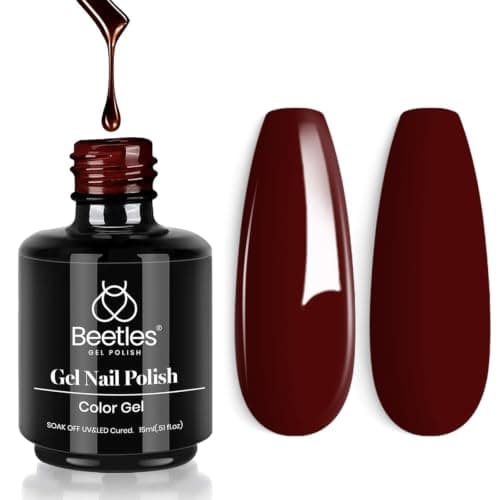
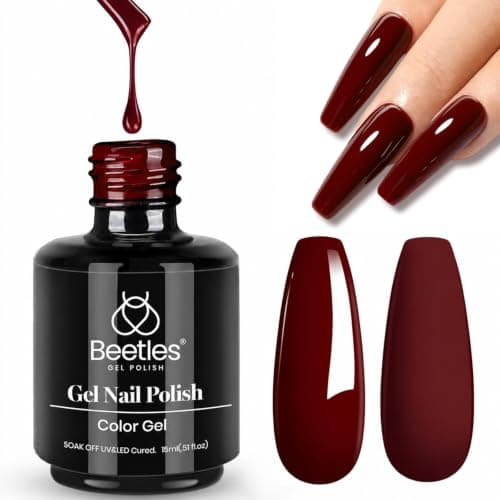
Beetles Oxblood Dark Burgundy
$6.99
The oxbloodThe autumn tip in one bottle — deep, one-coat, reads rich in low light.
Shop on AmazonFrench tip nails category
burgundy french tip nails
Burgundy french tip nails are autumn's defining manicure — oxblood vs wine vs merlot, the widths that keep deep red elegant, and the staining trap.
Burgundy french tip nails are what most people mean when they imagine an autumn French manicure — the deep wine-red line that reads rich in exactly the low, warm light that makes brighter colours look tired. It is the tip colour with the highest elegance-to-effort ratio of the cold season: one well-pigmented bottle, one thin line, and the manicure looks like it cost more than it did.
It also carries the single worst staining risk in the polish universe, which is worth knowing before the bottle is open rather than after.
“I'm actually twisting the nail as I'm drawing the curved smile line.”
Sukie's take: The twist she describes is a genuinely useful trick for dark colours: rotating the nail under a stationary brush gives a steadier curve than moving the brush — and burgundy is unforgiving enough to make the difference visible.
The autumn tip in one bottle — deep, one-coat, reads rich in low light.
Shop on AmazonThe warmer, brighter burgundy — September's shade where oxblood feels premature.
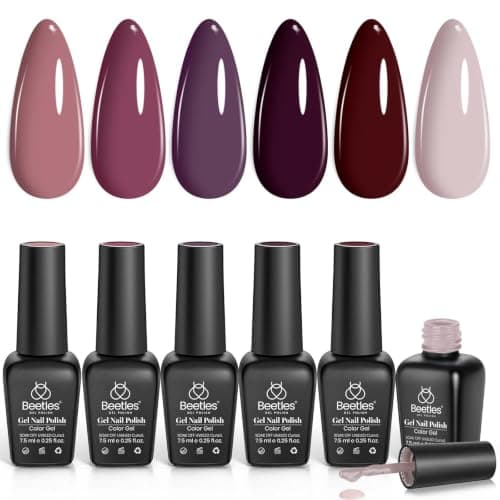
Shop on AmazonFour autumn-to-purple tones for the price of two singles — the mauve doubles as a quiet everyday tip.
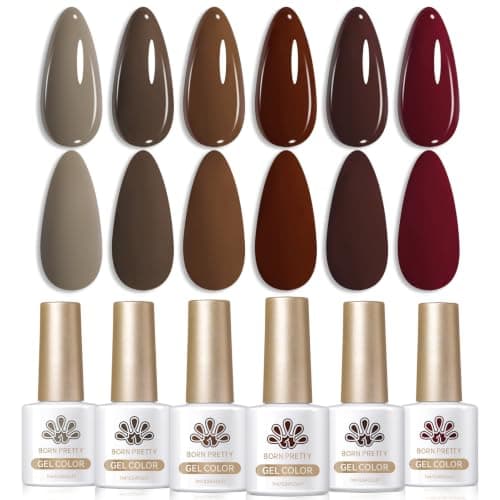
Shop on AmazonThe only budget set spanning caramel brown through wine — the Thanksgiving palette in one box.
Shop on AmazonProduct prices and availability are accurate as of October 28, 2026 and are subject to change. Any price and availability information displayed on Amazon at the time of purchase will apply. As an Amazon Associate we earn from qualifying purchases. Star ratings reflect Amazon customer reviews at the time of our last check.
The family runs deeper than the name suggests, and on a tip line the choice matters more than it would on a full nail.
Merlot and wine are the bright end — red first, depth second. The festive versions: these are the shades that read as holiday from late November onward, and they carry the classic red French tip energy with more sophistication.
True burgundy is the balance point and the shade to default to: unambiguously deep, still clearly red, correct from September through February.
Oxblood has brown in it and reads nearly black indoors. It is the moody end — the shade the Halloween page recommends as the wearable-after alternative to black, and the one that pairs best with the season's browns.
Plum-leaning burgundies cross into purple territory; if the bottle looks purple in the shade, the purple French tips page's rules apply.
| Shade | Reads as | Base | Width | Season |
|---|---|---|---|---|
| Merlot, wine | Red first, depth second; festive | Sheer pink | Thin to standard | Late November onward |
| True burgundy | The balance point; the default | Warm nude | Micro to standard | September–February |
| Oxblood | Nearly black indoors; moody | Warm nude or beige | Micro | October–January |
| Plum-leaning | Crosses into purple | Sheer pink | Micro | Autumn |
| Matte burgundy | Suede; the formal-dinner version | Warm nude | Standard | Winter |
The grid above holds the painted route — Beetles' oxblood and merlot gels sit at the two ends of the table, and the Born Pretty fall set covers the middle — and every one of them wants the base coat the staining section below insists on.
Three properties converge, and it is worth naming them because they explain when to choose burgundy over its rivals.
It is self-covering. Burgundy pigment is dense — one pass covers, which is everything on a tip line. No underlayers, no flooding risk, no streaks. Among deep colours only black covers as reliably, and black is harsher.
It flatters low light. October-through-January light is warm and flat; burgundy is designed for it, going velvety where brights go dull. This is the fall palette logic in one colour.
It flatters every skin tone. Deep reds read rich on deep skin, warm on olive skin, and striking on fair skin — burgundy has no failure mode the way pale colours do. Undertone only picks the shade: cooler skin toward wine, warmer skin toward oxblood.
Deep red pigment migrates, and burgundy left in contact with a bare nail plate will tint it — a faint orange-pink ghost that lasts weeks and grows out rather than washing off.
Three rules prevent it entirely. Base coat, always — this is the colour family where skipping it visibly costs. Cleanup before curing — burgundy on the cuticle is obvious and cured burgundy must be filed off. Still-pad removal — soak the cotton, hold it on the nail until the polish breaks down, lift it away in one motion. Rubbing a half-dissolved burgundy across the nail is how the stain happens.
If a stain is already there: it grows out. Buffing it away removes plate you want to keep — leave it.
Over warm nude — the definitive pairing. The nude reads as skin, the burgundy line reads as a deliberate object on it. Autumn's default for a reason.
Over sheer pink — the classic French structure, higher contrast, slightly more formal.
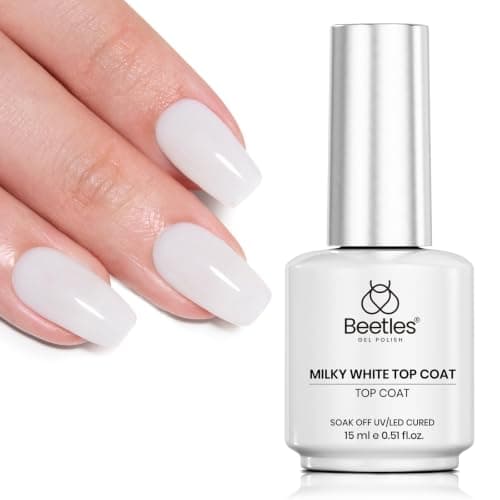
Over milky white — graphic and modern; the burgundy reads darker against the bright base.
Width does the register-setting: a micro burgundy line passes at any office and most weddings; a standard band is an evening and weekend look; anything wider than three millimetres wants a long nail and a confident owner. The width logic is the micro French argument, and burgundy is one of its best test cases.
Shape: almond first — the taper carries dark colour better than any silhouette, as the almond page explains. Coffin takes a wider burgundy band well. On short nails, hairline only; dark bands truncate small plates fastest.
Burgundy is the base layer of the cold season's best combinations, most already covered elsewhere on this site:
Burgundy with a gold hairline — the definitive festive French; the gold page has the technique and the Christmas page has the occasion.
Matte burgundy — a suede finish that is one of the two or three best things a matte top coat does anywhere.
Burgundy with pearl chrome glazed over it — depth plus luminosity for low light; sequence on the chrome page.
One at a time, as ever. Burgundy plus gold plus matte is three manicures fighting in a small space.
Home is where burgundy shines: one-coat coverage removes the hard part, and the high contrast makes the line easy to see while drawing. The standard two-stroke method applies unchanged; the only burgundy-specific additions are the base coat and the pre-cure cleanup. For a first coloured French done at home, this is the colour to learn on.
At a salon, name the depth — merlot, burgundy, oxblood — and bring a photo; "dark red" spans the whole family. It prices as a standard colour choice within normal French tip rates.
Burgundy is arguably the best pedicure colour there is, and the tip version inherits that: a thin oxblood line on a square big toenail, sheer base elsewhere, wears elegantly for the full six weeks a gel pedicure lasts. Deep shades suit toe scale better than brights, the slow grow-out flatters a dark line, and closed-shoe season means the manicure outlives the weather that shows it. The staining rule doubles on toes — a tinted toenail plate grows out over months, so the base coat is even less optional than on hands.
And if you are choosing between burgundy and its neighbours for the season: burgundy when you want the line noticed, espresso when you do not, and the gold-outlined version when the calendar says December. Those three cover the entire cold season without a fourth bottle.
Wear notes: burgundy shows chips clearly against the bare plate, so capping the free edge matters, and its density means slightly longer removal soaks than pale colours — patience over scraping, as ever. A top-coat refresh at the one-week mark keeps the depth glossy through the second and third week.
Burgundy tips behave like oxblood accessories: at their best against camel, cream, grey, denim and black — effectively everything an autumn wardrobe contains — and only ever at odds with head-to-toe warm reds, where the near-match reads as a missed match. Against black specifically, a burgundy micro-tip does something black tips cannot: it reads as depth rather than absence, which is why it is the better dark-manicure choice for anyone whose wardrobe already runs dark.
The event map is most of why burgundy earns a permanent bottle. Holiday parties: with the gold hairline, the definitive answer. Autumn weddings as a guest: a burgundy micro-tip photographs as rich against every autumn palette. Formal dinners: matte oxblood, the manicure equivalent of velvet. Office, year-round from September: the thin line at hairline width.
Where it misses: high summer, where the depth reads out of season, and any event with a strict light-and-bright dress code. For those months the same instinct is served by red's brighter end or by stepping down to caramel.
The one-line version of this whole page: burgundy over warm nude, drawn thin, base-coated underneath — autumn solved in a single line.
Before committing ten nails, paint one and look at it in the room you spend most of your evenings in. Burgundy is the shade that shifts most between daylight and warm indoor light — a wine that reads bright at the window can read oxblood under a lamp — and the nail you check at 8 p.m. is the one everyone else will see.
For the nail underneath any of this, the American Academy of Dermatology's nail care basics are the sensible baseline — most damage attributed to a manicure is removal damage.
Red French tips for the brighter family. Brown French tips for oxblood's nearest neighbour. Winter French tips for the palette burgundy anchors, and the french tip nails homepage for the full library.
What French tip shoppers are buying this week, across every category.
What is the difference between burgundy, oxblood and wine nails?
Depth and undertone. Wine and merlot are the brighter, redder end; burgundy sits in the middle; oxblood is the darkest, with brown in it, reading nearly black in low light. On a tip line the differences compress — at a thin width, wine reads festive while oxblood reads gothic-adjacent.
Do burgundy french tips stain your nails?
Deep reds are the worst-staining polish family there is, and burgundy is squarely in it. A base coat is mandatory, and at removal hold the acetone pad still until the polish dissolves rather than rubbing — rubbing is what drags pigment across the plate.
Are burgundy french tips okay for the office?
At micro width, almost anywhere — a thin burgundy line reads like a considered accessory, the manicure equivalent of oxblood loafers. A wide burgundy band is an evening look. Width, not colour, is the professional lever.
What base goes under burgundy tips?
A warm nude or beige base is the autumn default and the most sophisticated pairing. Sheer pink gives a more classic French structure with higher contrast. A milky white base turns burgundy graphic and modern — the boldest of the three.
What nail shape suits burgundy tips?
Almond, decisively. The taper keeps a dark band from reading heavy, and a burgundy micro-tip on a medium almond is arguably the single most expensive-looking coloured French. On short nails keep burgundy to a hairline — dark colours truncate small plates fastest.
Can I wear burgundy french tips in spring or summer?
Nothing stops you, but burgundy is strongly autumn-coded and reads slightly out of season against summer clothes and light. The seasonless deep alternative is espresso brown; the summer-tolerant red is a brighter cherry.
Almond French Tip Nails
almond french tip nails
Black French Tip Nails
black french tip nails
Blue French Tip Nails
blue french tip nails
Blue Square French Tip Nails
blue square french tip nails
Brown French Tip Nails
brown french tip nails
Chrome Coffin French Tip Nails
chrome coffin french tip nails
Chrome French Tip Nails
chrome french tip nails
Coffin French Tip Nails
coffin french tip nails