GAOY
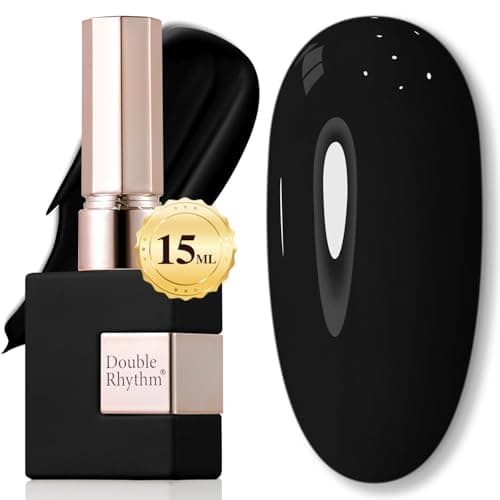
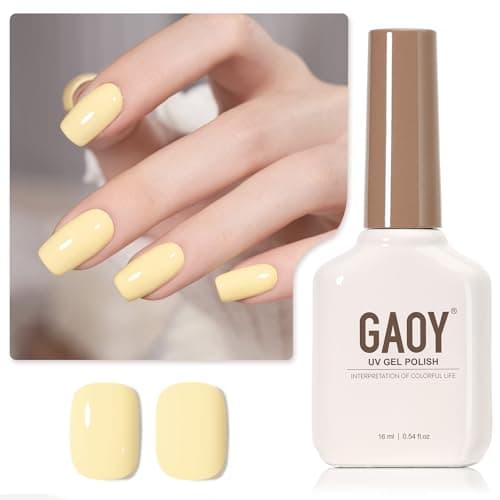
GAOY Pastel Yellow Gel
$6.994.4 (14,246)
The butter yellowThe softer pastel butter — GAOY's self-levelling helps yellow's streak problem.
Shop on AmazonFrench tip nails category
pastel french tip nails
Pastel french tip nails need a white underlayer or they vanish — which pastels work as tips, and the opacity fix that makes soft colour read.
Pastel french tip nails are the spring French — and the one whose polish is most likely to let you down, because pastel pigment is thin by design. They are a soft, wearable way to add colour without committing to full-colour nails. The French structure keeps the manicure clean, while pastels bring a light, playful vibe that’s especially popular in spring and summer. Pastels also look great as micro tips on short nails.
Sukie's take: A full pastel set on long almond nails, worked in real time. Note how much more visible the pastel tips are on the tapered shape than they would be on square — the almond-carries-pastel point from this page, demonstrated.
The softer pastel butter — GAOY's self-levelling helps yellow's streak problem.
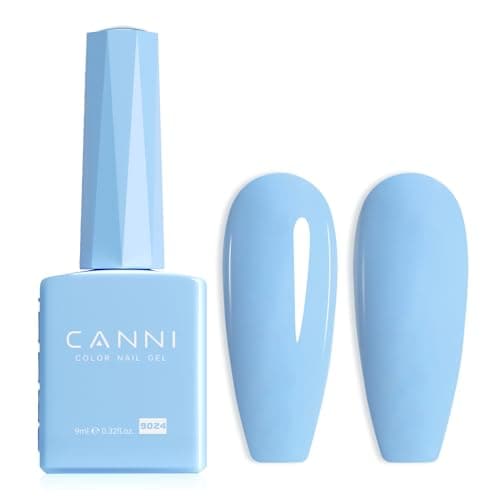
Shop on AmazonThe pale-blue single for spring tips — over a white underlayer it reads true in one pass.
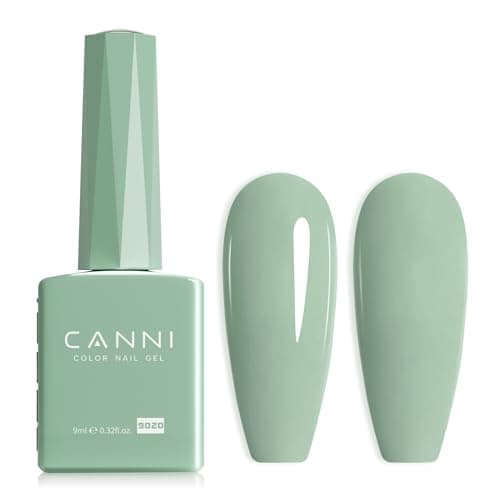
Shop on AmazonThe sage single — the most wearable green, muted enough to behave like a neutral.
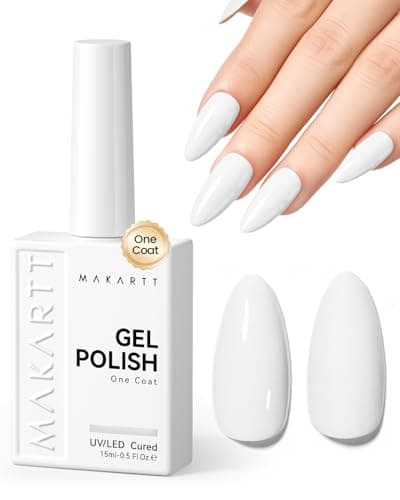
Shop on AmazonMarketed on pigment load and buyers confirm genuine one-coat coverage — the property that keeps a smile line crisp.
Shop on AmazonProduct prices and availability are accurate as of October 17, 2026 and are subject to change. Any price and availability information displayed on Amazon at the time of purchase will apply. As an Amazon Associate we earn from qualifying purchases. Star ratings reflect Amazon customer reviews at the time of our last check.
Try:
Not all pastels behave the same way on a nail edge, and the difference is pigment density rather than hue.
| Pastel | Reads as | Base | Needs a white underlayer? |
|---|---|---|---|
| Butter yellow | The most-worn pastel tip; warm, flatters most skin | Sheer pink or milky | Usually |
| Baby blue | Crispest contrast; the pastel closest to a classic French — see blue French tips | Sheer pink or milky white | Yes |
| Lilac, lavender | Cool, photogenic; greys under warm light | Milky white | Yes |
| Mint, sage | Fussy; clinical over pink, right over neutral — see green French tips | Milky or neutral | Yes |
| Peach, pale coral | Warmest; the most forgiving on deeper skin | Warm nude | Sometimes |
| Baby pink | The softest, and the only pastel that can go over a pink base | Sheer pink | Usually |
The last column is the whole technical story of this page, and it is explained below.
Pastels are the most technically demanding French tip colour, and it comes down to one thing: pastel polish is usually under-pigmented.
A pastel gets its softness by diluting pigment with white, which means less colour per coat. On a full nail you simply do two coats. On a tip you cannot, because the second coat has to land inside a line you can no longer clearly see, and it floods.
Two ways around it. Buy a pastel marketed as "one coat" or "high pigment" — the property is worth paying for. Or lay a very thin white base under the pastel tip first: the white gives the colour something opaque to sit on, and the pastel reads true in a single pass.
The white adds one cured layer and about two minutes. Without it, a pastel tip is a second-coat problem that no brush fixes.
The version that dominates spring: five nails, five different pastels, one per finger. It works because the shared softness holds the set together even though no two nails match.
Two things keep it from looking chaotic. Use the same base on all ten nails so there is a common thread. And keep the tip thickness identical across every nail — varying colour is fine, varying proportion is what makes a set look accidental.
Pastels peak hard from March through June and fall away sharply afterwards. That is not a reason to avoid them in autumn, but it is why they look distinctly spring-coded — if you want soft colour in November, nude tips read as seasonless in a way that lilac does not.
Butter yellow is the exception. It has held through several seasons now and reads more as a neutral than a pastel.
A milky or sheer pink base, a well-pigmented pastel for the tip, and a thin liner brush. Because pastels are soft, a slightly imperfect line is more forgiving here than with a high-contrast white — but the opacity issue means you want your best brush and a polish that covers.
See how to do French tips at home for the method and the best French tip nail brush for the applicator.
Almost all pastel French coverage assumes a sheer pink base. Changing the base is where the interesting versions live.
Over a milky white base, pastels read cleaner and more graphic — the white stops the colour muddying and each tip stays distinct.
Over a matching pale tint — lilac tip over the palest lavender base — you get a tonal set that is softer than any nude and considerably more interesting.
Over a warm beige base, cool pastels like mint and lilac can turn grey. Keep to peach, butter and coral if your base is warm.
Pastel is unusually responsive to finish, more so than deeper colours.
A matte top coat turns pastel tips chalky and modern, and disguises minor unevenness in the line. A glossy finish keeps them fresh and candy-like. A pearl or shimmer pastel picks up light and solves the visibility problem that flat pastels sometimes have on pale nails.
If a pastel tip looks flat or washed out, changing the finish is usually a faster fix than changing the colour.
Pastels are the tip colour most prone to visible change over a wear. Yellows and peaches in particular can warm up under UV, and a pastel that started soft can finish the fortnight looking slightly dirty.
A top coat with UV inhibitors slows it. So does not leaving your hands on a sunny car dashboard, which sounds trivial and genuinely is the most common cause. Gel holds pastel colour noticeably better than regular polish over the same period.
Pastel behaves differently by shape more than most colours do, because its low contrast interacts with silhouette.
On almond and oval, pastel tips look soft and cohesive — the taper and the gentle colour work in the same direction.
On square, pastel reads more graphic than you might expect. The flat edge gives the soft colour a hard boundary, and the contrast between soft hue and sharp geometry is genuinely striking.
On short round nails, pale pastels can disappear entirely. Pick the most saturated pastel you can find, or add a thin white line under the pastel to give it definition.
Pastel is the most fragile tip colour in wear terms, for a specific reason: chips show more.
On a white tip, a small chip reads as wear. On a pastel tip, the exposed nail underneath is a completely different hue from the colour, so even a tiny chip is visible from a distance. Capping the free edge matters more here than with almost any other colour.
Gel also outperforms regular polish more dramatically with pastels than with whites, because the softer pigment in regular pastel polish scuffs as well as chips.
Choosing by bottle colour. Pastels look considerably more saturated in the bottle than on the nail. Expect two shades lighter in practice.
Skipping the white underlayer. For any pastel that is not explicitly high-pigment, a thin white base under the tip is the difference between a clean colour and a patchy one.
Going too thick. Pastels are soft, so people compensate by drawing a wider band. That reverses the effect — a wide pale band looks washed out, a thin one looks deliberate.
Pastels are the least neutral French tip colour, which is worth planning around rather than discovering mid-wear.
They work with denim, white, cream, grey and other pastels, and they sit awkwardly against strong warm colours — a mint tip against a rust or mustard outfit reads as a clash rather than a contrast. If your wardrobe runs warm and saturated, peach and butter are the two pastels that will cooperate.
The other consideration is length of wear. A gel set lasts two to three weeks, which is long enough for a colour choice made in a specific mood to stop matching how you feel. Pastels are the tip colour most likely to produce that regret, which is an argument for trying them first in regular polish.
Pastels separate faster than saturated colours because the white pigment that lightens them is heavier and settles. Store bottles upright, away from windows, and roll rather than shake before use — shaking introduces air bubbles that show up as pinholes in a thin tip line.
A pastel that has begun to thicken at the neck is past its best; thinning it with remover changes the pigment ratio and it will apply patchily.
The pre-painted route sidesteps the pigment problem entirely, and pastel is where it makes most sense: Beetles' six-colour pastel French set in the press-on French tip nails category puts a spring wardrobe of tips in one box, on a short square, in sixteen sizes per colour. For a season that lasts three months, a box that covers it beats six bottles that separate by autumn.
The dermatologists' view of all this — soak rather than peel, oil the cuticles, file in one direction — is the American Academy of Dermatology's nail care basics.
Summer French tip designs for the brighter version, and winter French tips for where soft colour goes in the cold months. Pink French tips for the most wearable single colour, purple French tips for lilac in full, and cute French tips for the playful variations. Compare against a neutral baseline on white or nude French tips. Back to french tip nails.
What French tip shoppers are buying this week, across every category.
What are pastel French tip nails?
They’re French tips done in soft pastel shades (like baby pink, lavender, mint, and baby blue) over a neutral or sheer base.
Can I mix different pastel colors on each nail?
Yes—mix-and-match pastel tips are popular. Keep the base the same on all nails so the set still feels cohesive.
Do pastel tips work on short nails?
Very well. Use micro tips so the nail bed stays elongated and the pastels feel minimal rather than chunky.
What base shade looks best with pastels?
Sheer pink, nude, and milky bases are the most flattering and keep the pastel tips looking clean.
What’s the easiest pastel French tip look?
Choose one pastel shade (like baby blue) and do thin tips on all nails. Add a glossy top coat for a smooth finish.
Why do my pastel French tips look streaky?
Pastels are made by cutting pigment with white, so one thin line shows the base through it, and a second coat floods the edge you drew. A thin white liner line under the pastel, cured first, gives it something opaque to sit on and it reads true in one pass. Buying a pastel labelled one-coat or high-pigment helps too.
Which pastel is the easiest to wear?
Butter yellow, then peach. Both are warm enough to flatter most skin tones and to survive warm indoor light, where lilac and mint can go grey. Baby blue is the easiest to paint crisply because it contrasts most with a pink base, but it is the most spring-coded of the lot.
Almond French Tip Nails
almond french tip nails
Black French Tip Nails
black french tip nails
Blue French Tip Nails
blue french tip nails
Brown French Tip Nails
brown french tip nails
Burgundy French Tip Nails
burgundy french tip nails
Chrome Coffin French Tip Nails
chrome coffin french tip nails
Chrome French Tip Nails
chrome french tip nails
Coffin French Tip Nails
coffin french tip nails