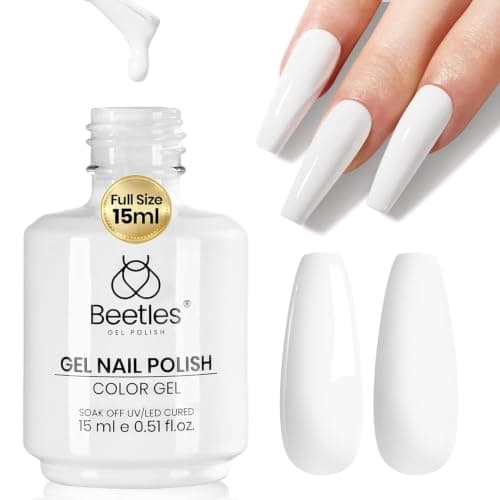
beetles Gel Polish
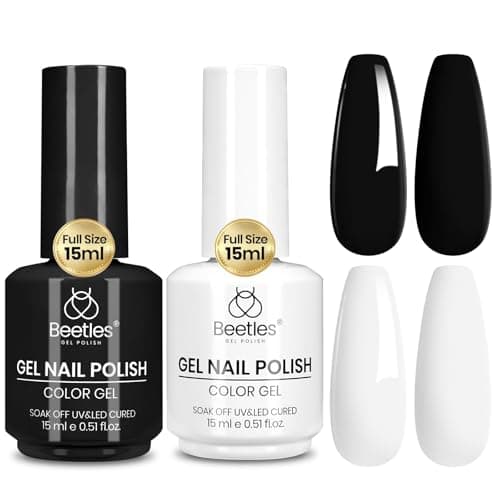
Beetles White Gel Polish, 15ml
$5.424.4 (69,251)
The whiteThe default one-coat white for tip lines — rank 200 across the whole nail category, and opacity is everything on a French tip.
Shop on AmazonFrench tip nails category
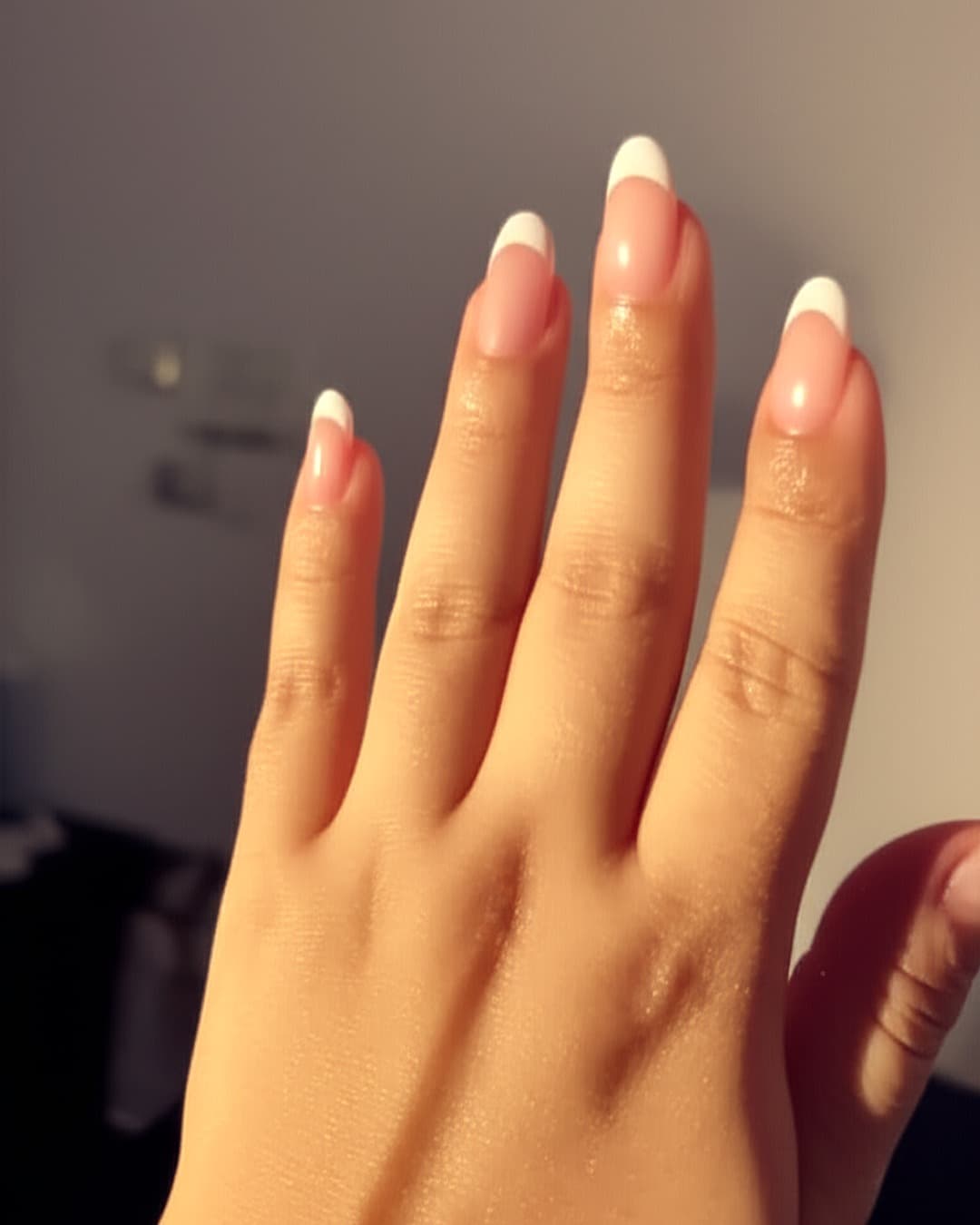
simple french tip nails
Simple french tip nails in four versions, plus the thing that decides them all: how to draw a smile line that stays even across ten nails.
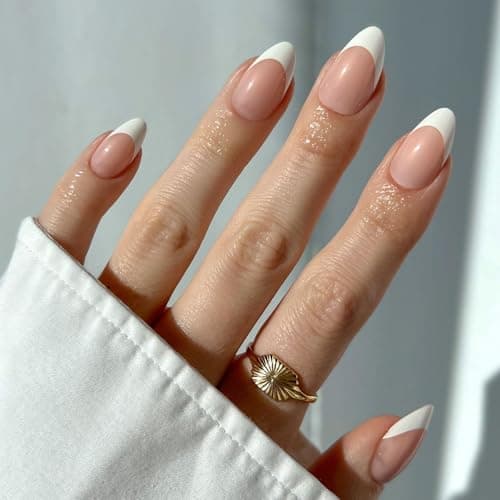
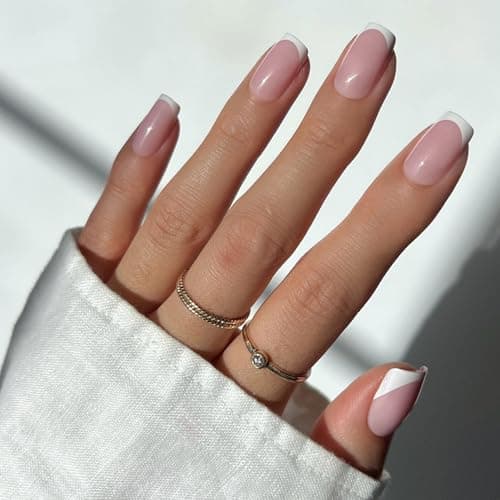
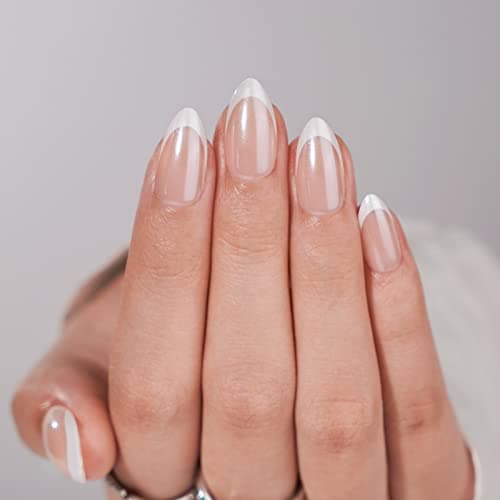
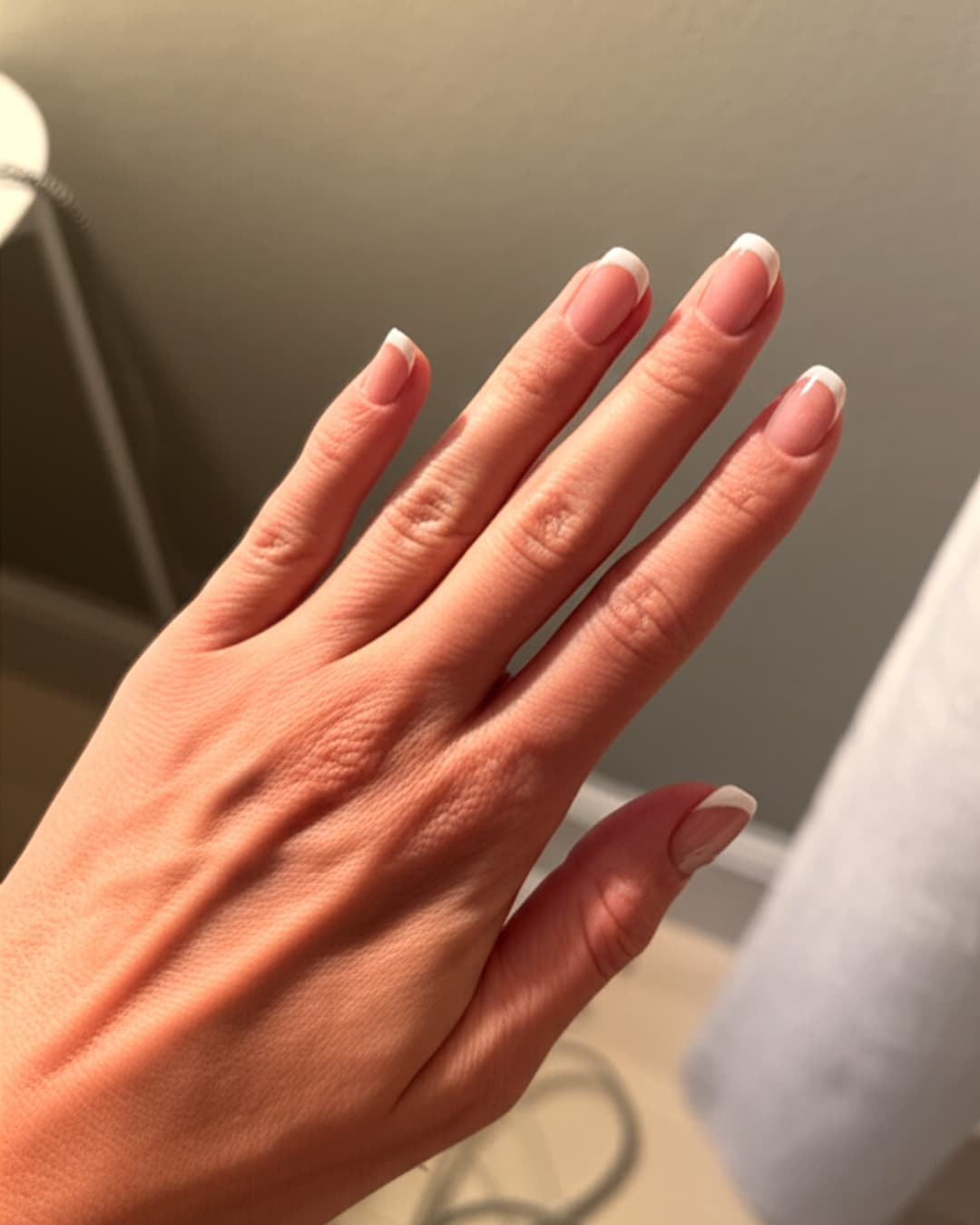
Simple french tip nails are the manicure with nowhere to hide — one line, one colour, and every flaw in that line is the whole result. Done well, they are all about clean lines and good proportions. If you want a manicure that matches everything and always looks polished, simple French tips are the easiest “default.” The modern version usually uses thinner tips and a softer base than the old-school, high-contrast French.
The default one-coat white for tip lines — rank 200 across the whole nail category, and opacity is everything on a French tip.
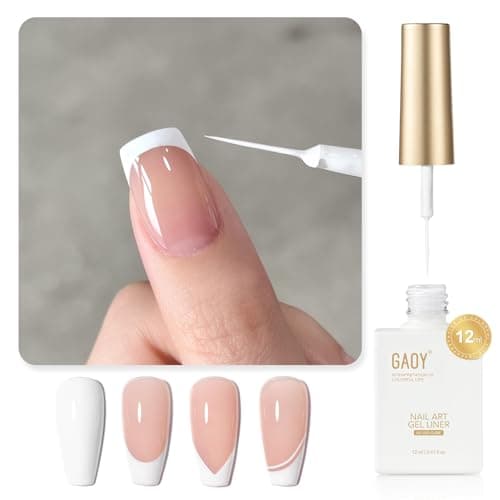
Shop on AmazonWhite with a long thin liner brush built into the cap — polish and applicator matched for micro lines out of the box.
Shop on AmazonThe sheer nude-pink base half of a French — rank 141, and the natural-nail illusion depends on exactly this sheerness.
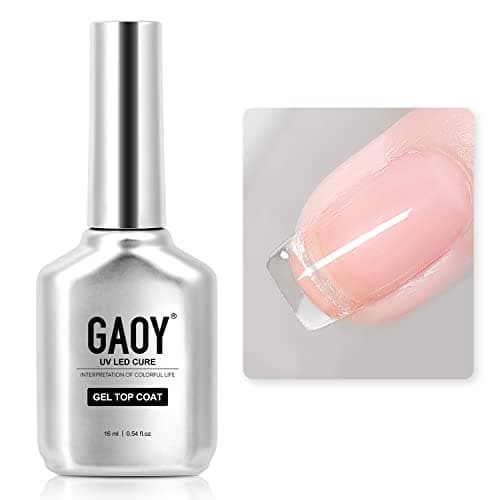
Shop on AmazonA glassy no-wipe single — the budget seal that still enables chrome.
Shop on AmazonProduct prices and availability are accurate as of October 17, 2026 and are subject to change. Any price and availability information displayed on Amazon at the time of purchase will apply. As an Amazon Associate we earn from qualifying purchases. Star ratings reflect Amazon customer reviews at the time of our last check.
| Version | Base | Tip | Reads as |
|---|---|---|---|
| The classic | Sheer pink | Thin white | The default — see white French tips |
| The quiet one | Sheer nude | Nude, a shade deeper | Groomed, not done — see nude French tips |
| The graphic one | Sheer pink or nude | Micro black | Same restraint, more presence — see black French tips |
| The soft one | Sheer pink | White, faded, no line | The bridal version — see ombre French tips |
A matte top coat over any of the four changes the character without adding a single element.
Try:
Simple French tips are not a lesser version of the classic — they are a specific aesthetic, and the current dominant one. A single thin line, one colour, no art, no embellishment.
The appeal is that they read as groomed rather than done. A simple French works in an office, at a wedding, and on a Tuesday, which is why it has outlasted nearly every nail trend of the last decade.
It is also the most forgiving version to wear. There is nothing to clash with an outfit, nothing to date, and nothing that looks wrong when it starts growing out.
The thinnest version — a line barely a millimetre wide, sometimes a hairline — is what most people now mean by a simple French.
It needs two things technically: a genuinely opaque polish that covers in one pass, and a narrow applicator. A polish that needs two coats will flood a hairline on the second pass, because the second coat cannot land inside a line that thin. Our white gel polish picks are ranked on exactly that property.
The reward is a manicure that looks expensive at a distance and deliberate up close.
Off-white is the most wearable — softer than stark white, and more forgiving of a slightly uneven line.
Milky white over a sheer pink base is the current default in salons.
Nude, one shade deeper than the base, is the quietest possible version and the most flattering on short nails.
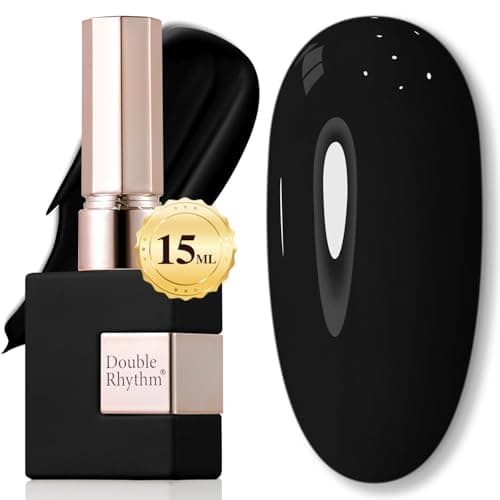
Thin black is simple in structure but graphic in effect — the same restraint, considerably more presence.
Two bottles do most of it: the sheer from the nude bases category and the white from the white gel polish category, where the grid is split into full-size whites for a standard tip and liner whites for the micro version.
There is nothing to hide behind. A simple French is one line on a bare-looking nail, so every flaw in that line is the whole manicure.
This is the opposite of nail art, where a slightly wobbly element disappears among the others. If you are learning, start with a nude simple French rather than white — the low contrast forgives the wobble while you build the motion.
Simple French sets have one durability advantage: with less product on the nail there is less to lift. A thin line and a sheer base is the least material of any manicure in this style, and a chipped simple French is repaired in about a minute — you redraw one line rather than reconstructing a design.
The trade-off is that the thin tip wears through faster at the free edge, since there is less colour there to begin with. Capping the edge is what buys the third week, and it is why a simple French is the version most likely to still look correct on day eighteen.
If you only ever get one manicure repeatedly, this is the one to pick. It suits every shape, every length, every skin tone and every setting. It costs less than any embellished version because it adds no time beyond the base French upcharge. And it is the version most likely to still look intentional when it is two weeks old.
The beauty of a simple French is that it works on every silhouette, but it does read differently on each.
Squoval is the most natural home for it — a neat shape with a neat line, and nothing competing.
Almond makes a simple French look expensive. The taper does the elongating work while the single thin line stays quiet.
Square turns it graphic. Same restraint, considerably sharper effect.
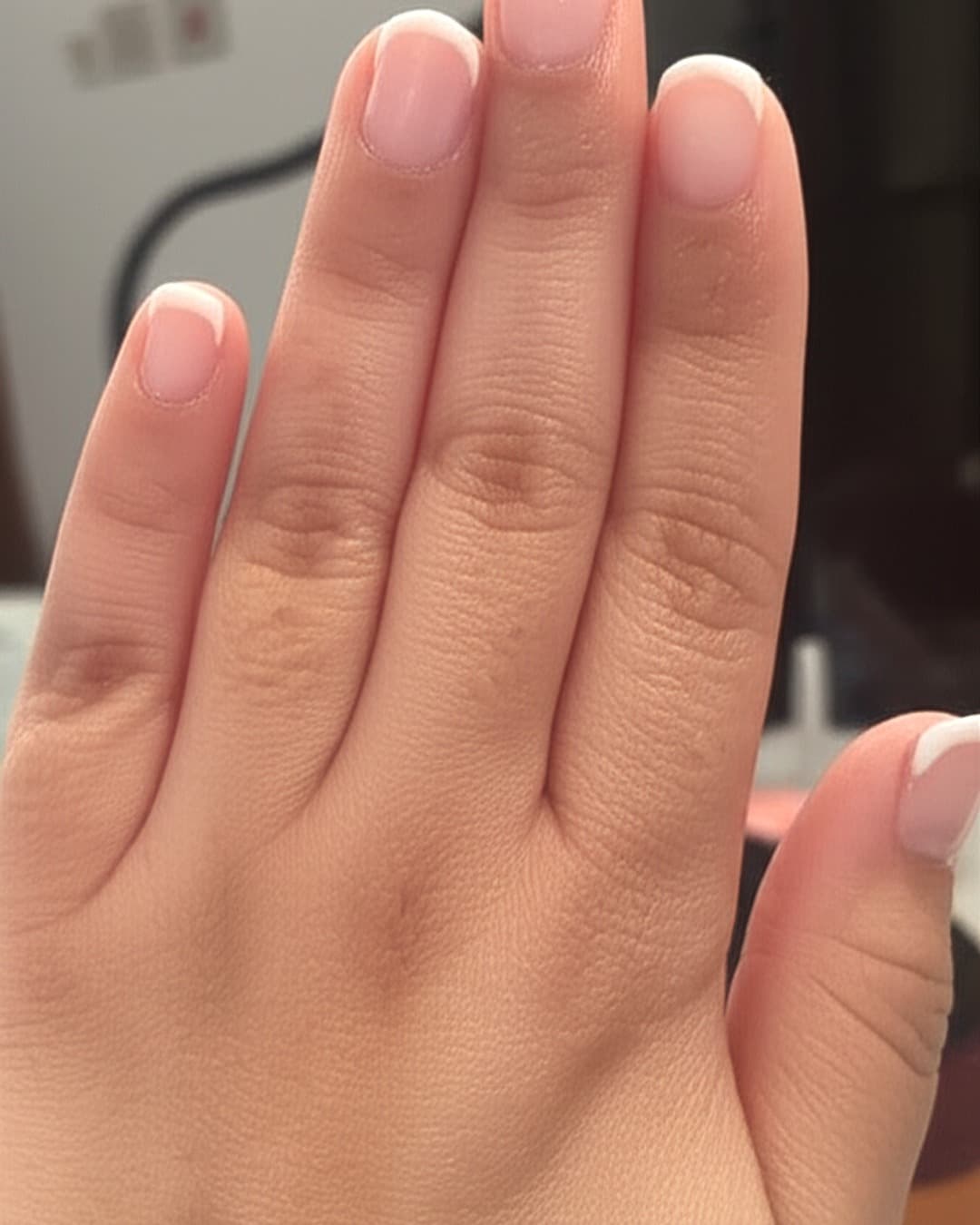
Short round is where simple French does its most useful work, because it is the only version of this manicure that does not truncate a small nail.
If you want a little more than a plain line, the additions that preserve the restraint are the very small ones.
A single accent nail with a slightly different tip — a V-cut, or a double line — on the ring finger only.
A hairline of chrome or gold along the smile line. Adds shine without adding width.
A matte top coat over the whole nail. Changes the character entirely with no extra drawing.
The rule that keeps it simple: one addition, not two. The moment you combine chrome and an accent nail and a shape variation, you have made a different kind of manicure that would have been better designed from scratch.
A simple French is the cheapest version of this style at a salon, because it adds no time beyond the standard French upcharge — no second colour, no art, no finish step. Expect the base service plus $5–$15. Full ranges in how much are French tip nails.
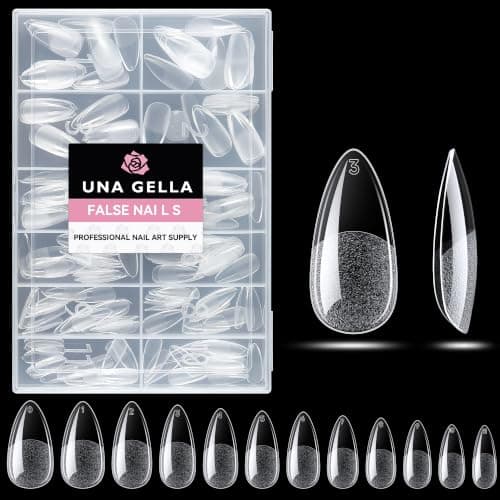
At home it is also the least equipment-dependent: a sheer base, one opaque colour, and one line-making tool.
Job interviews and formal work. This is the manicure that is unambiguously groomed without making any statement at all. Off-white or nude, thin line, short to medium length.
Weddings, as a guest. Simple French goes with any outfit and does not compete with the couple. As a bride, an ombre French is the more traditional choice, but a simple micro-French is increasingly common and photographs beautifully.
Everyday. The strongest case. A simple French looks intentional for its entire wear, grows out gracefully, and never clashes with anything you put on.
The line between simple and plain is thinner than it sounds, and it comes down to execution rather than additions.
A crisp, symmetrical line on a well-shaped nail with a good base tone looks expensive. The same line drawn unevenly on an unshaped nail looks like nothing at all. With no other elements to distract, the fundamentals carry the whole manicure — shape the nail properly, get the base tone right for your skin, and keep the two side points level.
That is the whole trick, and it is why simple French is the version most worth practising.
This is the version to learn on, and the equipment list is genuinely short: a sheer base, one opaque tip colour, one line-making tool, and a top coat.
Start in nude rather than white. The low contrast forgives an uneven line while you build the two-stroke motion, and you can graduate to white once the curve is reliable. Most people who conclude they cannot do French tips started with stark white on their own nails, which is the hardest possible version of the task.
Full method in how to do French tips at home, and the best French tip nail brush covers the three ways to make the curve — including the clean-up method, which is by far the most forgiving.
Nail fashion moves quickly, but the simple French has survived every cycle since the 1970s in some form. The reason is that it is not really a trend — it is a grooming standard with a variable proportion.
The thickness changes decade to decade. The colour drifts between stark white and soft nude. But the underlying idea, a clean nail with a defined edge, has never gone away, which makes it the safest thing to learn properly.
For the nail underneath any of this, the American Academy of Dermatology's nail care basics are the sensible baseline — most damage attributed to a manicure is removal damage.
Nude French tips for the softest version and white French tips for the classic. Micro French tips for the line width the modern simple French uses, and short French tips if length is your constraint. Once the proportions are right, French tip nails with design is where one addition goes. Home from french tip nails.
What French tip shoppers are buying this week, across every category.
What is the simplest French tip style?
A micro or thin tip in white over a sheer pink base is the simplest and most classic option.
How do I make simple French tips look modern?
Keep the tip thin, choose a milky or nude base, and consider a slight shape update like short almond or squoval.
Can simple French tips be done on natural nails?
Yes. Gel polish or regular polish can create a simple French on natural nails, especially at short or medium lengths.
What’s a simple alternative to white tips?
Try nude tips, soft pink tips, or a thin black micro-tip for a minimalist twist.
How do I ask for simple French tips at the salon?
Ask for “a classic French manicure with thin tips,” then specify base tone, shape, and whether you want a glossy finish.
What is the difference between a simple French and a micro French?
A micro French is a simple French at its thinnest — a line of one to two millimetres, sometimes a hairline. Every micro French is simple; a simple French can also be a standard-width white tip with nothing added. The two pages on this site overlap deliberately, because the modern simple French is usually a micro one.
Which is easier to learn on: white or nude?
Nude. The low contrast forgives an uneven line while you build the two-stroke motion, and the same wobble in stark white is the whole manicure. Most people who decide they cannot do French tips started with white on their own nails, which is the hardest version of the task; start nude and graduate.
Almond French Tip Nails
almond french tip nails
Black French Tip Nails
black french tip nails
Blue French Tip Nails
blue french tip nails
Brown French Tip Nails
brown french tip nails
Burgundy French Tip Nails
burgundy french tip nails
Chrome Coffin French Tip Nails
chrome coffin french tip nails
Chrome French Tip Nails
chrome french tip nails
Coffin French Tip Nails
coffin french tip nails