Artdone
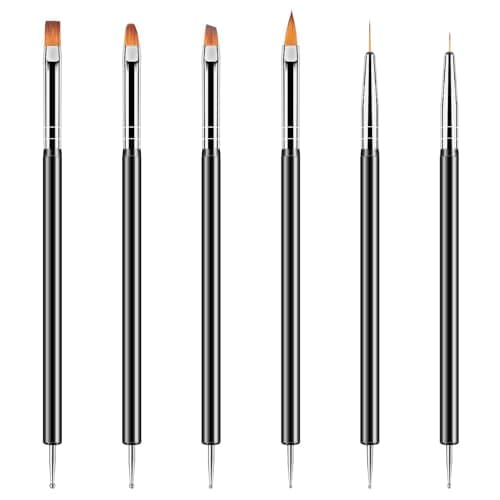
Artdone Dotting Tools, 6pc
$3.994.6 (2,299)
The dotting toolsDots become hearts, bows and flowers — the entire cute-French toolkit in one cheap set.
Shop on AmazonFrench tip nails category
french tip nails with design
French tips with simple designs—ideas that stay clean, wearable, and easy to request at the salon.
French tip nails with design fail in one predictable way: three ideas on a very small surface. Done well, they are the best of both worlds — the clean structure of a French manicure plus one small detail that makes the set feel personal. The trick is restraint—one intentional design element usually looks more “expensive” than multiple competing ideas.
Dots become hearts, bows and flowers — the entire cute-French toolkit in one cheap set.
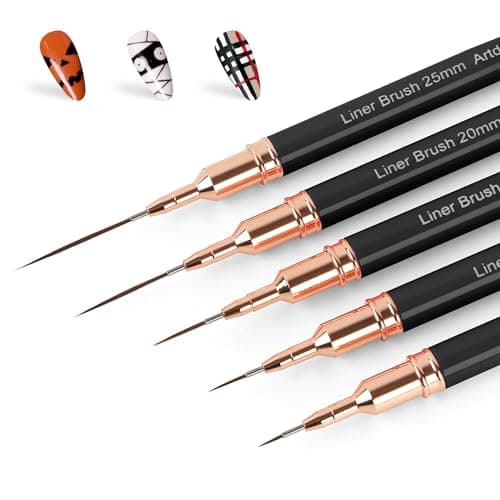
Shop on AmazonBest-selling liner set — long bristles hold enough polish to pull a full curve without reloading.
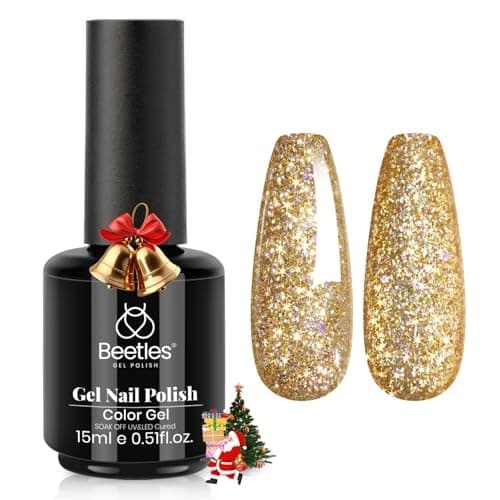
Shop on AmazonReflective gold that photographs as light, not texture — the gold hairline and festive accent bottle.
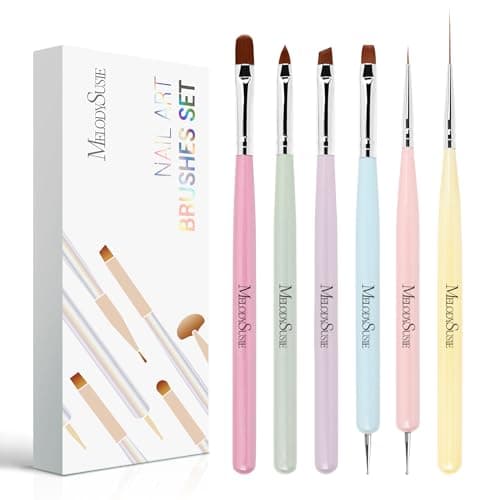
Shop on AmazonLiner, detail and clean-up shapes in one starter buy.
Shop on AmazonProduct prices and availability are accurate as of September 12, 2026 and are subject to change. Any price and availability information displayed on Amazon at the time of purchase will apply. As an Amazon Associate we earn from qualifying purchases. Star ratings reflect Amazon customer reviews at the time of our last check.
| Design | Tool | Difficulty | Wears |
|---|---|---|---|
| A finish upgrade — chrome or matte — instead of art | A no-wipe or matte top coat | Easiest | Full set |
| Micro-dots along the smile line | Dotting tool | Easy | Two weeks |
| Gold or chrome outline along the smile line | Fine liner | Easy–medium | Three weeks |
| One tiny motif at a tip corner | Dotting tool or decal | Easy | Ten days |
| Double French — two thin lines | Liner brush | Medium | Three weeks |
| Side-French — an angled band | Liner brush | Medium | Three weeks |
| V-French on one accent nail | Liner brush or a V guide | Medium | Three weeks |
| Negative-space line between base and tip | Liner brush, steady hand | Hardest | Three weeks |
Start on a plain French — white, black, pink or nude — and add one row from this table. The finish rows come from the chrome, glitter and matte pages.
Use a simple script:
A French tip is already a design. Anything you add is a second element on a nail that has one — which is why the manicures that work follow a simple constraint: one addition, not three.
A French tip plus a tiny motif looks considered. A French tip plus a motif plus glitter plus a chrome line looks like three ideas competing on a very small surface.
If you want something elaborate, the better route is usually to abandon the French structure and design from scratch, rather than stacking elements onto it.
Outlined tips. A hairline of gold, chrome or a contrasting colour tracing the smile line. The single most effective addition, because it emphasises the structure rather than competing with it — and it conveniently hides an uneven edge.
Accent nail with a different tip shape. V-cut, double line, or a deeper curve on one finger only. Adds interest with no new materials.
Tiny motifs at the tip corner. A star, a heart, a small flower — placed off-centre rather than in the middle, which reads as more casual and less symmetrical-by-force.
Negative-space cutouts. A thin bare line between the base and the tip. Modern, minimal, and harder than it looks because both edges have to be clean.
Micro-dots along the smile line. Reads as jewellery rather than as nail art.
Two-tone tips. A colour band with a thinner second colour beneath it. Graphic and unexpectedly easy.
The outline is the highest-value design on the page, and it takes about a minute per hand once the French is cured.
The gold hides a slightly uneven edge on the French beneath it, which is why it is also the best rescue for a set whose line came out soft. The liners and dotting tools are in the brushes category.
The strongest designs put the detail on one or two nails, not ten.
The ring finger is the traditional accent, partly because it sees less friction so the detail lasts longer, and partly because it sits centrally in a hand photo.
Eight plain French tips and two decorated ones reads as deliberate. Ten decorated ones reads as a theme, which is fine for an occasion and heavy for everyday.
Most French tip details need less skill than they appear to.
A dotting tool — or the rounded end of a bobby pin — makes dots, and dots become hearts, flowers and patterns. A fine liner brush does outlines and thin lines. Stickers and decals applied over a cured tip and sealed with top coat give you precision you cannot hand-paint.
None of these is a compromise. A cleanly placed sticker on a good French tip looks better than a shakily painted freehand motif.
The one thing that does need skill is the French tip underneath. Get the smile line right first — a beautiful detail on a wobbly line draws attention to the wobble.
Painted details sit on the surface and wear by rubbing rather than knocking, so they fade before the tip band does — usually around day eight to ten on a gel set.
Two coats of top coat over the detail helps considerably: the first sinks into and around the raised edge, the second levels it. Skipping the second is why home nail art wears off in days while the polish underneath stays perfect. For stickers and decals, press the edges down firmly before sealing; a lifted sticker edge traps air and the top coat will not adhere underneath it. And put the detail on the ring finger, which sees the least friction — the practical reason it became the traditional accent nail.
Short nails want the smallest possible details — micro-dots, a hairline outline, a single tiny motif. Anything larger competes with a plate that has little room to spare.
Medium nails are the most versatile and carry nearly everything on this page comfortably.
Long nails can take larger and more complex work, and this is where negative-space cutouts and multi-element designs actually have room to read. On a long coffin or almond the French band itself is generous enough to hold detail within it.
Square suits geometric additions — straight lines, blocks, chevrons — because the shape is already architectural.
Almond suits organic ones — florals, swirls, dots — which follow the taper rather than fighting it.
Coffin carries the boldest work, since the wide flat tip gives a design a defined area to sit in.
Short round or oval suits a single small motif and nothing more.
Nail art is almost always priced per nail, typically $3–$10 depending on complexity, on top of the base service and French upcharge.
That per-nail pricing is exactly why the two-accent-nail approach is so common — it is both the better-looking option and the substantially cheaper one. Ten decorated nails can easily double the cost of the appointment.
Bring a photo. Nail art is the service where verbal description fails hardest, and a technician quoting from a photo will give you a far more accurate price.
Some additions age better than others.
Outlines, dots and negative space have been in continuous use for decades and read as timeless.
Specific motifs tied to a trend — whatever the current viral shape is — date quickly, and a gel set stays on for three weeks.
Metallics sit in between: gold and chrome have been consistently popular, but heavy holographic finishes read as very of-their-moment.
If you want a design that still looks good in photographs years later, keep it structural rather than illustrative.
Over gel you have unlimited working time — the design stays wet until you cure it, so you can wipe back and redo a wobbly element as many times as needed. This makes gel considerably easier for detail work despite the extra equipment.
Over regular polish the design must be right within seconds, and any correction disturbs the layer underneath. Workable for dots, difficult for lines.
If you intend to do detailed work regularly, gel is worth the lamp for this reason alone.
If you want the regulator's version of the ingredient questions — HEMA, acrylates, what a label must say — the FDA's nail care products page is where to read it.
Cute French tips for the playful, smaller end. Glitter French tips for texture and chrome French tips for the outlined-tip finish. French tip nail shapes to choose the silhouette first — the same design reads differently on square and almond. Home from french tip nails.
What French tip shoppers are buying this week, across every category.
What counts as a “French tip nails with design” look?
Any French manicure with an added element—like a thin outline, tiny accent, chrome finish, glitter line, or a small pattern—while keeping the French tip structure.
What’s the easiest design to add to French tips?
A thin glitter line at the smile line or a micro accent on one nail (like a small heart or star) is simple and doesn’t overcrowd the look.
How do I keep French tip designs from looking messy?
Keep the base neutral and limit designs to one feature. Ask for clean lines, symmetry, and a high-quality top coat.
Can I add designs to short French tips?
Yes—short nails look best with micro tips and minimal accents like a dot, thin line, or a subtle shimmer.
Should I pick color tips or designs (or both)?
If you’re new to the look, choose one: either a colored tip or a design accent. If you do both, keep the design extremely minimal.
What is the most wearable French tip design?
A hairline of gold or chrome traced along the smile line of a plain French. It emphasises the structure rather than competing with it, hides a slightly uneven edge, survives the grow-out, and takes about a minute per hand over a cured set.
How much does a design add at the salon?
Nail art is priced per nail, typically $3–$10 depending on complexity, on top of the base service and the French upcharge. That is why the two-accent-nail approach is both the better-looking and the cheaper option; ten decorated nails can double the appointment.
Almond French Tip Nails
almond french tip nails
Black French Tip Nails
black french tip nails
Blue French Tip Nails
blue french tip nails
Brown French Tip Nails
brown french tip nails
Chrome Coffin French Tip Nails
chrome coffin french tip nails
Chrome French Tip Nails
chrome french tip nails
Coffin French Tip Nails
coffin french tip nails
Cute French Tip Nails
cute french tip nails