SUNUV
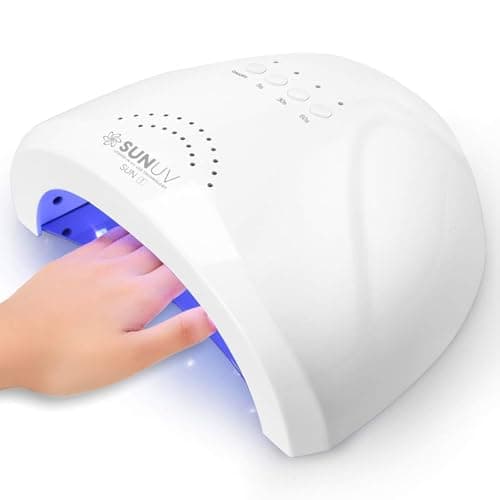
SUNUV UV/LED Lamp
$29.99
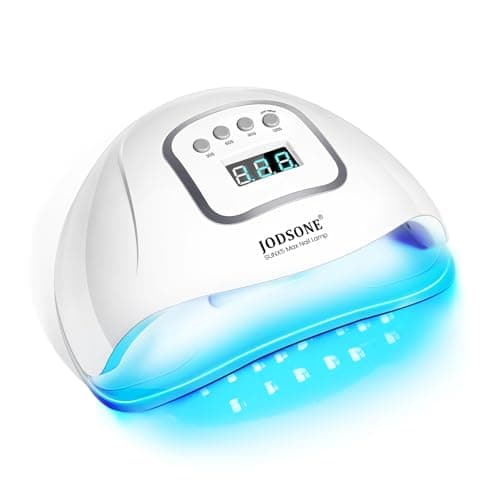
The lampThe known-brand lamp default — the purchase that unlocks gel's fix-before-cure advantage.
Shop on AmazonFrench tip nails category
french tip gel nails
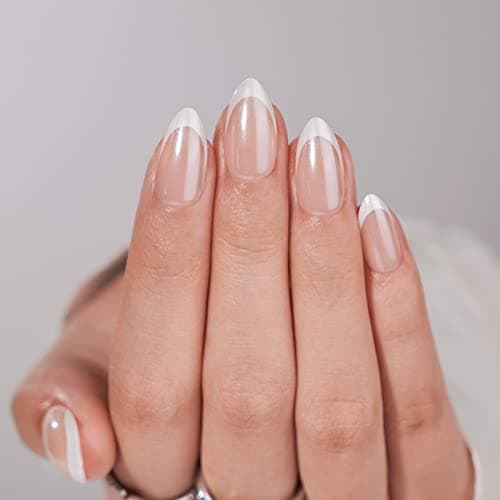
French tip gel nails are the easier French: the kit list, cure times per layer, and the aftercare that keeps a gel tip glossy instead of peeling.
French tip gel nails are the version most people should start with: glossy, low-chip, and — the part nobody mentions — the easiest French to correct, because gel stays wet until you cure it. Gel can be used on natural nails (gel polish) or as extensions. It’s a great option if you like a lighter feel than acrylic while still wanting a durable finish.
The known-brand lamp default — the purchase that unlocks gel's fix-before-cure advantage.
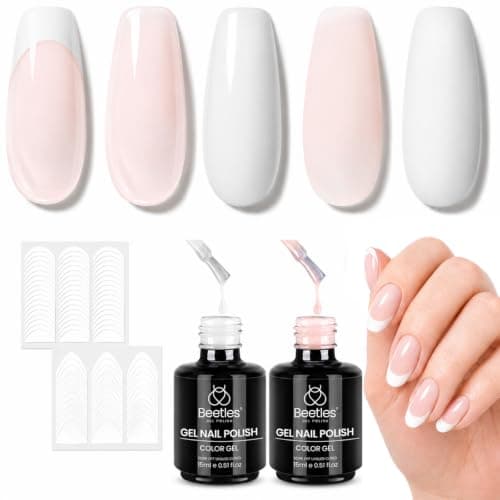
Shop on AmazonThe budget first lamp for finding out whether gel suits you.
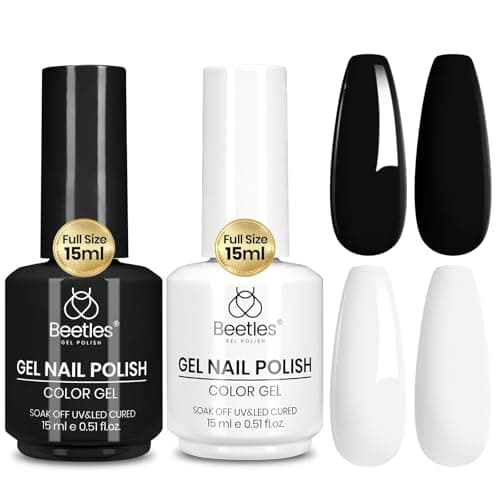
Shop on AmazonClassic, nude-on-nude and ombre French from one three-bottle set.
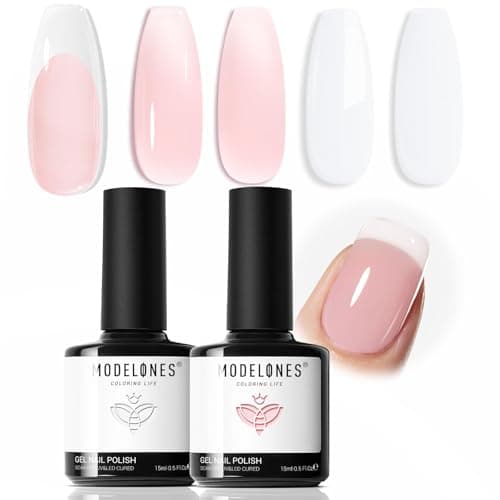
Shop on AmazonA sheer pink base and opaque white, colour-matched in one box — the classic French with zero guesswork.
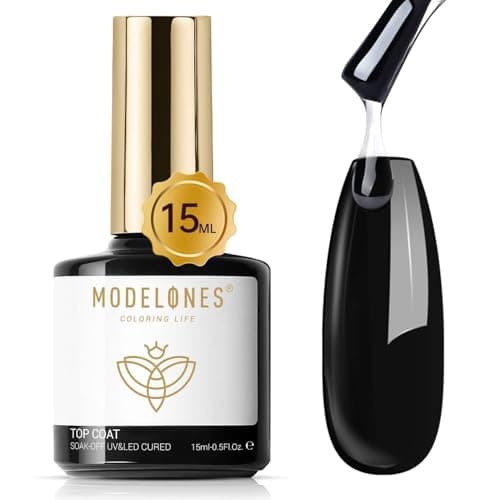
Shop on AmazonThe high-gloss seal — and the mandatory layer under any chrome powder.
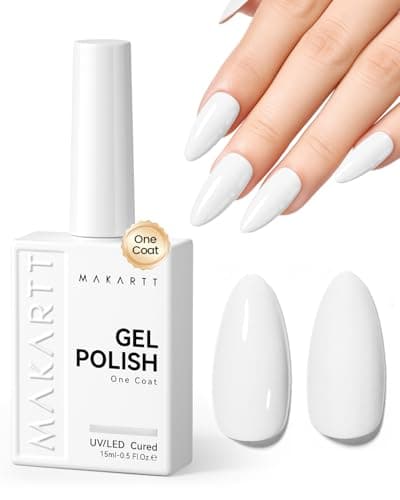
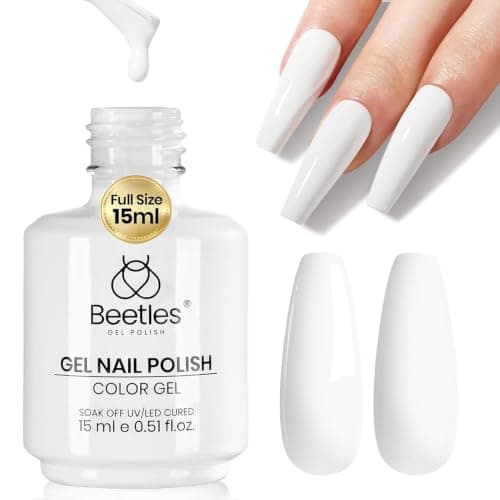
Shop on AmazonMarketed on pigment load and buyers confirm genuine one-coat coverage — the property that keeps a smile line crisp.
Shop on AmazonProduct prices and availability are accurate as of October 19, 2026 and are subject to change. Any price and availability information displayed on Amazon at the time of purchase will apply. As an Amazon Associate we earn from qualifying purchases. Star ratings reflect Amazon customer reviews at the time of our last check.
Try:
Counterintuitively, gel makes the hardest part of this manicure easier, and the reason is timing.
Regular polish begins setting the moment it hits air, so your window to correct a wobbly smile line is a few seconds. Gel stays completely workable until you put it under the lamp — which means you can draw the line, look at it, wipe it back with a clean-up brush, redraw it, and only then cure.
That single property is why gel is worth the lamp for anyone doing French tips at home. The line does not have to be right first time.
$40–$65 on natural nails in most US salons, and $55–$85 with gel extensions. The French adds a $5–$15 upcharge over a plain gel manicure.
Gel on natural nails lasts two to three weeks; gel extensions three to four. Neither needs fills in the way acrylic does — you soak the whole set off and start fresh, which is fewer decisions and slightly more product over a year.
Full ranges in how much are French tip nails.
Three things get called gel, and the difference matters when booking.
| Soft gel polish | Hard (builder) gel | Gel-X / soft-gel tips | |
|---|---|---|---|
| What it is | A coloured gel cured on natural nails | A building gel that adds strength and length | Pre-made soft-gel tips glued on with gel |
| Adds length? | No | Yes, sculpted | Yes, the tip's length |
| Removal | Soaks off in 10–15 min | Filed down; does not soak | Soaks off |
| Best for | A French on your own nails | Strengthening, sculpted shapes | Fast, light extensions |
For a French tip on your own nails, soft gel polish is what you want. If you want very long or heavily sculpted shapes, acrylic may hold form better — see French tip acrylic nails. Any French variation works in gel: classic white, thin black, pearl chrome, the ombré baby boomer.
The kit is short: a lamp, base coat, a sheer base colour, an opaque tip colour, top coat, and one line-making tool.
Two gel-specific points. Thin coats cure properly; thick ones stay soft underneath and wrinkle — this is the most common home-gel mistake. And cap the free edge with both colour and top coat, because the tip is where gel lifts first.
The rest is standard technique. See how to do French tips at home, and the best white gel polish for why opacity is the property that matters most.
Buff the shiny top layer, soak cotton in acetone, hold it against the nail with foil for 10–15 minutes, then push the softened gel off with an orange stick.
If it resists, re-soak. Do not scrape. Almost all the nail damage attributed to gel comes from impatient removal rather than from the product.
People with healthy natural nails who want them to look immaculate for two to three weeks. This is gel's core case and it does it better than anything else.
People who dislike how acrylic feels. Gel flexes with the finger, and a great many people who believe they dislike enhanced nails actually dislike acrylic's rigidity specifically.
People who want an easier removal. Ten to fifteen minutes of soaking versus twenty to thirty, and less filing at the prep stage.
People sensitive to smell. Gel has almost no odour where acrylic has a strong monomer smell.
Where gel is the wrong answer: if you want substantial length on short natural nails, gel polish alone will not provide it. You need extensions, at which point the cost approaches acrylic.
You need a UV or LED lamp, and the specification matters more than people expect.
An underpowered or aging lamp leaves gel looking dry while remaining slightly soft underneath — which causes wrinkling, early lifting, and in the case of chrome tips, a finish that will not mirror.
If your gel manicures consistently lift within a week and your prep is good, suspect the lamp before the polish. Bulbs degrade over time even when they still light up.
The single most common home-gel mistake is applying too thickly.
Gel cures from the surface down. A thick coat cures hard on top while staying soft underneath, and soft gel under a hard shell wrinkles, dents and eventually lifts as one piece.
Two thin coats always beat one thick one, and this matters most on the tip line — where a thick band of white will wrinkle visibly.
Cuticle oil daily keeps the surrounding skin flexible, which prevents the lifting that starts at the cuticle.
If a corner lifts, do not pull it. Trim it if you can, or book a repair. Pulling a lifted gel nail takes layers of natural plate with it, which is where essentially all gel-related nail damage comes from.
And take a break occasionally — two to four weeks once or twice a year lets the plate recover from continuous wear.
Every bottle in the shop lists a cure time — usually sixty seconds under a UV/LED lamp, sometimes ninety to one hundred and twenty for a thicker formula or a HEMA-free one — and the number is a minimum, not a suggestion. Under-cured gel looks dry, feels dry, and is still soft underneath: it wrinkles within the hour, lifts within the week, and will not take chrome at all. If the lamp is old or its wattage is low, cure for longer than the label says rather than shorter, and cure the thumb separately, because it sits at the edge of most lamps and gets the least light.
Gel fails at the cuticle first, and it fails early. Look at the cuticle edge under daylight on day three: a thin line where the gel has separated from the plate means the prep missed a spot, and a technician can reseal it in minutes if you go back that week. Left alone, water gets under it, the nail beneath goes soft, and by day ten the whole nail lifts. A set that reaches day seven with no lifting will almost always reach day twenty-one.
Wrinkling on the surface. The coat was too thick, so it cured hard on top and stayed soft underneath. Thinner coats, cured fully.
Peeling off in sheets after a few days. Prep failure — the shine was not buffed off, or the plate was not dehydrated before the base coat.
Chipping at the free edge within a week. The edge was not capped. Run both colour and top coat over the very end of the nail.
The tip line looking soft rather than crisp. The white needed two coats, and the second flooded the line. This is an opacity problem with the polish rather than a technique problem.
Sticky surface after curing. Normal for most gels — it is the inhibition layer, and it wipes off with alcohol. Only a "no-wipe" top coat cures completely dry.
Gel does not damage nails. Removal and over-filing do.
The evidence for this is simple: people who soak off properly and prep gently wear gel for years without issue, while people who peel sets off have thin, tender nails within months. The variable is the handling, not the product.
Two practical rules. Never peel a lifting nail — soak it. And if a technician is filing your natural plate hard with an e-file at every appointment, that is the thing thinning your nails, not the gel.
UV exposure from lamps is a common worry. The exposure is brief and comparable to a short period of daylight; if it concerns you, fingerless UV gloves cost very little.
Gel is the right system for a pedicure French. It lasts four to six weeks on toenails — considerably longer than on hands, because toenails grow more slowly and take far less impact.
Keep the band thin and the curve nearly flat, and choose square or squoval rather than rounding the corners, which encourages ingrowing.
The products here are cosmetics under US law, and the FDA's page on nail care products explains what that does and does not guarantee about the bottles.
French tip acrylic vs gel for the direct comparison, and French tip acrylic nails for the alternative system. How to do French tips at home for the technique, and short French tips — gel's natural home. Compare finishes on matte and glitter, and colours on pink and blue. Back to french tip nails.
What French tip shoppers are buying this week, across every category.
What are French tip gel nails?
They’re French tips done with gel polish on natural nails or gel extensions. Gel cures under a lamp and typically stays glossy and chip-resistant for 2–3 weeks.
Is gel better than acrylic for French tips?
Gel feels lighter and more flexible, while acrylic is sturdier for long length and major reshaping. The best choice depends on your nail strength and desired length.
Can gel French tips be done on short nails?
Yes. Short gel French tips with a micro line are one of the most wearable, low-maintenance options (see short French tips for styling).
How long do gel French tips last?
Most gel manicures last about 2–3 weeks before lifting or noticeable growth, depending on your routine and nail growth.
Almond French Tip Nails
almond french tip nails
Black French Tip Nails
black french tip nails
Blue French Tip Nails
blue french tip nails
Brown French Tip Nails
brown french tip nails
Burgundy French Tip Nails
burgundy french tip nails
Chrome Coffin French Tip Nails
chrome coffin french tip nails
Chrome French Tip Nails
chrome french tip nails
Coffin French Tip Nails
coffin french tip nails