CANNI
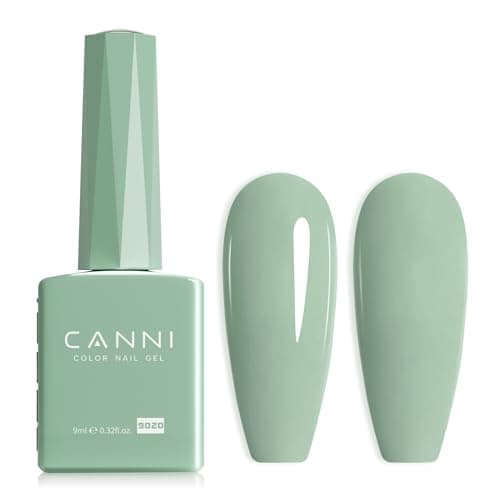
CANNI Sage Green Gel
$5.994.2 (9,772)
The sageThe sage single — the most wearable green, muted enough to behave like a neutral.
Shop on AmazonFrench tip nails category
green french tip nails
Green french tip nails from sage and olive to emerald and forest: which green flatters which skin tone, and the bases that stop it going muddy.
Green french tip nails went from novelty to staple in about two seasons, and the reason is sage — a green so muted it behaves like a neutral. They are a twist on the classic French manicure that stays wearable because the structure contains the colour. Depending on the shade, green can feel soft and earthy (sage), bright and fun (lime), or rich and elegant (emerald). Because the French structure keeps the design contained to the tip, green stays wearable even if you don’t usually wear green nail color.
“Apply a thin coat of clear rubber base coat and cap the free edge. Cure for 60 seconds.”
Sukie's take: A brand demo, so the steps are unusually clean — notice she caps the free edge at every single layer, not just the top coat. That habit is most of why salon green tips outlast home ones.
The sage single — the most wearable green, muted enough to behave like a neutral.
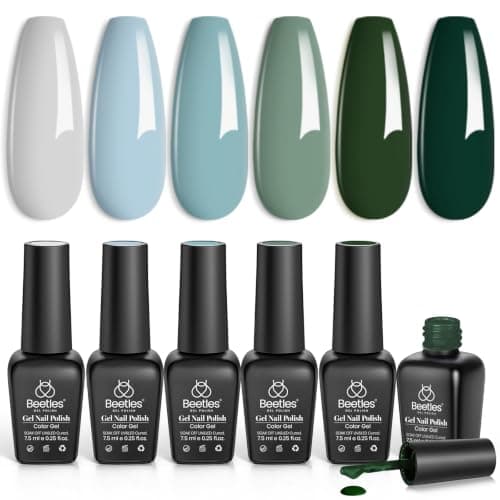
Shop on AmazonSage through forest in one set — green's whole seasonal range, and the deep ones cover in one coat.
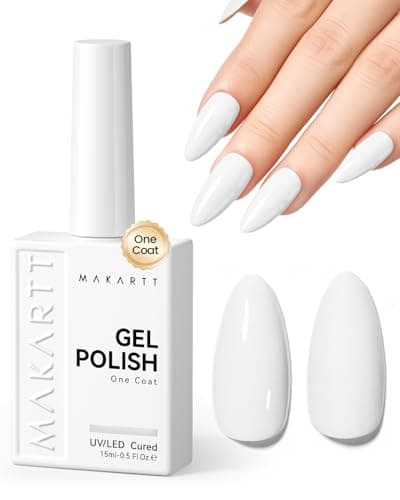
Shop on AmazonMarketed on pigment load and buyers confirm genuine one-coat coverage — the property that keeps a smile line crisp.
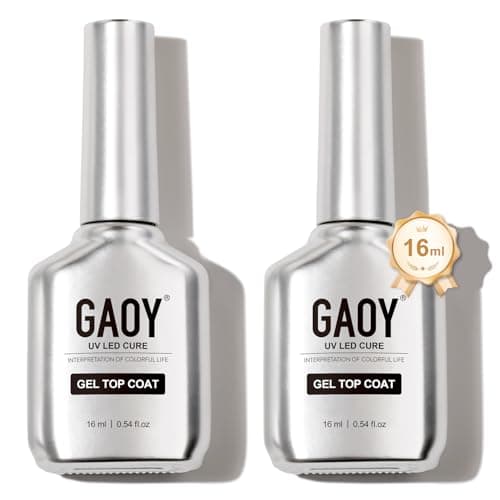
Shop on AmazonThe two-pack of the glassy seal — chrome prerequisite and everyday finisher.
Shop on AmazonProduct prices and availability are accurate as of October 17, 2026 and are subject to change. Any price and availability information displayed on Amazon at the time of purchase will apply. As an Amazon Associate we earn from qualifying purchases. Star ratings reflect Amazon customer reviews at the time of our last check.
Try:
A genuinely common search, so let us be straight: there is no established meaning for olive green nails.
The question comes from a social-media trend that assigned meanings to nail colours — olive or sage variously standing for growth, envy, or being single, depending which video you saw. The assignments contradicted one another, they were invented for the format, and they have no basis outside it.
Green is worn deliberately for a few real reasons: mental health awareness uses a green ribbon, and green appears around St Patrick's Day and Christmas. Outside those, someone wearing green tips almost certainly just likes green — which, given how well olive and sage suit most skin tones, is entirely reasonable.
Green has moved from novelty to staple over the last few seasons, and the shades are not interchangeable.
| Shade | Reads as | Base | Season | Covers in one coat? |
|---|---|---|---|---|
| Sage | Muted, grey-green; the most wearable | Warm beige | All year | No — white underlayer |
| Olive | Warm, deep, expensive; the autumn green | Warm beige or nude | Autumn | Yes |
| Mint | Pastel, fresh, fussy about its base | Cool or neutral | Spring | No — white underlayer |
| Emerald | Jewel, saturated; needs length | Sheer pink or milky | Winter holidays | Yes |
| Forest, hunter | Darkest; behaves like navy | Sheer pink | Winter | Yes |
The last column is the one that decides how easy the tip is to paint; the two "no" rows are covered in the steps below.
Sage and mint share the pale-colour problem: under-pigmentation. Both are typically lightened with white, meaning less colour per coat and a patchy tip if you try to build coverage inside the line you drew.
Lay a thin white base under the tip and the green reads true in one pass. Olive, emerald and forest are usually pigmented enough not to need it.
One green-specific note: green polish stains the natural nail more readily than most colours, particularly the deeper shades. Always use a base coat — this is the colour family where skipping it actually shows.
Olive, emerald and forest skip step two. The CANNI sage and the Beetles Misty Forest set in the grid above are the two ends of the range.
Sage and olive both sit beautifully over a warm beige base; the shared warmth makes the whole thing look intentional. Emerald and forest want a sheer pink or milky base for contrast. Mint is the fussy one — it needs a cool or neutral base, because a warm base turns it slightly yellow.
Green is one of the more skin-tone-responsive tip colours, and matching well makes the difference between expensive-looking and off.
Deeper skin tones are flattered by olive, emerald and forest — the saturated, warm-leaning greens. These read rich rather than muted, and the contrast works in their favour.
Medium and olive skin tones suit essentially every green, with sage and olive being particularly harmonious because they echo the undertone.
Fair, cool-toned skin is best served by sage, mint and emerald. Olive can read slightly sallow against very fair cool skin, because the yellow in it competes with the pink in the skin.
Fair, warm-toned skin goes the other way — olive and moss look intentional, while mint can look washed out.
None of this is a rule, and plenty of people wear the opposite on purpose. But if a green has ever looked slightly wrong on you without your being able to say why, undertone clash is usually the reason.
Sage micro-tip is the everyday version — barely there, and it goes with almost any outfit.
Olive with a gold line is the autumn combination, and the gold picks up the warmth already in the olive.
Emerald with chrome turns a jewel green into something genuinely dramatic, best kept to one or two accent nails rather than all ten.
Mixed greens — sage, olive and mint across different fingers over a shared base — works better than mixed brights, because the greens share enough undertone to hold together.
Short nails suit sage above all — the muted tone keeps the band from truncating the plate, and a hairline of sage on a short oval nail is one of the quietest good manicures there is.
Medium nails are where olive comes into its own. There is enough plate for the warmth to register without the band dominating.
Long nails can carry emerald and forest, which need room to read as jewel tones rather than as a dark stripe.
Green polish behaves like most mid-range pigments in wear, with one specific caveat already mentioned: staining. Deep greens are second only to blues and reds for leaving a tint on an unprotected nail plate, so a base coat is genuinely required rather than merely advisable.
In terms of chipping, sage and mint show wear soonest because the exposed nail underneath contrasts with the pale colour. Olive and forest hide early wear better.
Sage and olive are effectively neutrals and go with almost anything — denim, cream, camel, black. Emerald wants to be the accent rather than compete, so it works best against neutral clothing.
The pairing to avoid is green tips against strongly red or pink clothing, where the complementary contrast reads as accidental rather than styled.
If you want one green that never looks out of season, sage is the answer. It carries no strong seasonal coding, flatters most skin tones, and works at every nail length. Olive is the better choice if you only wear coloured tips occasionally and want the one that looks most expensive.
Green is among the least commonly stocked French tip colours, so bring a photo and name the shade — sage, olive, emerald — rather than saying green.
Ask whether they have it before the appointment starts. There is nothing worse than committing to a colour and discovering mid-service that their only green is a bright grass tone you did not want.
If the salon carries a limited green range, olive is the shade most likely to be in stock, because it doubles as an autumn seasonal colour.
Green takes texture unusually well. A matte top coat over an olive tip turns it suede-like and is one of the most autumnal things you can do to a nail. Chrome over emerald produces a beetle-wing shift. A glitter green tip works at Christmas without reading as costume, provided the glitter is fine rather than chunky.
Of the three, matte olive is the most wearable and the easiest to achieve — it needs no extra skill, only a different top coat.
Green is one of the better colours to learn on, provided you pick the right shade. Olive and forest cover in a single coat, so you avoid the flooding problem that ruins pale-colour tips, and their mid-range contrast reads clearly without punishing a slightly uneven curve the way stark white does.
Sage and mint are the harder ones and are worth saving until the two-stroke motion is automatic — or using the thin white underlayer described above. The full technique is in how to do French tips at home, and the best French tip nail brush covers the three ways to make the curve.
The dermatologists' view of all this — soak rather than peel, oil the cuticles, file in one direction — is the American Academy of Dermatology's nail care basics.
Emerald is the green most likely to disappoint in photographs. Under warm indoor lighting it loses its blue component and reads closer to a flat bottle-green, which is why emerald tips often look richer in the salon mirror than they do in the pictures taken afterwards. Sage and olive are far more stable across lighting because neither depends on a narrow band of the spectrum to look correct.
If the set is for an occasion that will be photographed, olive is the safer green and emerald is the one to reserve for evenings where you will actually be seen in person.
Blue French tips for the other cool option and pastel French tips for mint in context. Brown French tips — olive's autumn companion — and the fall French tips guide for the palette together. Winter French tips for emerald's season. To see green against a neutral classic, nude French tips or white French tips. Back to french tip nails.
What French tip shoppers are buying this week, across every category.
What green shade is best for French tip nails?
Sage green is soft and wearable, while emerald and forest green are richer and more dramatic. Pick based on how subtle you want the tips to feel.
Do green French tips look good with a nude base?
Yes—nude or sheer pink bases keep green tips looking clean and intentional.
What finish works best with green tips?
Glossy is the cleanest. Chrome or shimmer can create a jewel-like effect, especially on deeper greens.
Can green tips work on short nails?
Absolutely. Keep the tip thin or micro so the nail bed stays elongated.
What do olive green French tip nails mean?
Nothing established. The question comes from a social-media trend that assigned meanings to nail colours and contradicted itself across videos. Green is worn deliberately for mental health awareness, which uses a green ribbon, and around St Patrick's Day and Christmas; otherwise someone in olive tips likes olive.
Why does my sage French tip look patchy?
Sage and mint are lightened with white, so they carry less pigment per coat and a thin line shows the base through it. A thin white liner line under the sage, cured first, gives it something opaque to sit on and it reads true in one pass. Olive, emerald and forest cover without it.
Almond French Tip Nails
almond french tip nails
Black French Tip Nails
black french tip nails
Blue French Tip Nails
blue french tip nails
Brown French Tip Nails
brown french tip nails
Burgundy French Tip Nails
burgundy french tip nails
Chrome Coffin French Tip Nails
chrome coffin french tip nails
Chrome French Tip Nails
chrome french tip nails
Coffin French Tip Nails
coffin french tip nails