beetles Gel Polish
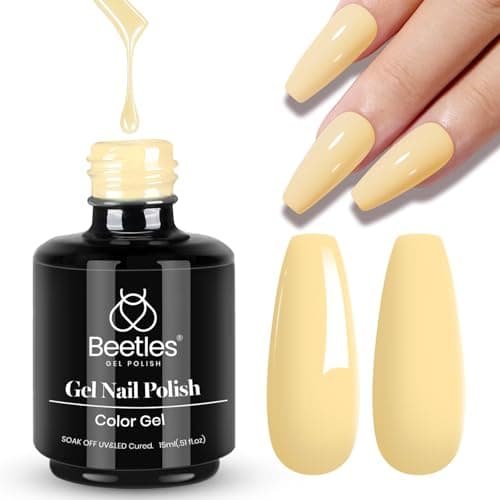
Beetles Lemon Chiffon Yellow
$5.99
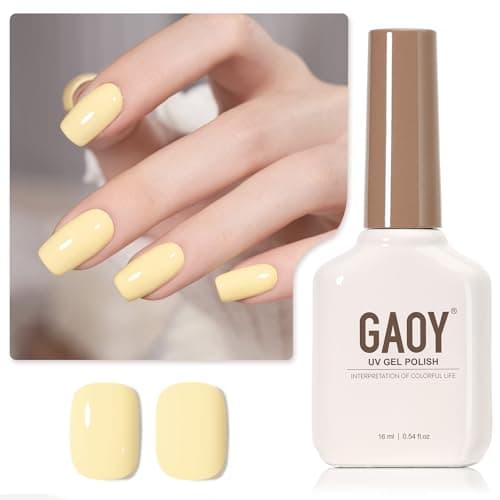
The butter yellowThe butter-yellow single at rank 200 — the trend shade that became a staple.
Shop on AmazonFrench tip nails category
yellow french tip nails
Yellow french tip nails from butter to marigold — why butter yellow became the modern neutral, the opacity fix every pale yellow needs, and the bases that stop yellow going brassy.
Yellow french tip nails would have been a novelty request a few years ago; butter yellow changed that. The soft, cream-leaning yellow crossed from viral shade to standing favourite — the rare trend colour that behaves like a neutral — and it dragged the whole yellow family into the French tip repertoire behind it.
Yellow is also, technically, the most demanding tip colour on this site. It covers worse than any pastel, it is fussier about bases than any metallic, and it photographs a shade paler than it looks. All three problems have fixes, and they are the difference between the butter-yellow tips in the reference photos and the streaky version that puts people off.
“You may not get perfectly even coverage on your first coat — and that's okay.”
Sukie's take: A pro educator confirming this page's core warning: yellow does not cover in one pass. Watch how she builds the second coat instead of flooding the line — it is the technique the white-underlayer trick replaces.
The butter-yellow single at rank 200 — the trend shade that became a staple.
Shop on AmazonThe softer pastel butter — GAOY's self-levelling helps yellow's streak problem.
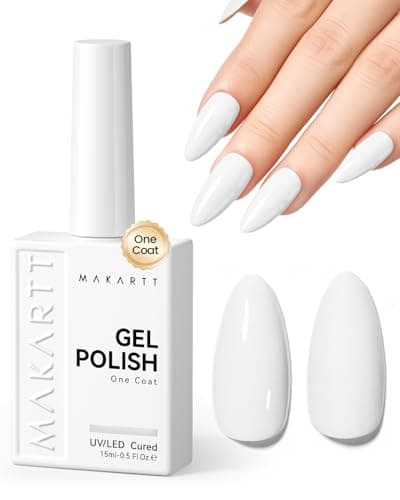
Shop on AmazonMarketed on pigment load and buyers confirm genuine one-coat coverage — the property that keeps a smile line crisp.
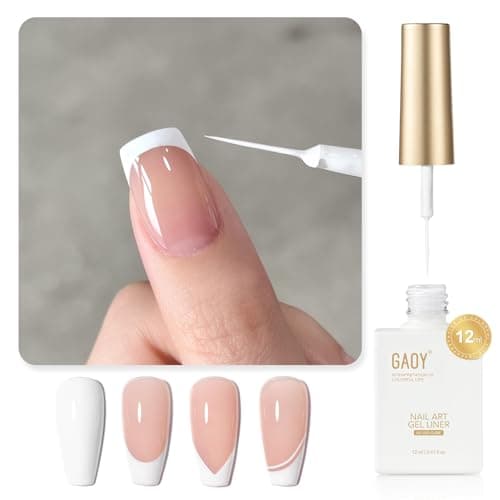
Shop on AmazonWhite with a long thin liner brush built into the cap — polish and applicator matched for micro lines out of the box.
Shop on AmazonProduct prices and availability are accurate as of September 17, 2026 and are subject to change. Any price and availability information displayed on Amazon at the time of purchase will apply. As an Amazon Associate we earn from qualifying purchases. Star ratings reflect Amazon customer reviews at the time of our last check.
Butter yellow is the headline — pale, warmed with cream, and the most wearable yellow ever put on a nail. It reads as considered rather than loud, flatters warm skin tones outright, and sits comfortably in contexts where a bright yellow would not.
Cream and custard run slightly deeper and warmer than butter — the autumn-tolerant end of the pale yellows.
Marigold and sunflower are the saturated middles: cheerful, unmistakably summer, and demanding of a thin line — a wide marigold band is a lot of manicure.
Neon yellow is a beach statement with a shelf life of exactly one season per outing. As a hairline it can be great fun; as a band it is a costume.
Mustard is the outlier — the one autumn yellow, ochre-leaning and best over warm bases in October, where it plays the role olive plays for green tips.
| Yellow | Reads as | Base | Width | Season |
|---|---|---|---|---|
| Butter | The modern neutral; soft, warm | Milky white or sheer warm pink | Micro to thin | Spring–autumn |
| Cream, custard | A deeper butter; autumn-tolerant | Milky white | Thin | Spring–autumn |
| Marigold, sunflower | Cheerful, unmistakably summer | Milky white | Thin only | Summer |
| Neon | A beach statement | Milky white | Hairline | One outing |
| Mustard | The one autumn yellow; ochre | Warm nude | Thin, matte | October |
Every row shares one instruction: the white goes on first.
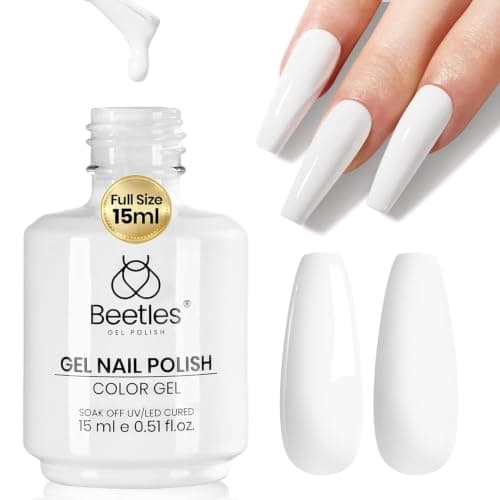
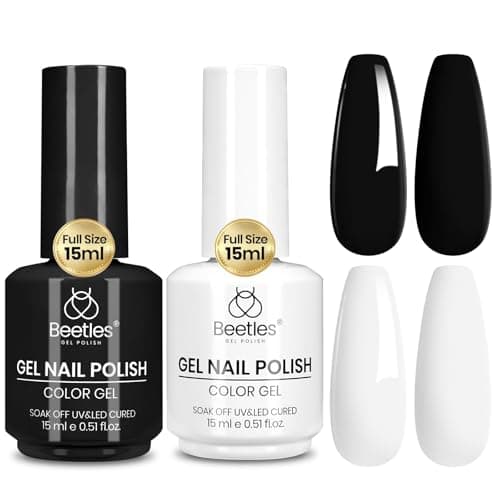
The GAOY pastel yellow and the Beetles lemon in the grid above are the butter and marigold ends of the table; the white under them is the purchase that decides the result.
Everything the pastel page says about under-pigmented colours applies to yellow with the volume turned up: yellow pigment is the weakest-covering in the polish universe. Even "one-coat" yellows frequently are not, and a tip line offers no second chance — the second coat floods the edge.
The fix is non-negotiable rather than optional here: draw the tip in opaque white first, then lay the yellow over it in a single pass. The white does the covering; the yellow only has to bring colour. Every clean butter-yellow tip you have seen in a photograph was almost certainly built this way.
That makes the white underneath the real purchase decision — the white gel polish guide covers the one-coat options, and the brush guide covers laying two aligned lines, which is the only added skill this technique asks for.
Yellow's second trap is the base, because yellow borrows tone from whatever sits behind it.
Milky white is the safe pairing — it isolates the yellow and keeps it bright. This is the base for butter and marigold both.
Sheer warm pink works under butter yellow for a softer, more classic French structure.
Beige and warm nude bases are the mistake. Yellow over beige merges into one continuous brassy tone — the tip boundary dissolves and the whole nail reads sallow. If your usual base is a warm nude, switch it out for yellow days.
Bare nail under a yellow tip works only with the white underlayer, which restores the boundary the bare nail cannot provide.
Yellow is the tip colour where undertone matching pays most visibly.
Warm and olive skin tones carry butter and marigold beautifully — the shared warmth reads intentional, and on olive skin butter yellow is arguably at its absolute best.
Deeper skin tones suit the saturated yellows — marigold, sunflower — which read vivid rather than pale. Butter can read chalky against deep skin; going one step more saturated fixes it.
Fair cool-toned skin is the hardest pairing: pale yellow can vanish into the hand. The moves are a deeper shade, the white underlayer for punch, or conceding the point to a pastel blue or lilac, which do for cool skin what butter does for warm.
Butter yellow's neutral credentials mean a thin butter tip goes where pastels go — spring events, summer everything, casual offices. The saturated yellows are weekend-and-holiday shades. Mustard belongs to autumn layering, denim and camel.
Width follows saturation, as always: the brighter the yellow, the thinner the line. A marigold hairline is charming; a marigold band is a warning sign. The micro French width suits the entire bright half of this family.
For sets, yellow is the anchor of the classic mixed-pastel manicure — butter on one finger among lilac, mint, baby blue and pink — where its warmth keeps the cool pastels from going icy. The mechanics are on the pastel page.
At a salon, name the shade and expect a stocking gap: many salons carry one yellow, and it is usually a bright. Bring the bottle if you own the butter yellow you want, and ask for the white underlayer explicitly — it is not a standard step anywhere.
At home, the sequence is: base, cure; white tip line, cure; yellow over the white line, cure; cap and top coat. It is the standard at-home method plus one aligned line. Budget a couple of practice nails — aligning the yellow pass over the white takes two or three attempts to feel natural.
Yellow pedicures are a summer-only proposition and a good one — marigold tips on toes read as cheerful against sandal tans, and the toe-scale rules (thin, flat, big toe only) keep even bright yellow from tipping into loud. The white underlayer transfers unchanged: toe or finger, pale yellow needs it. Butter yellow on toes is subtler than expected, often to the point of vanishing; on feet, the saturated shades earn their place.
One closing buying note: because yellow depends so completely on the white underneath it, a cheap yellow over a good white beats an expensive yellow over a weak one every time. Spend on the white; the yellow only has to be the right shade.
Wear-wise, yellow behaves like the pastels: chips show quickly because the exposed nail underneath differs so visibly from the colour, so cap the free edge properly and expect the tips to want a top-coat refresh at the one-week mark. Gel holds yellow noticeably better than regular polish, whose yellow pigments are weaker still.
Yellow needs less help than most colours — it is already the accent. The additions that work are the quiet ones: butter yellow with a white micro-outline, which sharpens the soft edge; marigold on one accent nail among nude tips, summer's version of the accent-nail formula; and mustard under a matte top coat in autumn, which turns the ochre suede-like. Skip glitter over yellow entirely — the pigment is too weak to hold its own under sparkle, and the result reads as neither.
Yellow's event map is short and specific. Summer parties and holidays: marigold's home ground. Baby showers: butter yellow is the traditional neutral when the answer is unknown, and a butter micro-tip is the manicure version. Weddings as a guest, summer only: butter over milky white photographs as sunshine without competing with anyone. Autumn dinners: mustard, matte, thin.
Where yellow does not go: winter formal, where even butter reads out of season against the palette everyone else is wearing, and any context lit by warm candlelight, which turns every yellow slightly green. The photograph-a-shade-deeper rule doubles at golden hour.
The summary rule for the whole family: butter for every day, marigold for holidays, mustard for October — and whatever the shade, the white goes on first.
Whatever the style, the nail plate has to survive it: the American Academy of Dermatology's tips for healthy nails cover the soaking, filing and oiling habits every page on this site assumes.
Pastel French tips for yellow's soft-colour family. Green French tips for the neighbouring trend-to-staple story. Summer French tip designs for yellow's peak season, and the french tip nails homepage for everything.
What French tip shoppers are buying this week, across every category.
Is butter yellow still in style for nails?
Yes — butter yellow crossed over from trend to staple, holding through multiple seasons the way sage green did. It now behaves as a warm neutral: soft enough for everyday, distinct enough to read as a choice. It is the yellow to start with.
Why does my yellow tip look patchy?
Yellow is the worst-covering pigment family in polish — worse than any pastel. Almost every yellow needs the thin white underlayer beneath the tip line: draw the line in opaque white first, then the yellow over it in one pass. Without it, even two coats streak.
Do yellow french tips work on pale skin?
Yes, with shade care. Butter and cream yellows flatter fair warm-toned skin; on fair cool-toned skin, pale yellow can blend into the hand — a slightly deeper marigold or a white underlayer boosts the contrast back.
What colour base goes with yellow tips?
Milky white is the reliable one — it brightens the yellow and stops it muddying. Sheer warm pink works for butter yellow. Avoid beige bases: yellow-on-beige reads as one continuous brassy tone with no defined tip.
When do yellow french tips work best?
Butter yellow runs spring through summer and has enough neutral credibility for autumn. Bright and neon yellows are strictly summer. Mustard flips it — that is the one autumn yellow, best over a warm base in October.
Are yellow tips hard to photograph?
Yellow reads lighter and less saturated on camera than in person, especially in warm indoor light. If the manicure is for an event with photos, pick one shade deeper than the reference photo you are matching.
Almond French Tip Nails
almond french tip nails
Black French Tip Nails
black french tip nails
Blue French Tip Nails
blue french tip nails
Brown French Tip Nails
brown french tip nails
Chrome Coffin French Tip Nails
chrome coffin french tip nails
Chrome French Tip Nails
chrome french tip nails
Coffin French Tip Nails
coffin french tip nails
Cute French Tip Nails
cute french tip nails