BTArtbox
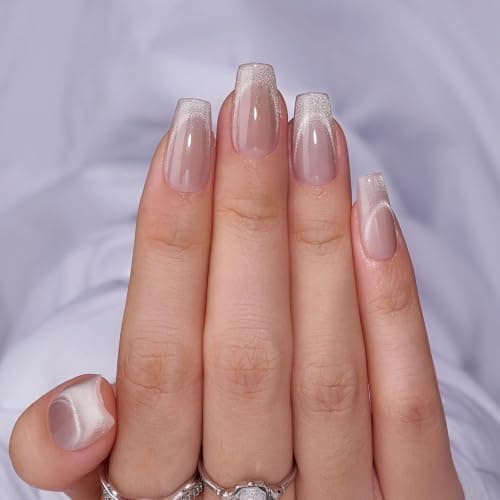
BTArtbox Short Coffin Cat-Eye French
$18.97
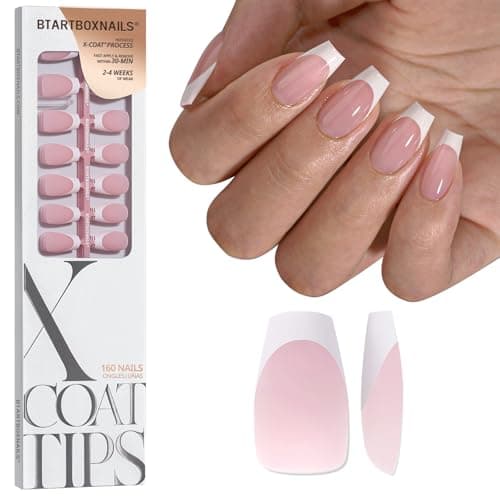
The press-on coffinThe coffin French in press-on form, with a cat-eye shimmer tip.
Shop on AmazonFrench tip nails category
white coffin french tip nails
White coffin french tip nails: the classic white tip on a tapered flat-edge shape — the right length, the tip depth, and why corners chip first.
The white coffin french tip nails that get photographed most are the ones that were not going to survive the week. Long, tapered to a narrow flat edge, a deep white tip that follows the taper exactly — they are the version that reads as a salon set from across a room, and they are the version whose corners chip by Thursday. The wearable white coffin French is a slightly different manicure: medium length, corners filed a hair softer, and a tip depth chosen for the shape rather than copied from a photo of a longer one.
This page is about that version, and about why the coffin shape changes the rules for a white tip that would be routine on square or almond.
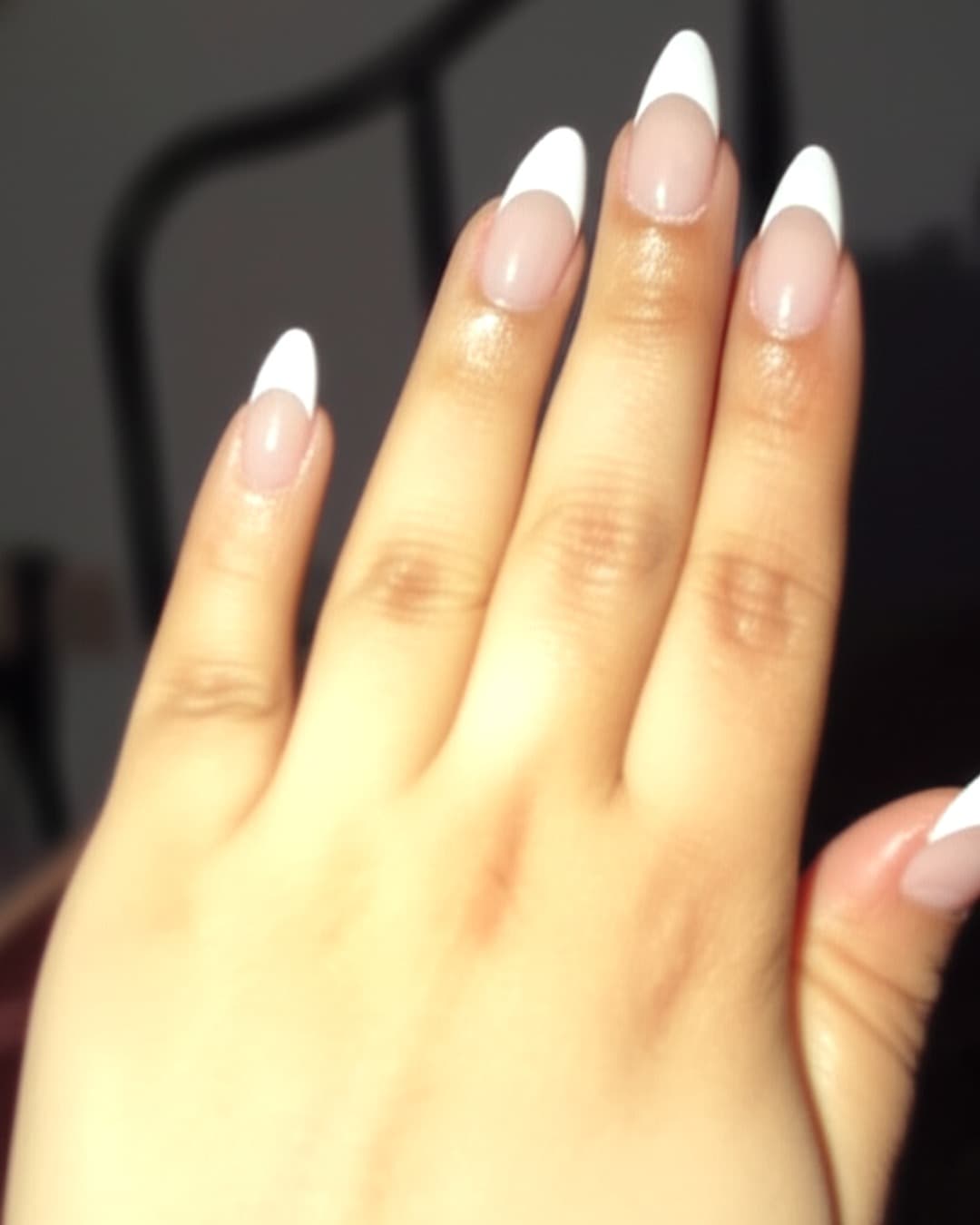
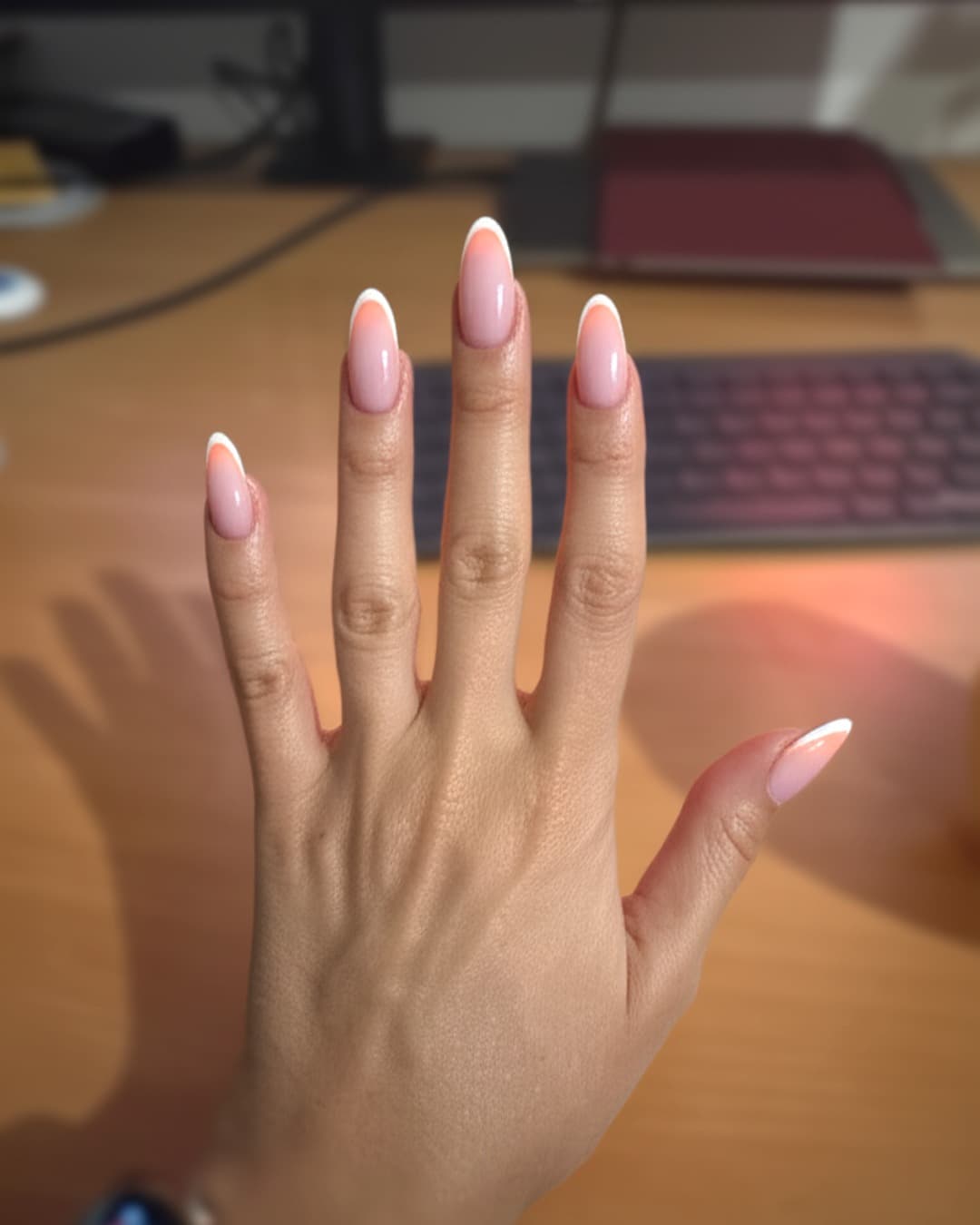
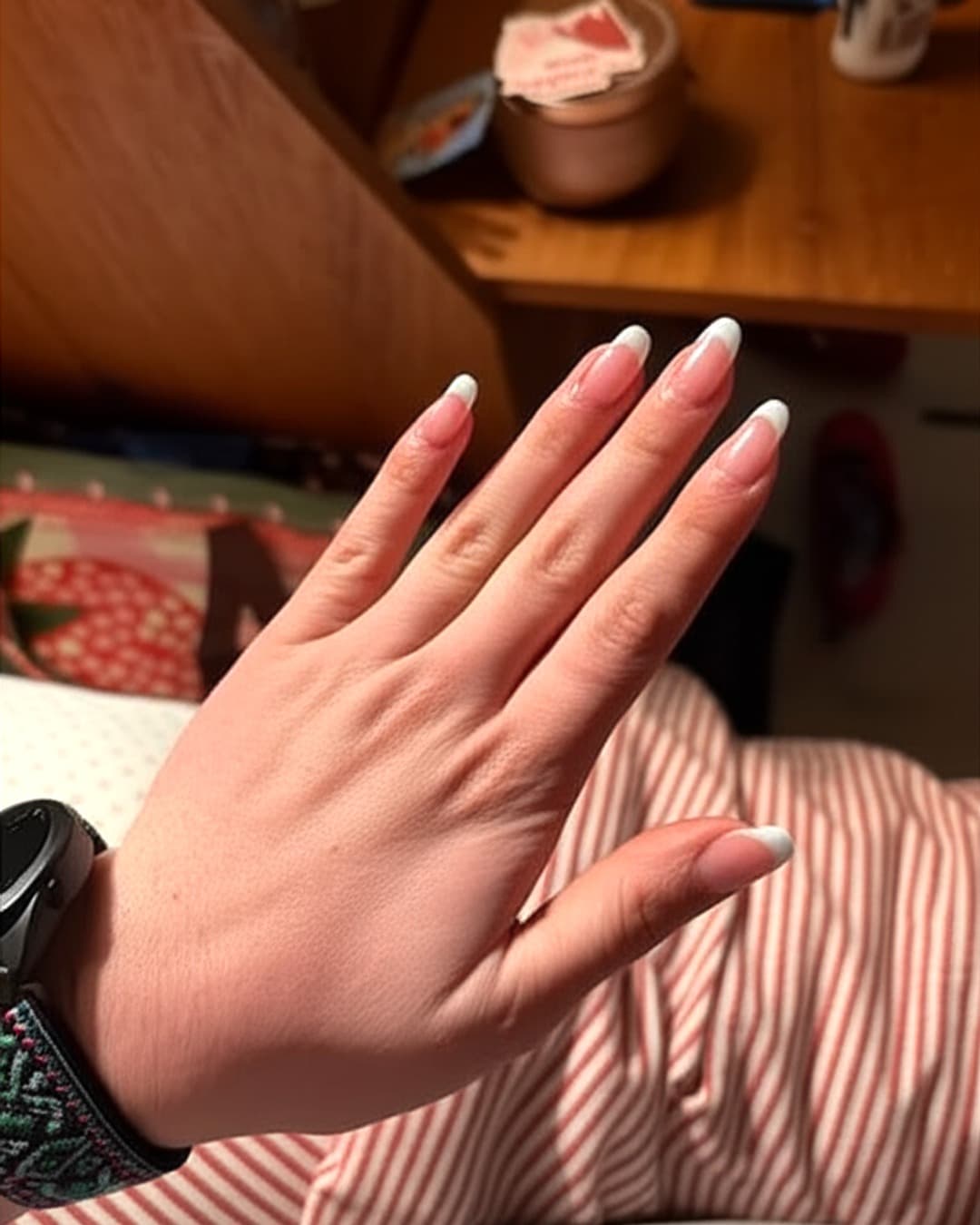
The coffin French in press-on form, with a cat-eye shimmer tip.
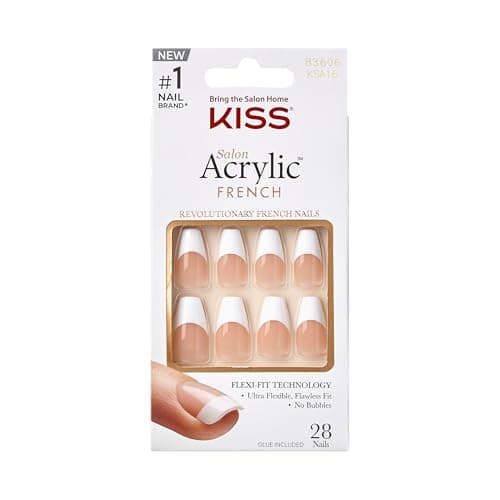
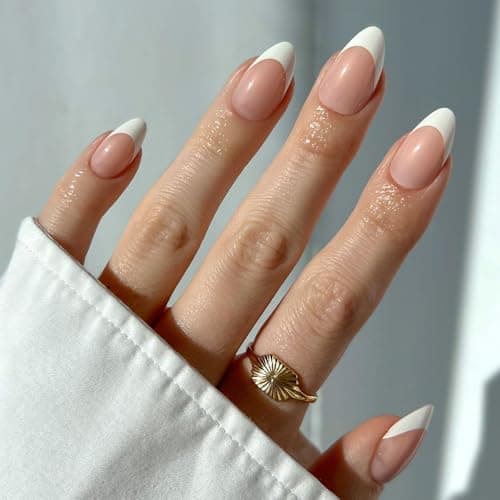
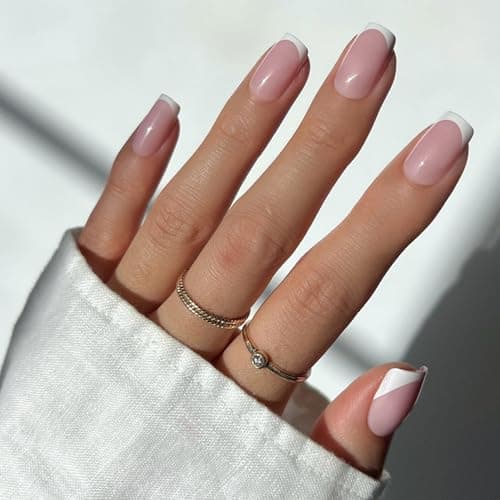
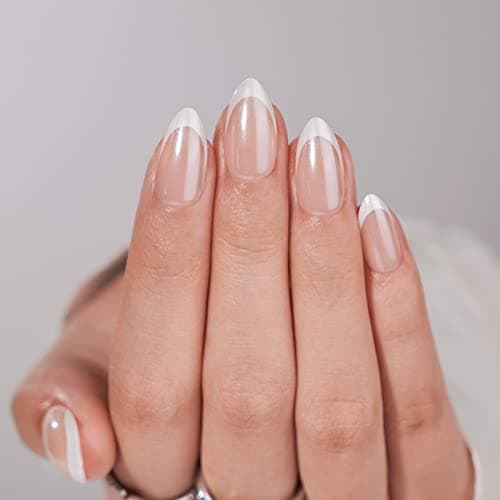
Shop on AmazonA medium coffin white French with glue included, at drugstore money — the way to find out whether coffin suits your hands before a pricier set.
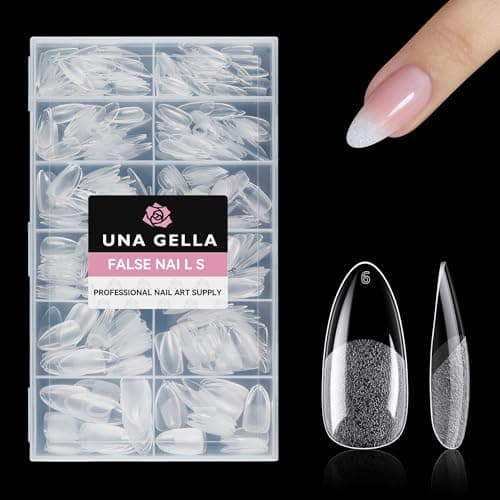
Shop on AmazonPre-built white French coffin extensions — salon shape without the salon build.
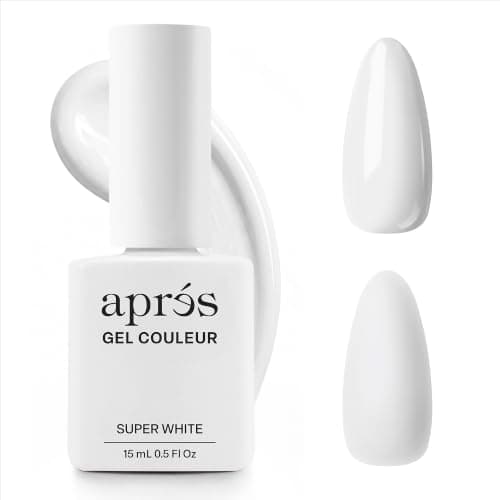
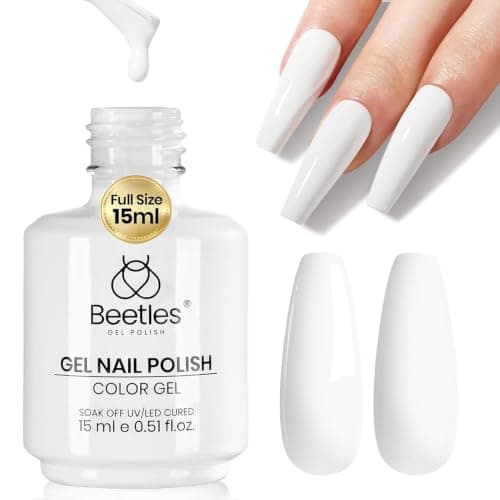
Shop on AmazonAPRÉS' one-coat, cool-toned white that the brand claims stays white after curing — the pro-line answer to the yellow cast cheaper whites can develop.
Shop on AmazonProduct prices and availability are accurate as of October 19, 2026 and are subject to change. Any price and availability information displayed on Amazon at the time of purchase will apply. As an Amazon Associate we earn from qualifying purchases. Star ratings reflect Amazon customer reviews at the time of our last check.
A coffin — ballerina, in older salon language — tapers along the side walls like a stiletto and then stops in a flat edge like a square. That flat edge is the whole personality of the shape, and the white tip sits on it.
On a square nail, the white tip is a bar with a gentle curve across the middle. On an almond, it is a deep curve following the taper. On a coffin, the tip has to do both: run straight across the flat edge and then follow the taper down each side wall. The result is a white section shaped like a shallow trapezoid — wider at the free edge, narrowing toward the smile line. Get the proportions wrong and it looks like a mistake; get them right and it is the most graphic French there is.
Two things follow. First, the smile line on a coffin is usually shallow or almost straight, because a deep curve fights the flat edge visually. Second, the white section is comparatively large — it covers more of the nail than on any other shape — so opacity and a clean edge matter more, and a streaky white shows more.
Length and tip depth are not separate decisions on a coffin. They set each other.
| Length | Tip depth that works | What happens if you go deeper |
|---|---|---|
| Short coffin (barely past the fingertip) | Thin — 1–2 mm | The nail reads as a white nail with a pink cuticle |
| Medium coffin | Medium — a quarter of the visible nail | Still balanced; the classic salon set |
| Long coffin | Deep — up to a third of the nail | Reads as a "salon set" look, and the corners carry all the weight |
The rule of thumb salons use: the white section should cover roughly the part of the nail that extends past the fingertip, plus a little. On a short coffin that is a thin line; on a long one it is a deep block. Copying a deep tip from a long-coffin photo onto a medium nail is the single most common way the look goes wrong — the white eats the pink and the shape loses its taper.
For the general shape without the white, coffin French tip nails has the colour and finish variants; the thin-line version of the same shape is its own page, publishing later this autumn.
Every coffin French chips at the corners first, and it is worth understanding why before blaming the polish.
The corners of a coffin extend past the finger pad with nothing behind them. On a square nail the corners are at least supported by the full width of the nail bed; on a coffin the taper has narrowed the nail, so the corners sit further from the support and take every knock as a lever. And because the tip is white over a sheer base, a corner chip shows as a bright white notch — the most visible possible failure on the most visible part of the nail.
Three things help, in order of effect:
There is a fourth: white gel is harder than white polish, and a coffin French in regular polish is a three-day manicure. This is one of the shapes where gel or acrylic is not a preference but a requirement.
Built extensions. Acrylic or hard gel sculpted over a coffin tip, white French either painted or cut with a smile-line cutter after the build. This is the salon method and the strongest version — the structure is one continuous piece — and it is the route for a long coffin. The French tip acrylic nails page covers the build; the cutters live with the guides and stamps.
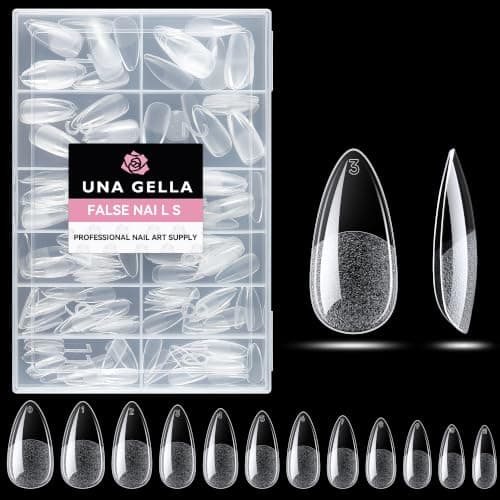
Full-cover soft-gel tips. A coffin-shaped soft-gel tip, often pre-painted with the white French, glued on with gel adhesive and cured. Faster, lighter, and the pre-painted line is perfectly uniform. BTArtbox's X-Coat coffin sets are this method; they are the shortlist above. The nail tips category explains the difference between these and press-ons.
Press-on sets. A finished coffin French in a box, glued or tabbed on. The fastest and the least durable, and the right answer for an occasion. The coffin corners are the pop-off point on press-ons, too — press the corners hardest when applying, and file them softer as above.
Because the white section is large, the base shows less than on other shapes, and that changes the base choice. A very sheer pink can look like nothing at all next to a big white block; a milky pink or a slightly more opaque nude gives the white something to contrast with. Warm nudes for olive and deep skin tones keep the white from looking chalky. The nude bases page sorts them by undertone.
The all-white version — milky white base, brighter white tip — works especially well on coffin, because the shape is graphic enough to carry a low-contrast French that would disappear on a round nail.
The flat edge is a canvas, and the white coffin French takes finishes better than most:
Glitter over a white coffin tip is the one finish that fights the shape: it blurs the crisp edge that makes the coffin worth wearing. If you want sparkle, put it on the base and leave the tip clean.
Coffin tip depth varies more between technicians than on any other shape, so the wording matters. Say the length first ("medium coffin"), then the colour ("white French"), then the depth ("thin tip", "medium tip" or "deep tip"), then the line ("straight across" or "slight curve"). If you have a photo, show it at the depth conversation, not at the start — most misunderstandings are about how much white, not what colour. The how to ask for French tips at the salon guide has the full script, and how much French tip nails cost has what a coffin set adds to the price.
For nail health under any extension, the American Academy of Dermatology's nail care basics are the sensible baseline — most damage attributed to coffin extensions is removal damage.
The shape's other versions are on the coffin French tip nails page, the plain white on every shape is on white French tip nails, and everything starts from the french tip nails homepage.
What French tip shoppers are buying this week, across every category.
What are white coffin french tip nails?
A French manicure — sheer or nude base, white tip — on a coffin (ballerina) shape: tapered side walls that end in a flat, squared-off edge. The white tip follows that edge, so it reads as a straight bar across the top rather than a curve, with a shallow smile line or none at all.
How long do white coffin French tips need to be?
Medium is the sweet spot. A coffin needs enough length past the fingertip for the taper to show — on a short nail the shape reads as square — but a long coffin puts a lot of leverage on the corners, which are the weakest point of the shape. Most salon sets are medium; long is for occasions.
Why do my coffin French tips chip at the corners?
Because the coffin's corners stick out past the finger with no support underneath, and every knock lands on them. The white tip is thicker than the base, so the chip shows white. Capping the free edge with top coat, filing the corners a hair rounder, and choosing medium over long all reduce it.
Do white coffin French tips need extensions?
Almost always. The shape needs length and a strong, flat free edge, which natural nails rarely have. Acrylic or hard gel over a coffin tip, a full-cover soft-gel coffin tip, or a coffin press-on set are the three routes; painting a coffin French on short natural nails is not really possible.
What do I ask for at the salon?
Say the shape, the length and the tip: 'medium coffin, white French, thin tip' or 'deep tip'. If you want the tip to follow the flat edge rather than curve, say 'straight across'. Bring a photo — coffin tip depth varies more between technicians than any other shape.
Is white coffin the same as white ballerina French tips?
Yes. Ballerina is the older name for the same shape — the flat edge is said to look like a pointe shoe. Salons use the two words interchangeably; some technicians use 'ballerina' for a slightly narrower taper.
Chrome Coffin French Tip Nails
chrome coffin french tip nails
Coffin French Tip Nails
coffin french tip nails
Short Coffin French Tip Nails
short coffin french tip nails
White French Tip Nails
white french tip nails
Almond French Tip Nails
almond french tip nails
Black French Tip Nails
black french tip nails
Blue French Tip Nails
blue french tip nails
Brown French Tip Nails
brown french tip nails