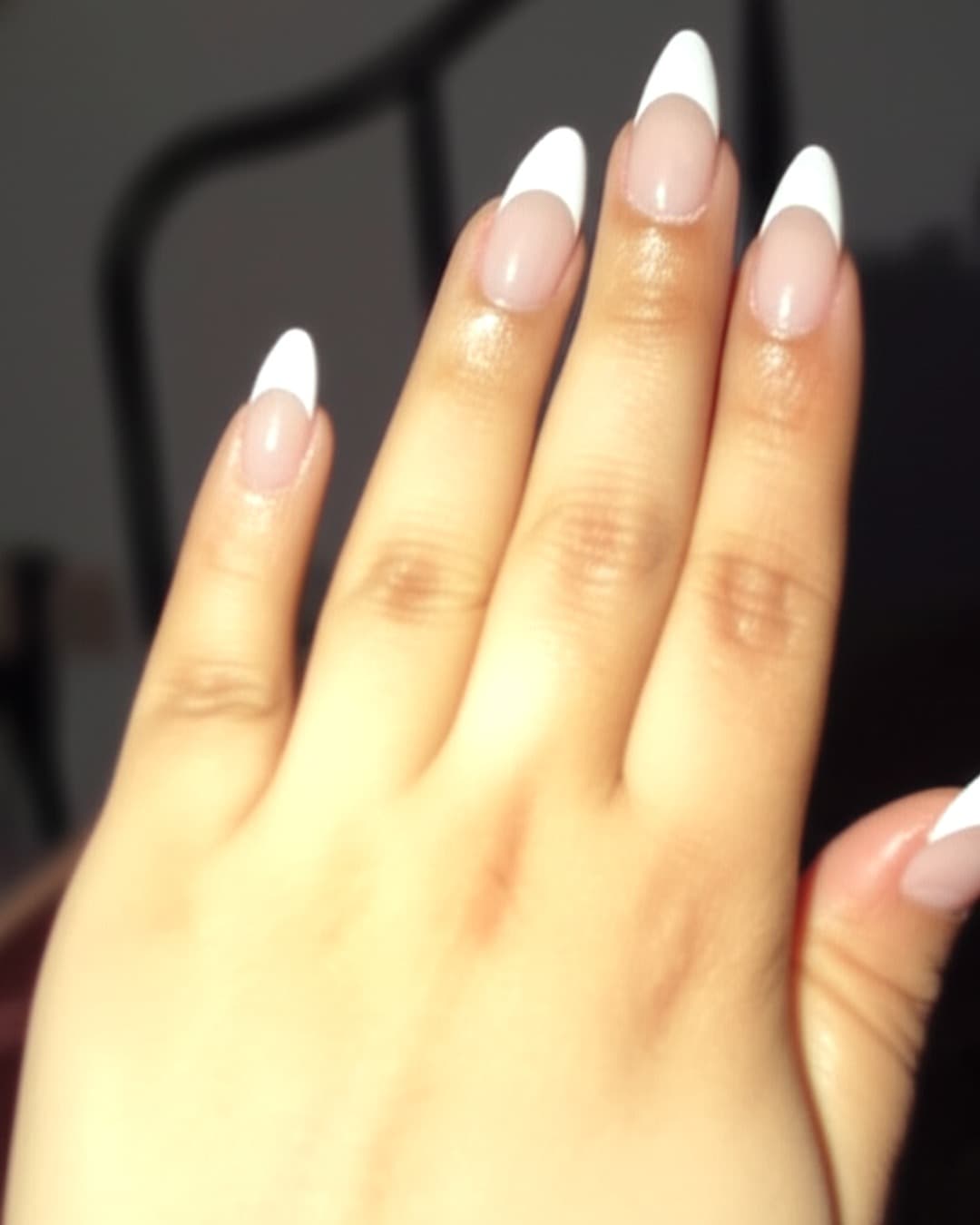
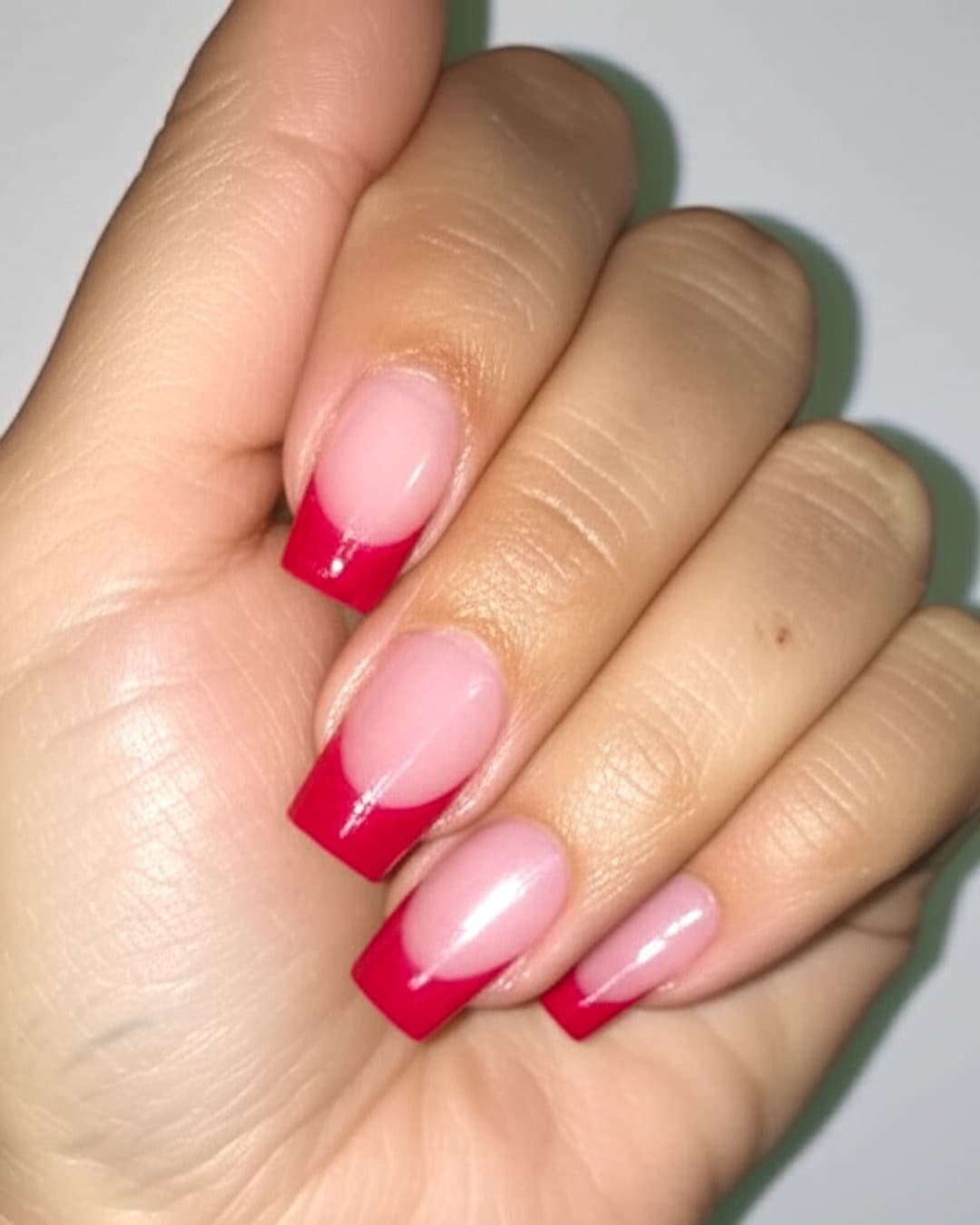
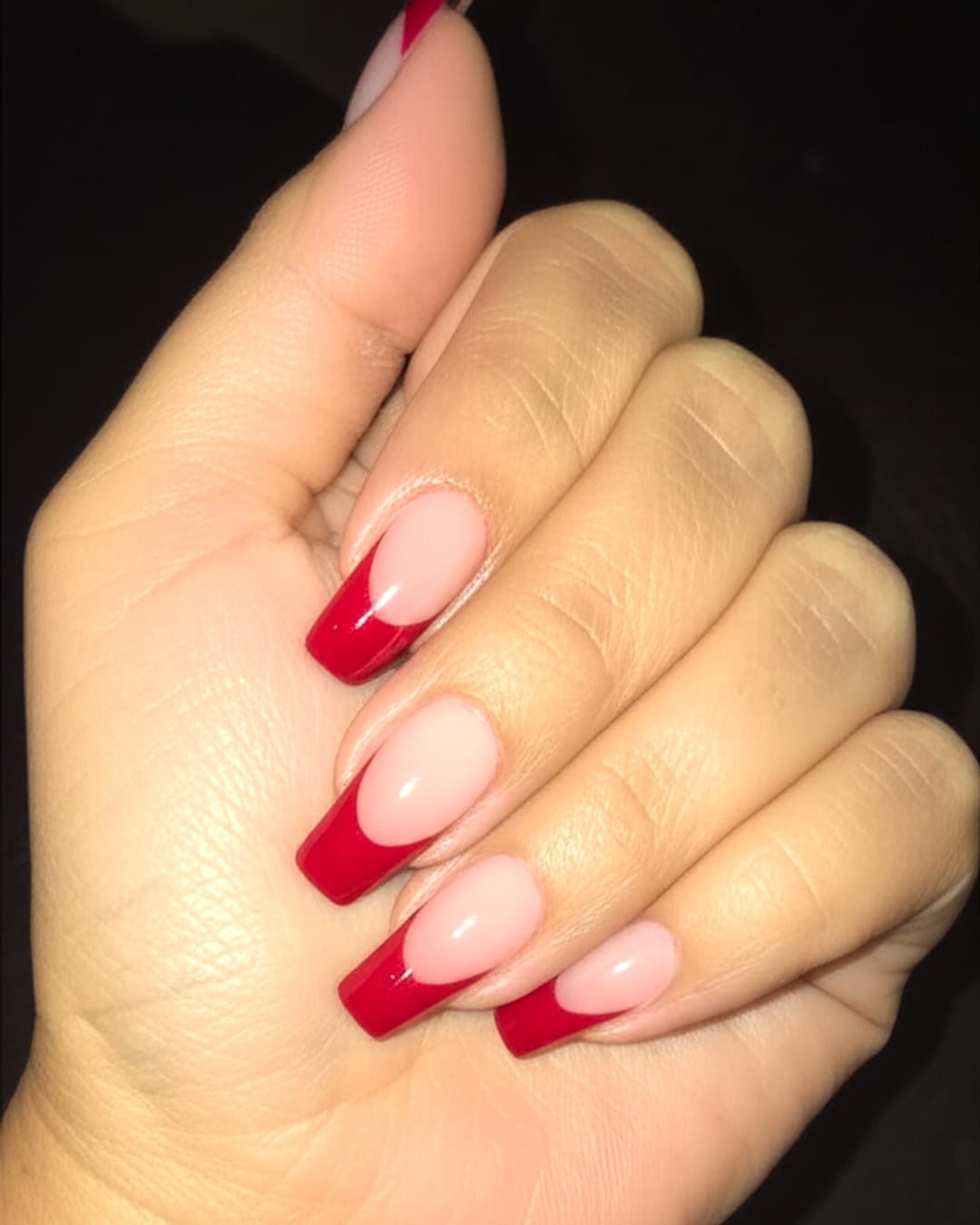
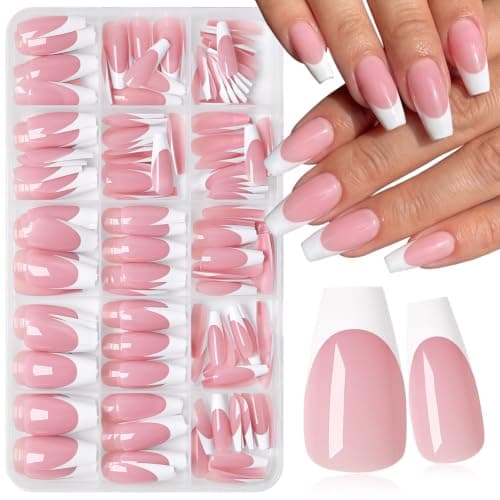
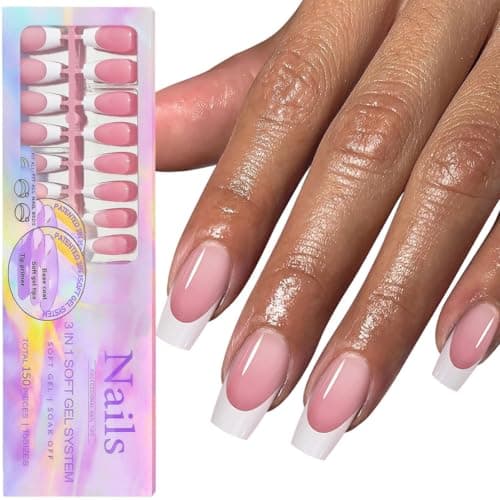
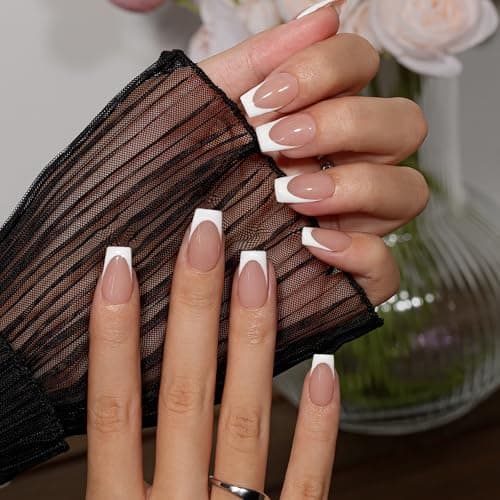
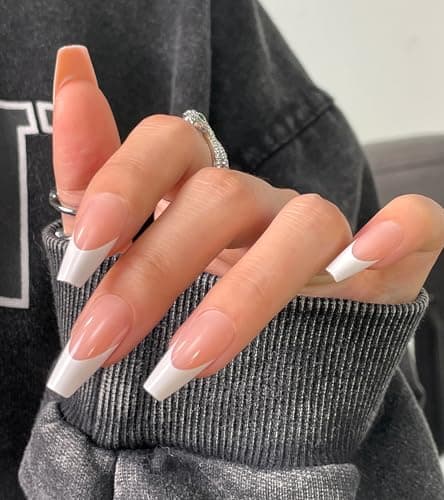
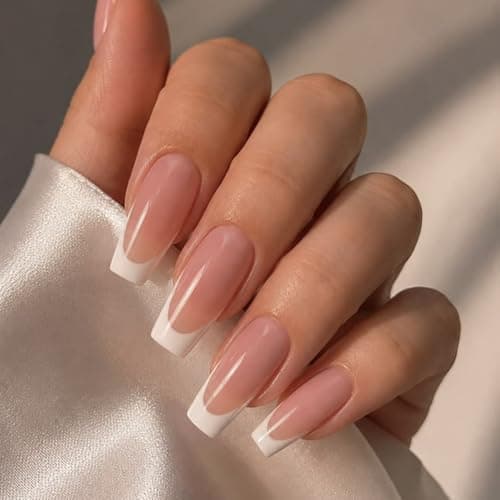
What does "medium" actually mean for a coffin nail?
Medium means the free edge extends far enough past the fingertip for the taper to become the main event, without the nail becoming a project to live with. There is no official number. Salons, press-on brands and nail techs all draw the line in slightly different places, and a "medium" set from one brand can be a "long" from another.
The most reliable way to describe it is relative to your own nail. Look at your hand palm-down. The nail bed is the pink part, from the cuticle to where the nail lifts away from the skin. As a rule of thumb, a medium coffin has a free edge that is roughly a third to a half of that pink length. On a long nail bed, that is more free edge than on a short one, which is exactly right, because the shape is about proportion rather than a fixed ruler length.
Why this matters: a coffin is two straight side walls angling toward each other and stopping at a flat edge. Those walls need distance to angle. On a short coffin there is so little distance that the flat edge dominates, and the nail can read as a narrow square (the short coffin French tip nails page deals with how to fight that). At medium, the walls have enough room to form a clear, soft V before they meet the flat edge, and that V is what people recognise as coffin.
How deep should the white tip be on a medium coffin?
As a rule of thumb, the white should cover about half of the free edge, measured at the centre of the nail. That proportion is why medium is the length where a classic French looks most balanced: the white band and the visible base are roughly equal partners.
Three things go wrong around that midpoint:
- Too shallow. A white line that covers only a sliver of the free edge reads as a micro or thin French. That is a legitimate look, and it is lovely on a coffin, but it is a different style with its own page: thin French tip coffin nails. If you want a classic French, ask for more depth.
- Too deep. When the white swallows most of the free edge, the eye reads the white as "where the nail ends" and the nail looks shorter and blockier than it is. On a medium coffin that also hides the taper, because the side walls of the white run almost parallel.
- The wrong curve. The smile line on a medium coffin should be gently curved, dipping slightly at the centre and rising to meet each side wall where the taper begins. A perfectly straight line across looks like a square French that has been filed afterwards. A deep, dramatic curve, the kind that looks great on long coffins, runs out of room on a medium nail and ends almost at the cuticle on each side.
A quick check before the top coat goes on: look straight down at the nail. The two points where the white meets the side walls should sit level with each other and roughly where the nail leaves the finger.
Where should the taper start?
At the smile line, or just past it. This is the single most useful instruction for a medium coffin, and the one most often left to chance.
On a long coffin, the side walls can run straight for a while and only start angling in partway along the free edge, because there is plenty of length left to finish the taper. On a medium coffin, starting that late produces a nail with long straight sides and two clipped corners: a square with the corners filed off, which is the most common complaint about medium sets that "don't look coffin".
Start the taper where the nail leaves the finger and keep the angle steady all the way to the flat edge. Each side wall should be a single straight line from that point, not a curve. The result is a clean, shallow V that reads as coffin from across a room.
How wide should the flat edge be?
As a rule of thumb, a third to two fifths of the nail's widest point. Medium gives you slightly more latitude here than short does, because the taper has enough length to establish the shape before the flat edge takes over.
Narrower than a third, and the corners become fragile points that catch on knitwear and break first. Wider than two fifths, and the nail starts to look like a tapered square. If you are unsure, err a touch narrow. Narrow corners can be softened later; a flat edge that is too wide can only be fixed by refiling both side walls, which shortens the taper.
The flat edge should be straight and parallel to the cuticle line. Look at it end-on as well as from above. A flat edge that tilts toward one side is usually the result of filing one side wall harder than the other, and it makes the whole hand look uneven.
When is medium the right length, and when is it not?
Medium is the right call for most people who want the coffin shape to be obvious. It suits average and long nail beds especially well, because the taper has room without the nail becoming impractically long. It is also the length at which most press-on French tip nails in coffin are cut, so it is the easiest length to buy ready-made.
Choose short instead if your hands do a lot of fine work (keyboards, instruments, small fasteners), if your natural nails are thin and break at the corners, or if you want a hint of coffin rather than a statement. Expect the shape to read less clearly, and keep the flat edge narrow.
Choose long instead for an occasion, a photo shoot or a look where the shape itself is the point. Long coffin allows a deeper, more curved smile line and a wider flat edge, but it needs a strong structural build and changes how you use your hands.
One more test: if a medium set feels long by the second day, it was probably long-medium, and you will usually be happier filing it back rather than waiting it out. The shape survives a slight shortening better than almost any other, because the taper simply ends a little sooner.
What should you say at the salon?
Name four things out loud rather than letting the technician decide them: length, taper, flat edge and tip depth. "Medium coffin, French tip" leaves all four open, and every salon fills them in differently.
- Length. "Medium coffin, about a third to a half of my nail bed past the fingertip." Pointing to the length on your own nail is clearer than any number.
- Taper. "Start the taper where the nail leaves my finger, straight side walls."
- Flat edge. "Keep the flat edge narrow, about a third of the width." If you like ballerina proportions, say "ballerina-narrow".
- Tip depth. "Classic French, white covering about half the free edge, gentle curve that meets the sides where the taper starts."
- Base. "Sheer pink" or "milky" for a softer look, or a sheer nude matched to your nail bed. Opaque bases hide where the natural nail ends and make the white look heavier.
- The check. Before the top coat, ask to see the hand palm-down and say what needs adjusting. A flat edge that is too wide or a taper that starts late is a quick file fix at this point and a redo after the top coat.
If a reference photo helps, bring one, but say which parts of it you want. A photo of a long coffin will be shortened to medium, and the deep smile line from that photo will not fit. The general French script is in how to ask for French tips at the salon.
How do you size medium coffin press-ons?
By width, not length. Medium coffin press-ons arrive pre-filed to the length and shape, so the decision is which numbered size fits each nail.
- Measure at the widest point. Hold each tip against the nail and check it covers from side wall to side wall without touching the skin.
- Size up between sizes. If a nail falls between two sizes, take the larger and file the side walls in with gentle strokes toward the centre. A tip that is too narrow leaves a gap at the side wall that shows on a medium nail and lifts first.
- Check the flat edge. Some sets are cut with a wider flat edge than the photo suggests. A few strokes of a fine file on each side wall brings it back to coffin proportions.
- Trim the length if needed. If a set runs long-medium on your hands, clip a little off the free edge before applying and refile the flat edge straight. On pre-painted French sets this takes off some of the white, so trim conservatively.
- Seal the edge. A thin top coat across the free edge helps the corners on any coffin set.
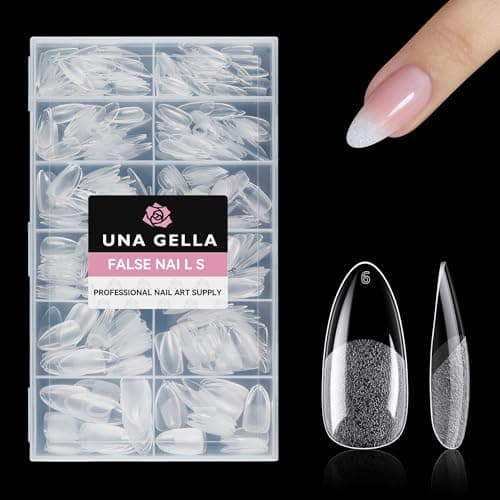
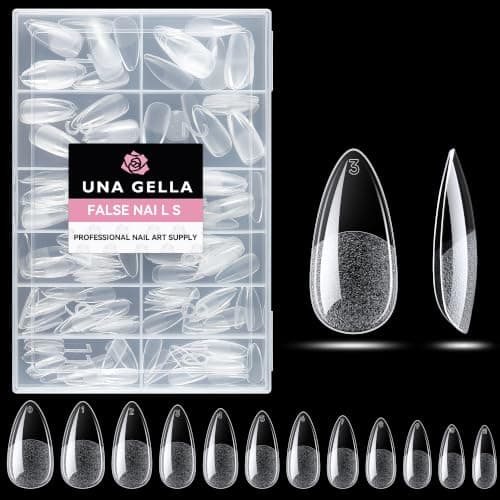
The listings below are medium coffin sets plus two longer coffin options that come with files, for anyone who prefers to shorten a long set. Piece and size counts are as each listing states them; check the listing for the current pack before buying.
Why the medium version gets searched so differently
This page exists because of this site's own search data. People looking for the medium coffin French phrase it in many different ways, and the phrasing with "medium" at the end is the most common by a wide margin.
| Query | Google impressions | Average position |
|---|
| coffin french tip nails medium | 63 | 9.5 |
| medium coffin french tip nails | 30 | 9.1 |
| medium coffin nails french tip | 16 | 10.9 |
| french tip coffin nails medium | 14 | 9.8 |
| medium length coffin french tip nails | 7 | 9.3 |
| medium coffin french tip | 7 | 13.3 |
| coffin medium french tip | 6 | 8.3 |
| All 14 phrasings in the cluster | 159 | |
Source: Google Search Console export for lovefrenchtipnails.com, 27 July – 26 October 2026, read 29 October 2026. Impressions are per query, used only to compare phrasings; not a traffic total.
What the table says: these are people who already know the shape and the style, and are narrowing down the length. None of the 14 phrasings asks what a coffin is. That is why this page skips the basics and goes straight to proportion.
Keeping a medium coffin intact
The corners of the flat edge are where a medium coffin fails first. Use the pads of your fingers on buttons, keyboards and ring-pulls; reapply a thin top coat over the free edge every few days; and keep the cuticles and side walls moisturised so the nail plate stays flexible instead of brittle. The American Academy of Dermatology's tips for healthy nails cover the filing and moisturising basics behind that advice, including filing in one direction rather than sawing back and forth, which matters on the long, straight side walls of a coffin.
If a corner does chip, file both corners back by the same small amount so the flat edge stays level, rather than repairing just the broken side. A slightly shorter medium coffin still reads as coffin; a lopsided one does not. For every other shape and length, start from the french tip nails homepage.