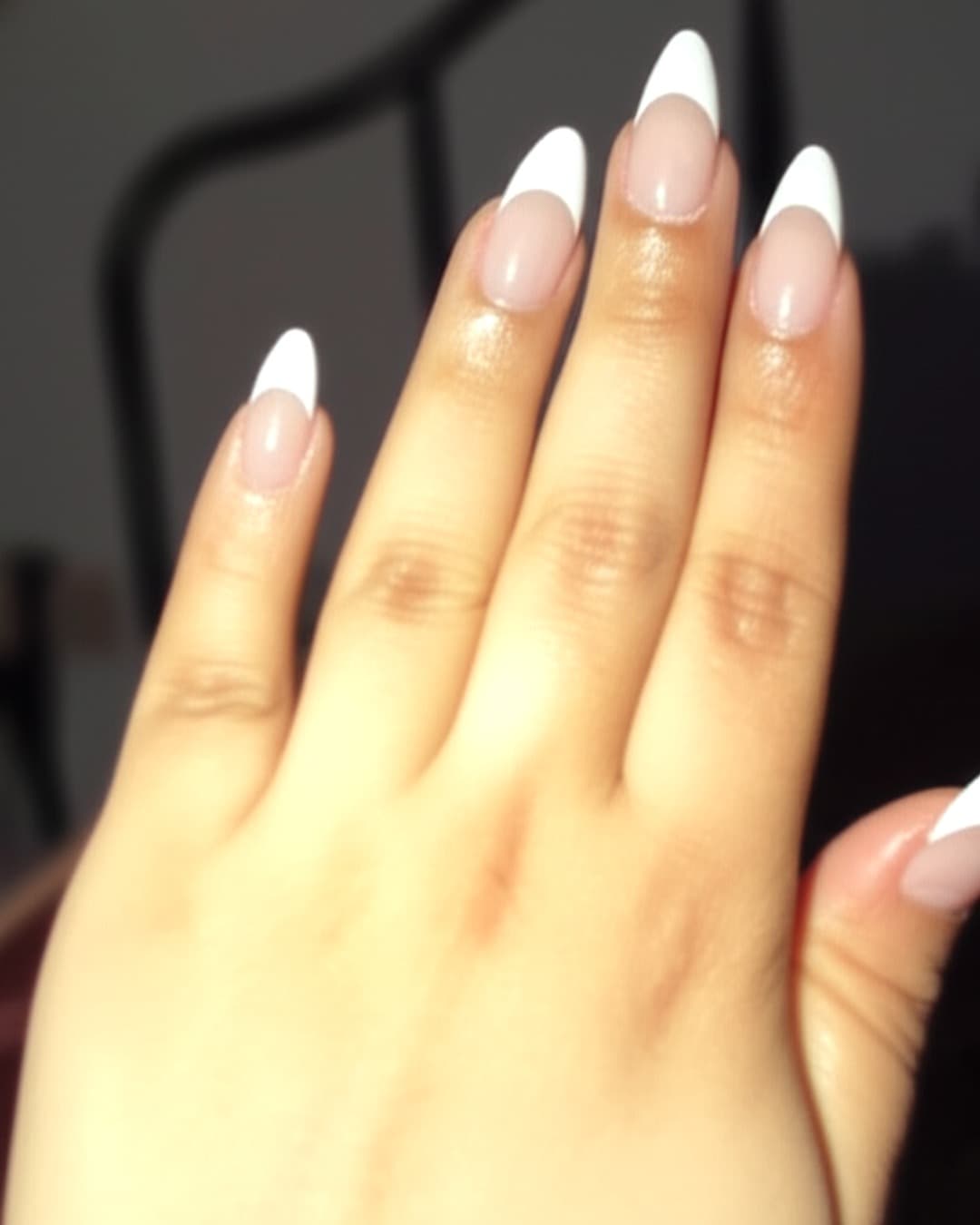
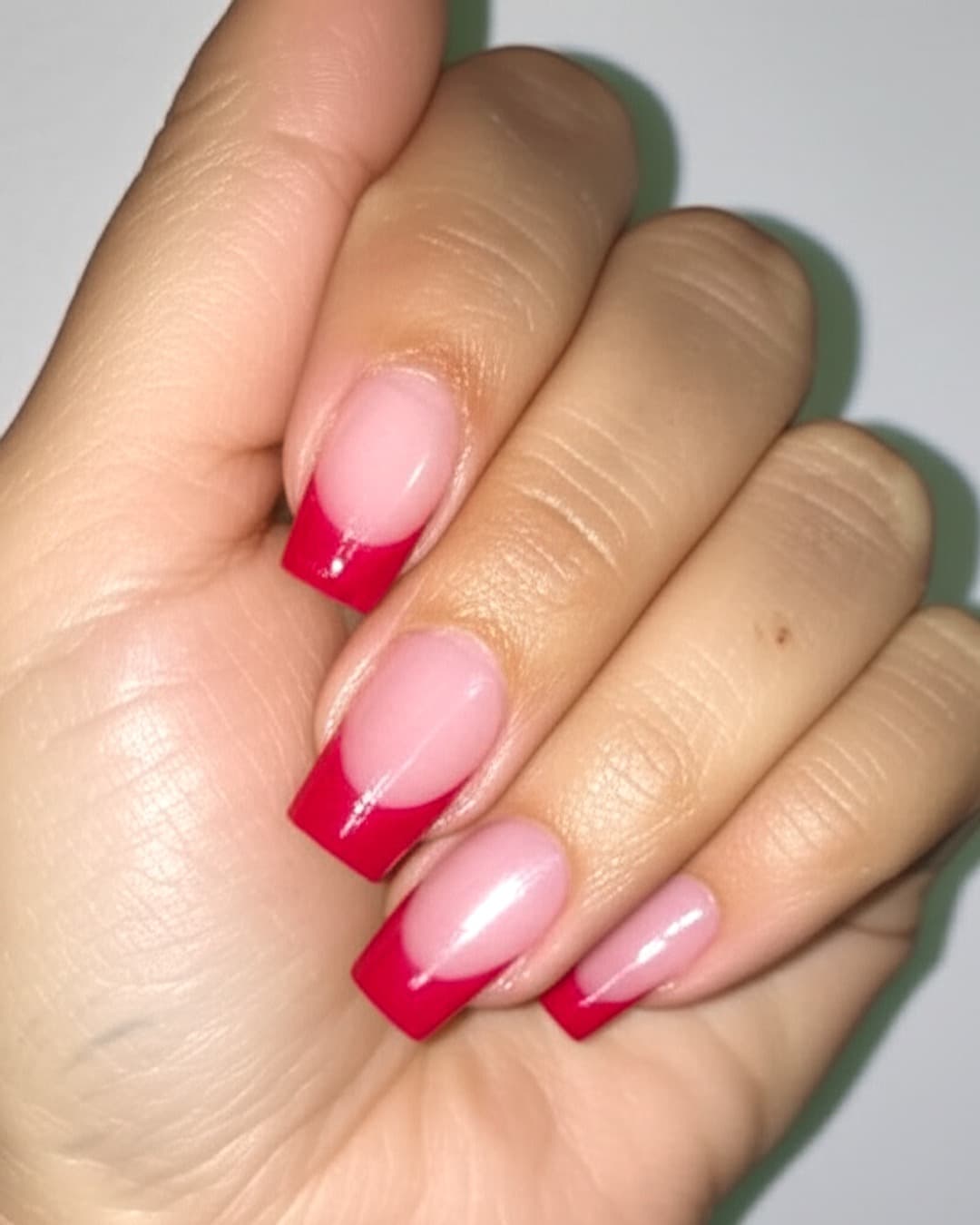
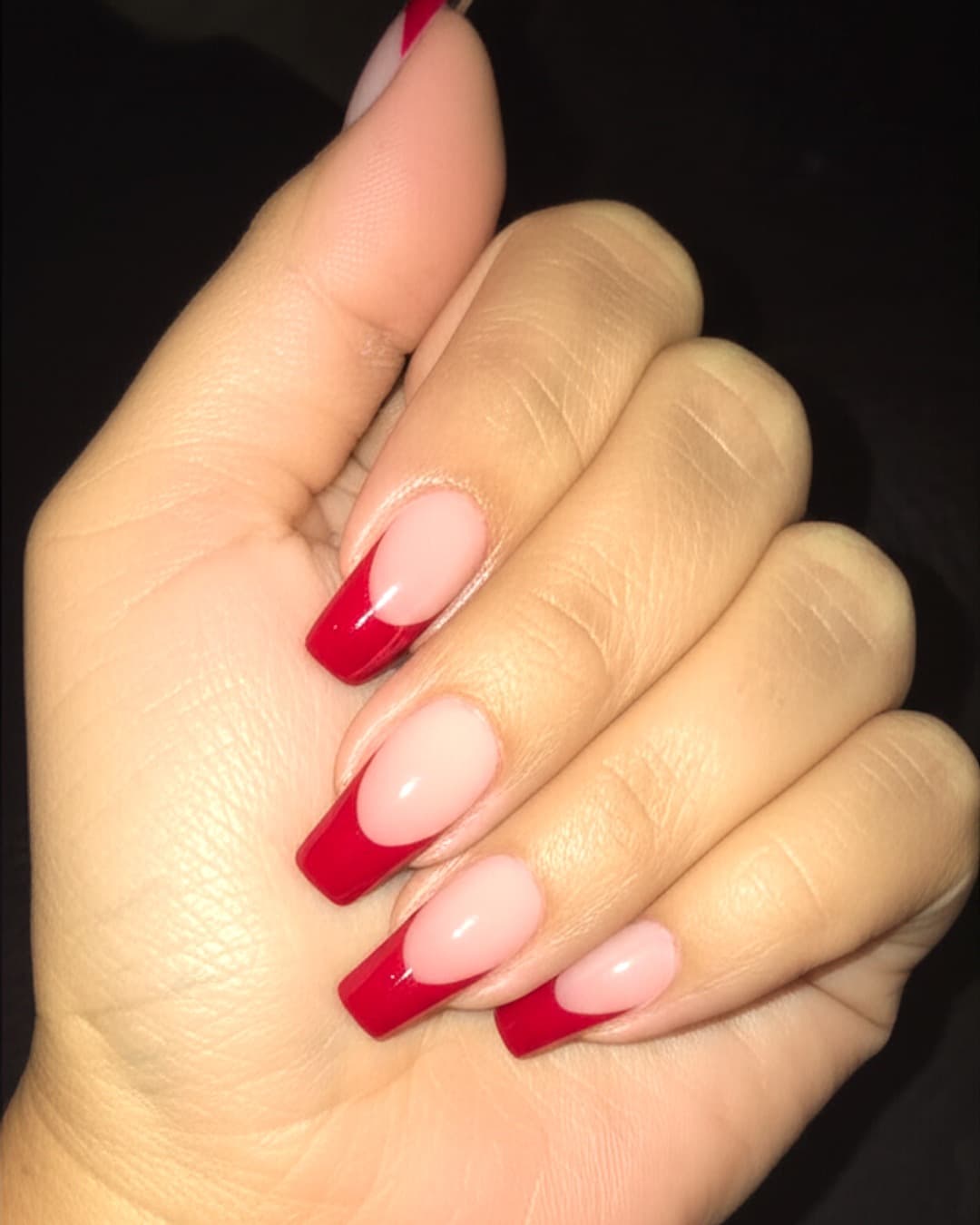
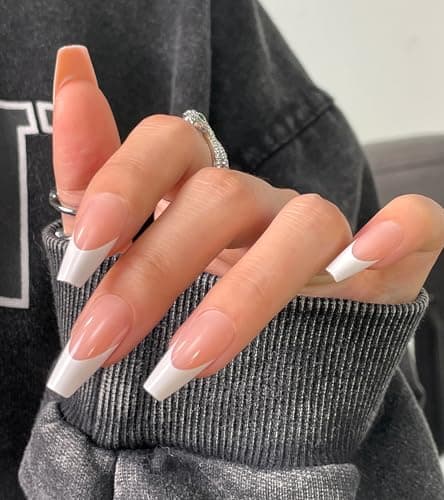
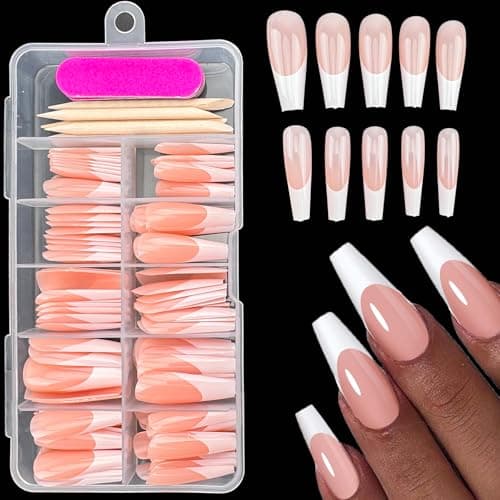
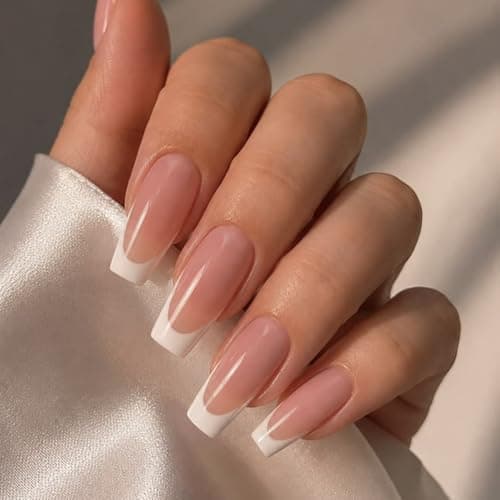
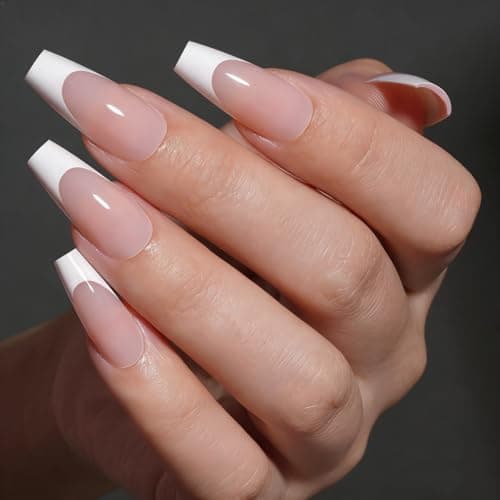
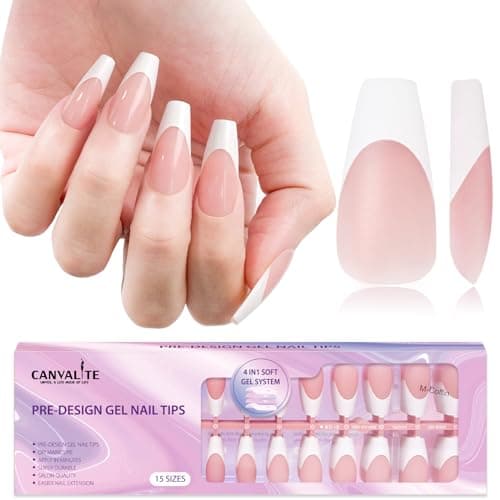
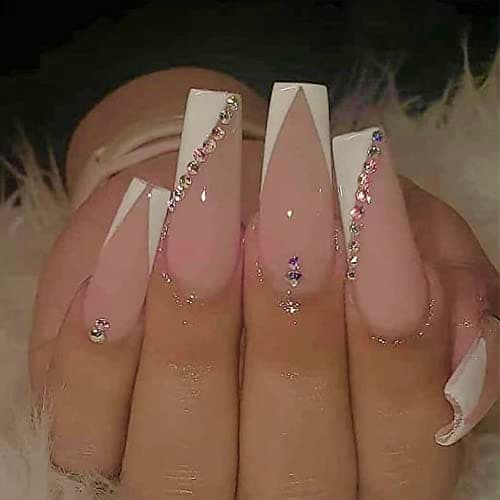
Long coffin is almost always built, not grown
The coffin shape has two features that work against a natural nail at length: straight side walls that taper inward, and a flat tip with sharp corners. An oval or almond nail spreads pressure around a curve; a coffin concentrates it at two corners and along a flat edge. On a short or medium nail, the natural plate can usually handle that. On a long nail, the free edge becomes a lever, and a natural nail tends to bend, split at the corners or snap across the middle long before it reaches the length in the photos.
So the first decision is what to build it from. There are four routes.
| Method | What it is | Upkeep | Removal |
|---|
| Acrylic | Liquid monomer and powder sculpted over a form or a glued tip; the French can be built in white powder or painted on top | Infills as the nail grows out; the stress area needs rebalancing at each fill | Soaked off in acetone by a technician, or filed down and soaked; never pried |
| Hard gel | Builder gel sculpted and cured under a lamp, shaped with a file; the white tip is sculpted in or painted in gel polish | Infills or rebalances as it grows; holds a thin, glassy finish | Mostly filed off, because hard gel does not soak away easily |
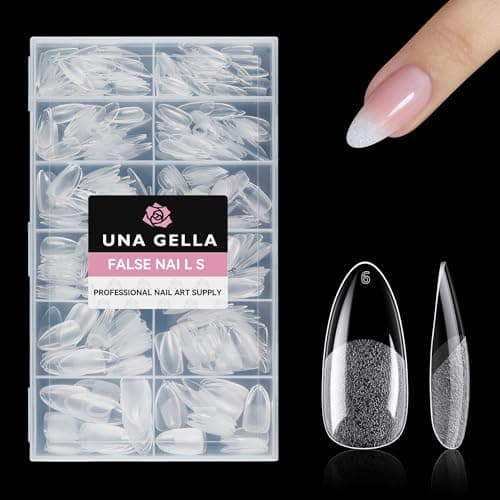
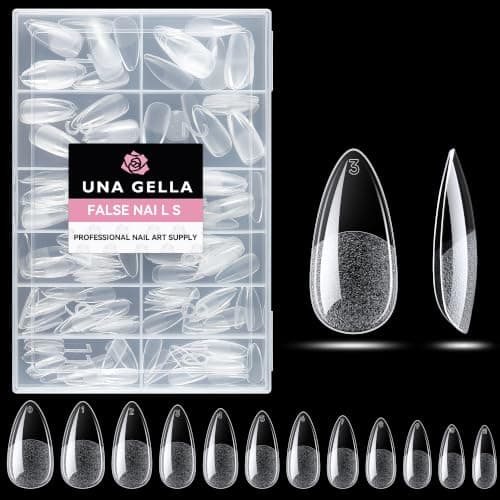
| Soft-gel tips | Full-cover pre-shaped tips bonded with gel adhesive and cured; can be blank (you paint the French) or pre-painted | Usually replaced rather than filled; some people do a new set each time | Soaked off like gel polish, with the surface broken first |
| Press-ons | Pre-shaped, usually pre-painted nails stuck on with liquid glue or adhesive tabs at home | Replace or re-glue individual nails as they lift | Warm, soapy soak with cuticle oil worked under the edge for glue; tabs peel more easily |
Acrylic and hard gel give a technician the most control over structure, which matters at length. Soft-gel tips give the most consistent shape, since every nail is the same moulded coffin. Press-ons need no salon or lamp and can be worn for just a weekend. The trade-offs between the two salon systems are covered in French tip acrylic vs gel; the full shape at every length is on the coffin French tip nails page.
The stress area is where a long coffin snaps
Every enhancement has a stress area: the zone just past where the nail leaves the finger, where the free edge starts. When a long nail catches, the force lands there, where a stiff extension meets a nail bed that can flex. A long coffin is a longer lever with a flat tip that catches more often.
Nail technicians handle this with the apex, the highest point of the curve when you look at the nail from the side. A well-built long nail is not the same thickness all over. It is thin near the cuticle so it sits flush, rises to its thickest point over the stress area, then slims down again toward the free edge so the tip looks fine rather than blocky. Look at a long coffin side-on: there should be a gentle hump over the stress area, not a flat line from cuticle to tip. A flat side profile on a long nail is the most common reason a set cracks across the middle within days.
A few other structural points matter more at long lengths than short ones:
The C-curve. Seen end-on, a nail should curve from side wall to side wall, a little like a tube cut lengthways. That arch adds stiffness. Long coffins built flat across, so they look wide and paddle-like from the front, bend more easily and also look wider than they are.
Straight side walls. The taper on a coffin should begin where the nail leaves the finger and continue in a straight line on both sides. If one side is filed in further than the other, the nail looks crooked, and the thinner side becomes the weak point.
Where a set breaks tells the technician what to fix: across the stress area usually means the apex is too low; at the corners, a flat edge too wide or corners too sharp. The salon script for French tips helps you describe it without sounding like a complaint.
A long nail needs a deeper tip and a narrower flat edge
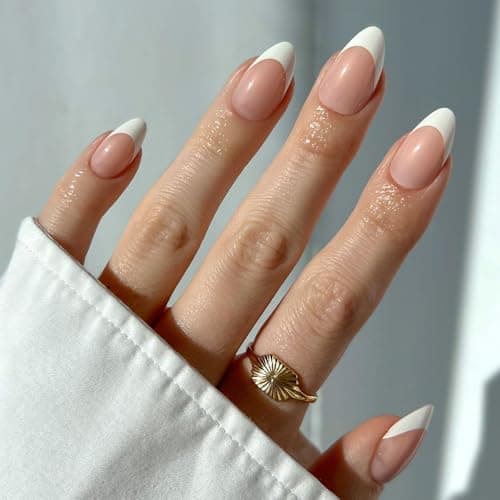
A French tip is a proportion, not a fixed width. The white mimics the free edge, and on a long nail the free edge is long. Keep it as thin as a short-nail French and the nail reads as a long nude extension with a white thread at the end; make it deeper and the nail looks balanced.
How deep to go is a judgement about your own nail bed and length, but a good test is to look from a normal distance, not close up. The white should look like the natural free edge grew out long, not like a band painted across the end. If you want the look of a fine line instead, it can work on long coffins, but it becomes a deliberate design rather than a classic French; the thin French tip coffin nails page covers that version.
The smile line has to curve more on a long nail. The smile line is the curve where the white meets the base. On a deep tip, a nearly straight line across the nail looks like a block of white, heavy and slightly dated. A curve that rises at the side walls and dips toward the centre does two jobs: it echoes the shape of a natural free edge, and it draws the eye down the middle of the nail, which makes a long coffin look slimmer. The deeper the white, the more pronounced that curve needs to be to avoid the blocky look. Both sides of the smile line should start at the same point on each side wall, or the nail looks tilted.
The flat edge decides whether it reads as a coffin. The flat tip on a long coffin should be clearly narrower than the widest part of the nail. Too wide and it reads as a long square; too narrow and it becomes a blunt stiletto with fragile corners. Let the taper run gradually from the stress area rather than angling in sharply near the end.
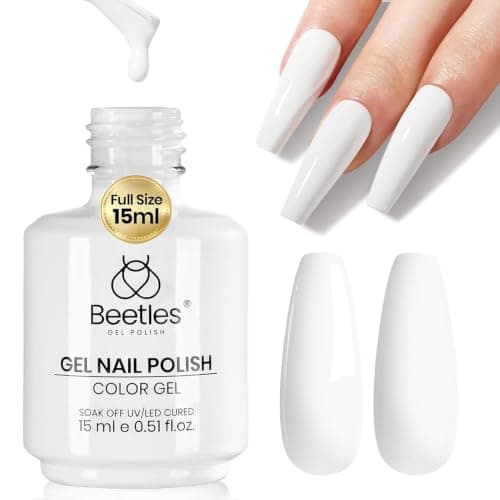
Base colour carries the length. On a long nail, much more base shows between cuticle and smile line, so the base colour does a lot of the work. Sheer pinks and milky nudes keep the look natural and soften the extension. A fully opaque base makes the nail look like one solid long panel. If you like a crisp contrast, the white coffin French tip nails page shows how bright and soft whites behave on this shape.
At the salon, say it plainly: "Long coffin, narrow flat edge, deep French with a curved smile line, sheer pink base, and please build the apex over the stress area."
Long coffin press-ons come down to sizing and adhesive
A long press-on exaggerates every fitting error. A nail that is slightly too wide sits on the skin at the side walls and lifts. A nail that is slightly too narrow leaves a gap that shows at the edges and puts the whole length on a smaller bonded area.
Sizing, step by step.
- Lay the sizes out in order before you open the glue. Most sets number each size on the underside or the tip.
- For each finger, hold the press-on against the nail and look at the side walls. It should cover the nail from side wall to side wall without touching the skin.
- If a nail falls between two sizes, take the larger one and file its side walls in gently. A too-narrow press-on cannot be widened.
- Match the curve. If the press-on is much flatter or much more curved than your nail, it will pop at the sides; a different size often fits the curve better.
- Check the cuticle end. Push the press-on back toward the cuticle without touching skin; any overlap onto skin lifts first.
Glue vs tabs. Adhesive tabs are gentler on the natural nail and easier to remove, and they suit a long coffin you want for a weekend or a single event. Liquid nail glue bonds much more firmly, which matters on a long nail because the leverage at the tip pulls on the bond every time you press a button. If you want to wear long press-ons for more than a few days, glue is the more realistic choice; just accept that it comes off with a soak rather than a peel. Either way, start on clean, dry, lightly buffed nails.
Thickness matters more at length. A thin, flexible press-on bends at the stress area each time it catches, and that flexing is what breaks the bond. For long coffins, look for listings that describe a thicker or reinforced material, and file the sharp corners very slightly so they catch less. The picks below are all long coffin French sets, chosen from what each listing states about material, sizes and adhesive. The wider range is on press-on French tip nails.
Taking any long set off. Removal is where long nails do their real damage. Never pry, crack or peel any set off; it takes layers of the natural plate with it. Soak glued press-ons in warm, soapy water with cuticle oil worked under the edges; soak acrylic and soft gel in acetone after breaking the top surface; file hard gel. The American Academy of Dermatology's healthy nail tips cover the moisturising and the not-picking habits that keep the plate underneath in good shape between sets.
Daily life with long coffins takes real adjustment
Long coffins look effortless in photos, but they take a little learning.
Typing and phones. You will type with flattened finger pads rather than the tips, and fast typing often slows at first. Touch screens respond to the skin, not the nail, so you will tilt your finger to tap. A stylus helps if your work is phone-heavy.
Fastenings and small tasks. Buttons, zips, earring backs and ring-pulls all change. Use a key for cans and pinch with the pads, not the nail. You may also snag hair and knits for the first night or two.
Contact lenses. This is the most common complaint. Use only the finger pads, keep the nail angled away from the eye, and scrub under the free edge with a soft brush first. If it still feels unsafe, choose medium length instead.
Grow-out. As the set grows, the apex moves forward and the balance point shifts toward the tip, which puts more strain on the stress area. That is why long sets need infills on schedule. A grown-out long coffin is more likely to break than a fresh one.
How people search for long coffin French tips
This page exists because of how people look for the style. In this site's own Search Console data, the long coffin French showed up in fourteen different word orders, all at roughly the bottom of page one, and none of them earned a click, because the site had no page for the length. Google was matching most of these to an article about how long French tips last, which is about wear time, not nail length.
| Phrasing searched | Google impressions | Average position |
|---|
| long coffin french tip nails | 38 | 9.8 |
| long coffin french tip | 22 | 9.8 |
| coffin french tip nails long | 15 | 9.7 |
| long coffin nails french tip | 15 | 11.1 |
| long french tip nails coffin | 14 | 10.4 |
| long french tip coffin nails | 8 | 12.5 |
| french tip nails long coffin | 7 | 9.6 |
| Seven other phrasings combined | 15 | 6.0 to 17.5 |
| All 14 phrasings | 134 | |
Source: Google Search Console export for lovefrenchtipnails.com, 27 July – 26 October 2026, read 29 October 2026. Impressions are per query, used only to compare phrasings; not a traffic total.
People put "long" first, last and in the middle, but they all want the same nail. At the salon, the words matter less than naming the length, the flat-edge width and the tip depth. For every other length and finish of the shape, start from the french tip nails homepage.