BTArtbox
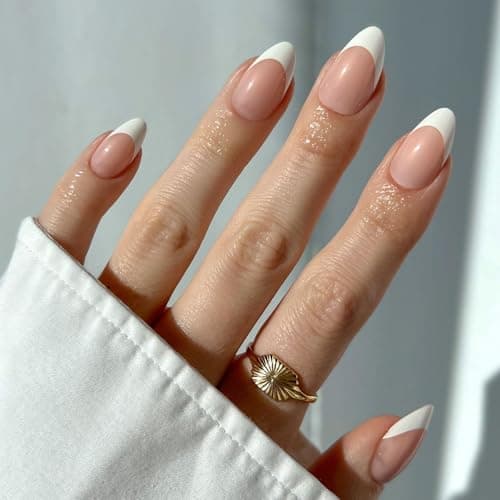
BTArtbox Short Almond White French
$14.974.3 (11,735)
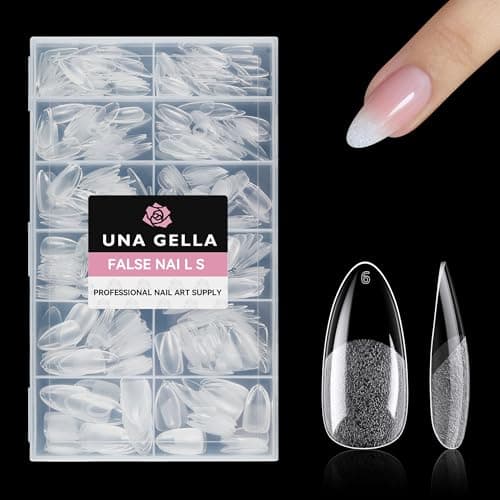
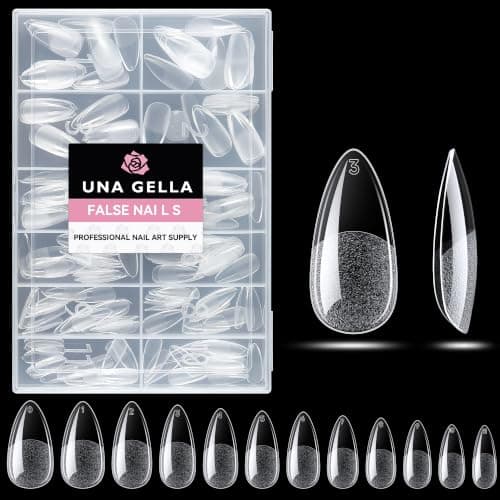
Try almondThe almond set — elongating shape, soft-gel construction that files without cracking.
Shop on AmazonFrench tip nail shapes compared — square, squoval, almond, oval, coffin, stiletto, round — and how the smile line must change for each.
French tip nail shapes matter more than colour, because the shape decides how the smile line reads. The same white tip on a square nail and on an almond one produces two genuinely different manicures — one graphic and crisp, the other elongating and soft.
Getting this right is also mostly free. Shape is filing, not product, so it costs nothing to change your mind next time.
The almond set — elongating shape, soft-gel construction that files without cracking.
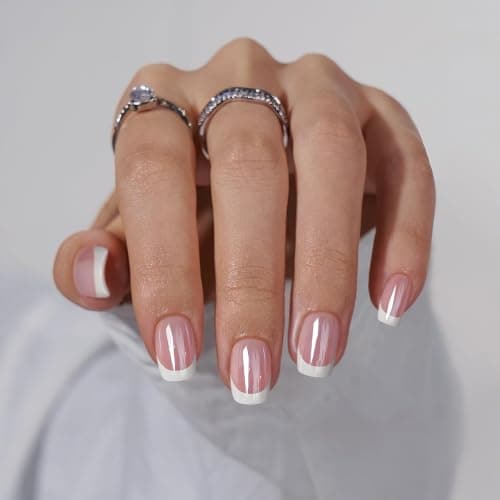
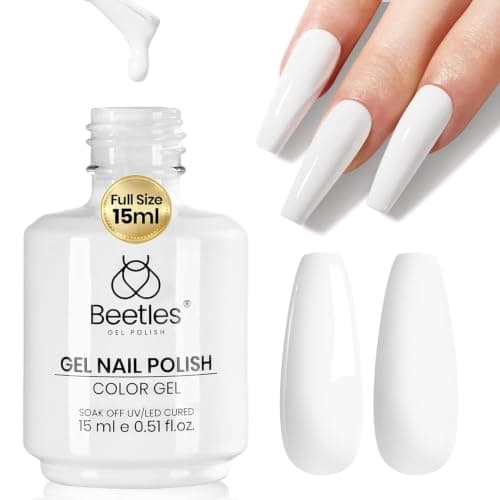
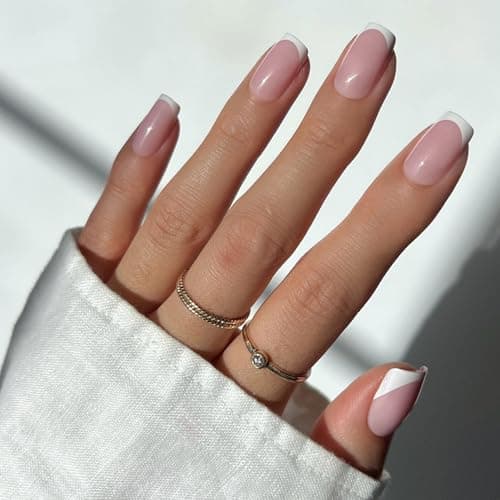
Shop on AmazonThe crisp square set from the same soft-gel line.
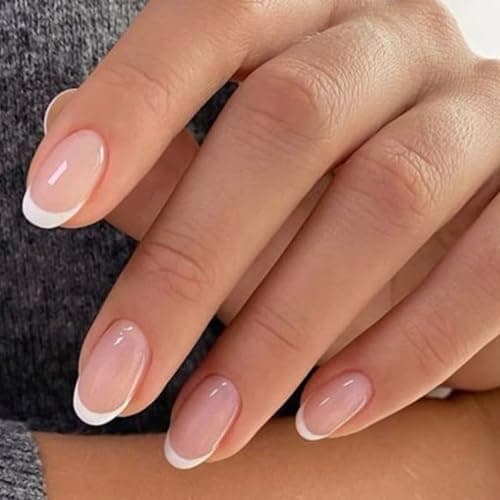
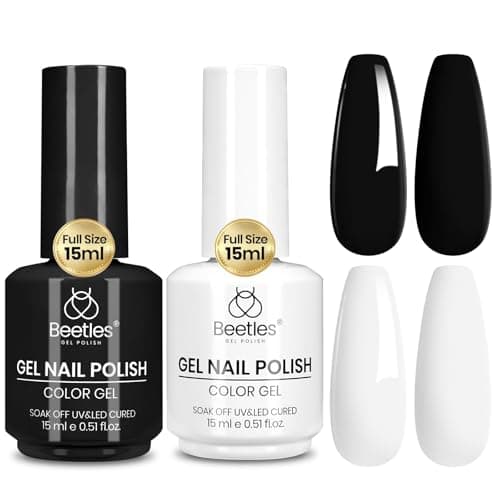
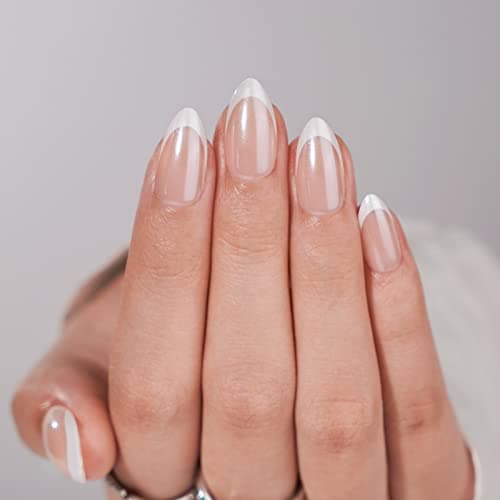
Shop on AmazonThe most natural-looking set — reads as a good manicure, not as press-ons.
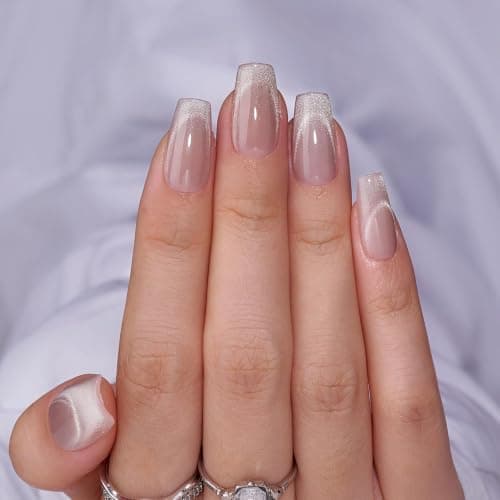
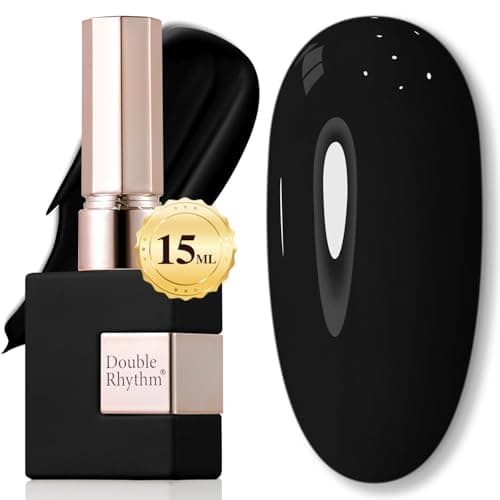
Shop on AmazonThe coffin French in press-on form, with a cat-eye shimmer tip.
Shop on AmazonProduct prices and availability are accurate as of October 17, 2026 and are subject to change. Any price and availability information displayed on Amazon at the time of purchase will apply. As an Amazon Associate we earn from qualifying purchases. Star ratings reflect Amazon customer reviews at the time of our last check.
Two things about your own hands should steer the choice before fashion does.
The shape of your free edge. Nails grow in a rough natural silhouette — some fan outward toward the tip, some are already tapered. Filing hard against that shape leaves weak points at the side walls, and side walls are where breaks start.
Your finger length. Shorter fingers benefit from tapered shapes that continue the line of the finger. Longer fingers can carry square and round shapes that shorter fingers cannot.
The best shape is usually the one closest to how your nail already wants to grow.
The original French manicure shape. Straight free edge, sharp corners, sides filed straight.
Reads as: graphic, crisp, retro-modern. Smile line: shallow and nearly straight, echoing the flat edge. A deep curve fights the geometry. Best on: long nail beds and slim fingers. Watch out: on a short or wide nail the flat edge plus a horizontal white band creates two parallel lines, and parallel lines emphasise width. It is the least forgiving shape for short nails.
Square with the corners rounded off. The most-worn shape in salons, for good reason.
Reads as: neat, unfussy, professional. Smile line: shallow, following the softened edge. Best on: almost everyone — it is the safe answer. Watch out: very little. It is the low-risk choice, at the cost of being the least distinctive.
Tapered sides narrowing to a soft rounded point.
Reads as: elegant, elongating, expensive. Smile line: carries a deeper curve well, because the taper gives the curve somewhere to sit. This is the shape where a dramatic French looks best. Best on: shorter fingers and wider nail beds — the taper visually narrows and lengthens both. Watch out: the point is a weak spot, needs some length to work, and files down easily if you catch it.
Like almond, but rounded rather than pointed at the tip.
Reads as: natural, soft, understated. Smile line: a gentle curve following the edge. Best on: short natural nails. Oval is the most forgiving shape there is, and a French tip on a short oval nail reads as a very good manicure rather than as applied nails. Watch out: the least dramatic option. If you want impact, this is not it.
Tapered sides with a squared-off tip — the shape of a coffin, or a ballet shoe.
Reads as: bold, current, high-maintenance. Smile line: deep curves work well, and the flat tip gives the white band a strong edge to sit against. Best on: long nails, almost always extensions. Watch out: needs real length. On a short bed the taper has nowhere to go and it looks like an accident rather than a choice. Usually acrylic or gel extensions — see French tip acrylic vs gel.
Sharply tapered to a point.
Reads as: dramatic, editorial. Smile line: very deep curves suit the extreme taper. Best on: long extensions, worn deliberately. Watch out: the least practical shape by a distance. The point catches on everything and breaks readily.
Follows the natural fingertip curve, filed short.
Reads as: tidy, invisible, practical. Smile line: shallow — there is no room for anything else. Best on: very short nails, and anyone who works with their hands. Watch out: a French tip on a very round short nail can read as barely there. Use slightly more contrast than you otherwise would.
This is the part most guides omit, and it is where home manicures go wrong.
Tapered shapes — almond, coffin, stiletto — carry deep curves. The narrowing sides give the two ends of the smile line somewhere to travel.
Flat-edged shapes — square, squoval — want shallow curves. A deep curve on a square nail pushes the side points high while the centre stays low, and the mismatch reads as a mistake.
Round and short shapes want the shallowest curve you can draw — often barely a curve at all. A slight lift at each side wall is enough to suggest the shape.
Ranked, most to least flattering: almond, oval, squoval, round, square. Coffin and stiletto need length that is not there.
The full reasoning is in how to do French tips on short nails, but the short version is that tapered shapes lengthen and flat wide shapes do not.
Most to least durable: round, squoval, oval, square, almond, coffin, stiletto.
Shapes with less material at the tip break more easily. If you break nails often, moving one step toward the round end of that list usually solves it without giving up the look.
Filing to a new shape is free and takes minutes, but going from square to almond removes material from the side walls — so a nail can look shorter immediately after the change even though nothing came off the length.
Grow a little extra before a shape change if you can, and file dry rather than straight after soaking. Wet nails are softer and tear rather than file cleanly.
Say the shape name and the length together, because "medium almond" means something specific while "a bit longer and pointy" does not. Bring a photo — it removes more ambiguity than any description. How to ask for French tips at the salon has the full script.
Note that shape upgrades beyond square and round often carry a $5–$15 surcharge, since they require sculpting rather than filing to a standard edge. Pricing details here.
Aesthetics aside, some shapes are simply impractical for some hands, and it is cheaper to know that before the appointment than after.
Typing all day. Long tapered shapes make you strike keys with the pad of the finger rather than the tip, which is slower and more tiring. Short squoval or round is the pragmatic answer, and a thin French tip on either still looks deliberate.
Working with your hands — gardening, cooking, lifting, childcare. Round and squoval, kept short. Anything tapered will snap, and a snapped acrylic tip can tear the natural nail underneath.
Playing an instrument. Guitar and piano both want nails short enough not to interfere; a micro-French on a round short nail is the only version of this style that really works.
Client-facing or formal work. Squoval or almond, medium length, nude or off-white tip. This is the combination that reads as groomed rather than as a statement.
Uncommon but worth mentioning, because it solves a real problem: if one nail is damaged or grows differently, filing all ten to match the weakest is not the only option.
Keeping nine at almond and one at squoval is far less visible than most people assume — the eye reads the overall silhouette rather than auditing each finger. This is a much better outcome than filing every nail down to match a single broken one.
What does read badly is mixing lengths dramatically. Shape variation is forgivable; length variation is not.
A detail that rarely gets mentioned: shape changes wear time, not just looks.
Square and squoval nails have the most material at the free edge, so the tip colour has a broad, well-supported surface to sit on. Tapered shapes concentrate every knock onto a much smaller area, which is why a French tip on a stiletto nail wears at the point long before the rest of the manicure looks tired.
If your tips consistently wear through within a week, the shape may be doing more of the damage than the polish. Moving one step toward squoval, and capping the free edge properly with top coat, usually buys another week without changing anything else.
| Shape | Smile line | Suits short nails | Durability | Usually needs extensions |
|---|---|---|---|---|
| Round | Barely curved | Yes | Highest | No |
| Squoval | Shallow, soft ends | Yes | High | No |
| Oval | Gentle curve | Yes | High | No |
| Square | Straight, shallow | Least | Medium | No |
| Almond | Medium to deep | Yes (lengthens) | Medium | Often |
| Coffin | Straight across the flat edge, deep sides | No | Lower | Yes |
| Stiletto | Very deep | No | Lowest | Yes |
Read it top to bottom as "most practical to most dramatic." The shapes that suit short nails and last longest cluster at the top; the ones that need extensions and break first cluster at the bottom, and no shape is in both groups.
Because squoval is the shape most people end up in, the four strokes that get there are worth writing down:
Squoval's smile line is the easiest of all the shapes to draw well, because the soft corners forgive a curve that is slightly off.
If a French keeps looking wrong across several shapes, the fault is usually tip depth rather than silhouette. A tip that covers more than about 15% of the visible nail shortens every shape, and the eye blames the shape. Thin the tip before changing the file — the short nails guide explains the proportion, and it applies at every length.
One outside reference worth keeping: the American Academy of Dermatology's healthy nail tips, which say in plainer words what this site keeps repeating about removal and cuticle oil.
What are French tip nails for the background, how to do French tips at home for the technique, and the best French tip nail brush for the tool that makes the curve possible.
Browse by shape: square, almond, coffin, short — all reachable from the french tip nails homepage.
What French tip shoppers are buying this week, across every category.
Want to see this on real nails?
Every style page shows the finish close up, a creator video, and the products used to get it.
New Year French Tip Nails: The One Night Glitter Is Correct
New year french tip nails for the night and the weeks after — where metallic and glitter genuinely belong, and what you'll regret on January 2nd.
Christmas French Tip Nails Without the Costume
Christmas french tip nails that read festive rather than novelty — the colours and finishes that work in low winter light, and when to book.
Black Friday Nail Deals: What Is Actually Worth Buying
Black friday nail deals, filtered — which nail products genuinely discount, which never do, and how to build a French tip kit without buying filler.
French Tips for Kids: Safe, Simple and Actually Doable
French tips for kids on short little nails — which products are safe at which ages, the peel-off polishes, and a method for nails that won't sit still.
Thanksgiving French Tip Nails: Warm, Simple and Photograph-Ready
Thanksgiving french tip nails in the warm neutrals that suit the table and the photos — why to book earlier than you think, and what survives cooking.
How Long Do French Tip Nails Last? Every System, Honestly
How long do french tip nails last — polish, gel, acrylic, extensions and press-ons compared, and why a French grows out better than solid colour.