beetles Gel Polish
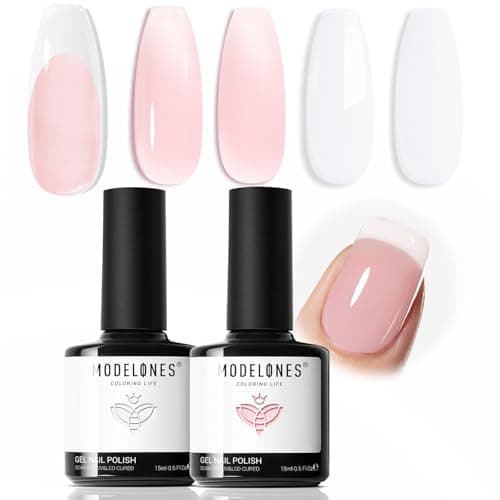
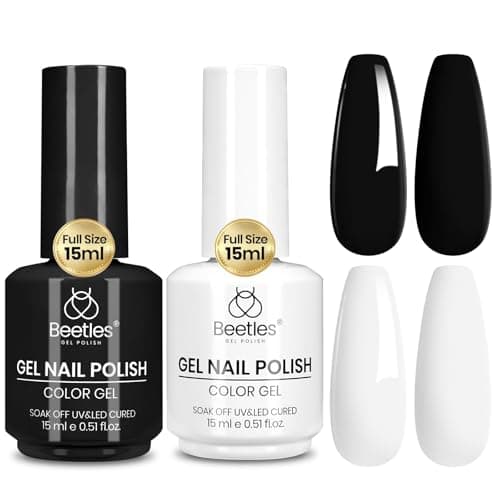
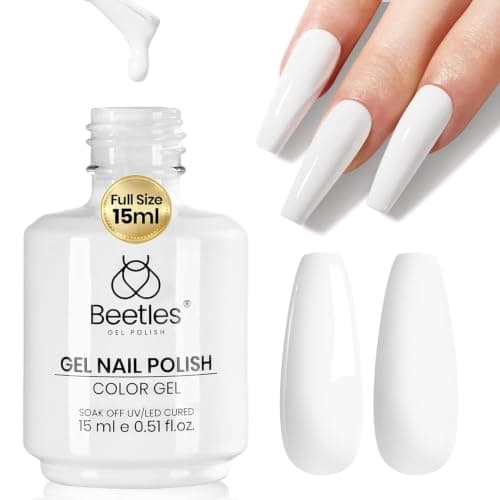
Beetles White Gel Polish, 15ml
$5.934.4 (68,857)
The whiteThe default one-coat white for tip lines — rank 200 across the whole nail category, and opacity is everything on a French tip.
Shop on AmazonFrench tip toe nails follow different rules from hands — flatter curves, thinner bands, square shapes only. The full pedicure method, what it costs, and how to make it last six weeks.
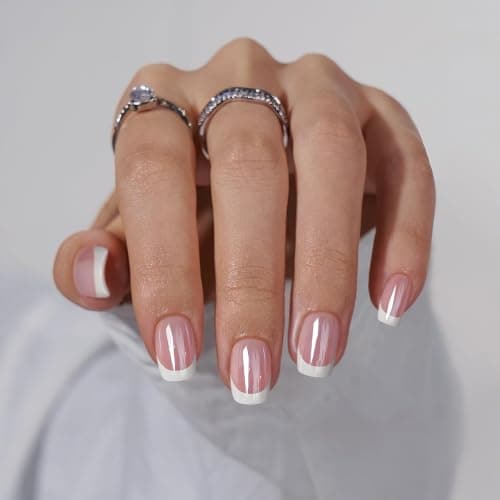
French tip toe nails are not a French manicure moved to the feet — nearly every proportion rule changes. Toenails are shorter, wider, flatter and slower-growing than fingernails, and applying hand rules to them is why so many DIY French pedicures look chunky when the salon version looks clean.
The good news: once the adjusted rules are clear, a French pedicure is genuinely easier than the hand version, and it lasts two to three times longer.
The default one-coat white for tip lines — rank 200 across the whole nail category, and opacity is everything on a French tip.
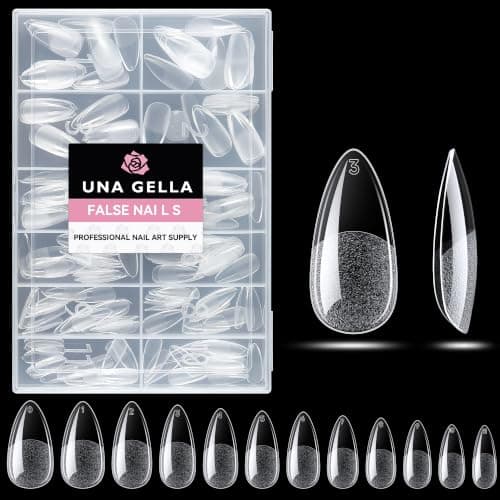
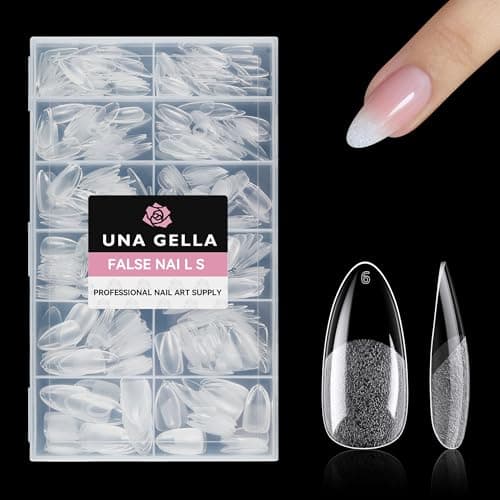
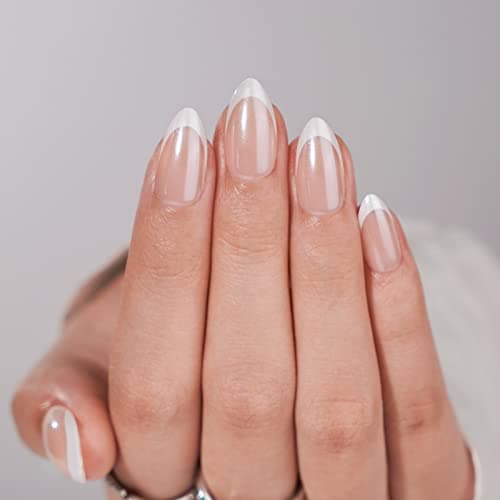
Shop on AmazonA sheer pink base and opaque white, colour-matched in one box — the classic French with zero guesswork.
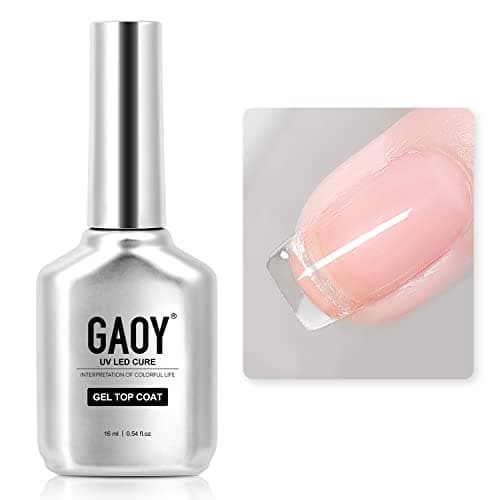
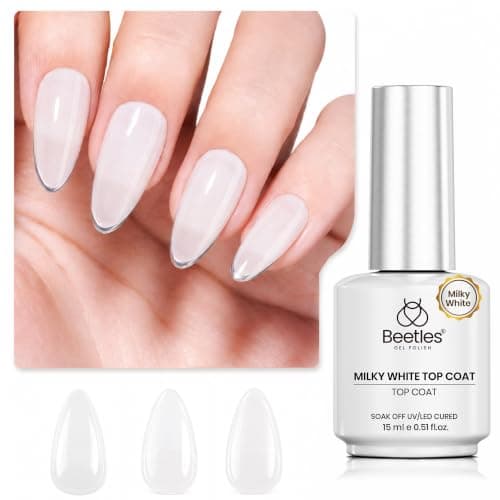
Shop on AmazonA glassy no-wipe single — the budget seal that still enables chrome.
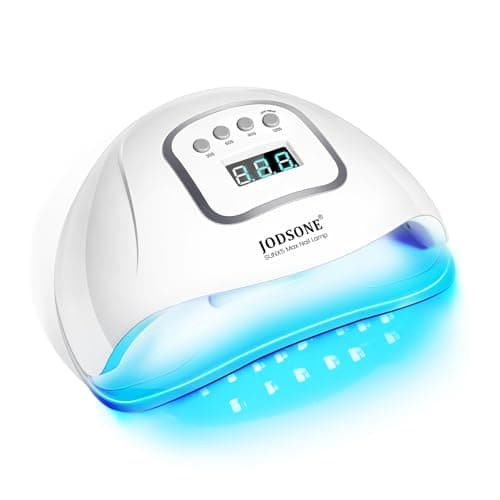
Shop on AmazonThe budget first lamp for finding out whether gel suits you.
Shop on AmazonProduct prices and availability are accurate as of September 16, 2026 and are subject to change. Any price and availability information displayed on Amazon at the time of purchase will apply. As an Amazon Associate we earn from qualifying purchases. Star ratings reflect Amazon customer reviews at the time of our last check.
The band goes thinner, not thicker. A toenail is wide relative to its length, so a band that looks proportionate on a fingernail looks like a slab on a big toe. Half the width you would use on hands — one to two millimetres on the big toe, a hairline on the smaller toes.
The curve goes almost flat. Toenails have very little natural smile line, and drawing a deep curve on a flat, wide nail reads as an obvious mistake. A nearly straight line with the slightest lift at each corner is correct.
Square only. This is a health rule, not a style one: toenails filed round or tapered at the corners are prone to ingrowing. File straight across, soften the corners a fraction, and stop. The shape debate that dominates fingernail French tips simply does not apply here.
The smaller toes are suggestions. The pinky toenail is a few millimetres of plate; a full French tip on it is neither possible nor necessary. Salons typically do a defined tip on the big toe, a thinner echo on the next two, and effectively a light stroke on the last two. Uniformity across all five is not the goal — proportion per nail is.
Total time: about forty minutes the first time, thirty after. Gel needs a lamp that can reach toes comfortably — awkward but workable with any tabletop lamp.
Gel, more decisively than on hands. Toenails grow at roughly a third the speed of fingernails, so the grow-out gap that forces a fingernail redo at three weeks takes six to nine weeks to appear on toes. A gel French pedicure routinely looks acceptable for four to six weeks — the best duration-per-effort ratio of any manicure or pedicure on this site.
Regular polish works but chips at the big toe within a week or two of real shoe-wearing, and the repainting cycle erases the convenience.
At US salons, a basic pedicure runs $35–$55 and a gel pedicure $45–$70; the French tip adds the usual $5–$15 hand-painting upcharge. Expect $50–$85 all-in for a gel French pedicure at a mid-range salon — and, given the six-week lifespan, a per-week cost well below the equivalent manicure. The full pricing logic is in how much are French tip nails.
Worth asking for explicitly: capping the free edge on the big toe, and a straight-across shape. Both are standard at good salons and skipped at rushed ones.
The classic white-on-sheer-pink translates directly and remains the default for a reason — against sandal tan lines, nothing looks cleaner.
Beyond it, the same principles as hands apply with one bias: deeper colours read better on toes than brights. A colour sits in a smaller area on a toenail, and brights at small scale read as dots of loudness rather than as a design. Burgundy, chocolate and deep red tips all work beautifully; see red French tips and brown French tips for the shades.
The nude-on-nude treatment also translates — a caramel tip on a beige base is the quietest good pedicure there is.
What does not translate: chrome and heavy glitter. Both are technically possible on toes and both wear badly in shoes, where constant friction dulls chrome in days and lifts glitter edges. Keep the chrome on your hands.
The classic instruction was to match exactly. Current practice is looser and better: echo, don't duplicate.
A white micro-French on the hands with a white French pedicure reads as put-together. So does a coloured tip on the hands with a plain sheer pedicure, or vice versa. What reads as dated is the full 1990s matched set — thick white bands on all twenty nails.
If you do one thing, match the base tones. A pink-based manicure with a beige-based pedicure clashes subtly in sandals; the same base family ties them together regardless of what the tips do.
Three habits carry a gel French pedicure from good-for-three-weeks to good-for-six.
Oil the cuticles when you remember — feet get none of the incidental moisturising hands get, and dry cuticles are where lifting starts.
Refresh the top coat at week three. Two minutes, restores the gloss, reseals the big toe's edge.
Do not peel, even at week six. Toenail gel comes off the same way hand gel does — acetone soak, ten to fifteen minutes — and peeling takes plate with it. The removal method is identical to hands, just slower to need.
The band looks like a slab. It is too wide for the nail — halve it. On toes the correction is easier than on hands: wipe the line back with a flat brush and remover and redraw thinner. Nobody inspects toenails from six inches; a carved-back line that would look rough on a fingernail reads perfectly on a toe.
Polish peels off the big toe within a week. Almost always moisture at application. Feet sweat, and a toenail that felt dry can carry a film a fingernail would not. After the alcohol wipe, give toes an extra minute to air before base coat, and never apply straight after the soak — soak first, shape, then let them dry properly while you do something else.
The smaller toes look blobbed. Too much product for a tiny plate. Load the brush for the big toe, then do the small toes on the remainder without reloading — what feels like too little polish is the right amount for a nail a few millimetres wide.
French pedicures are worn year-round but booked seasonally, and the timing has a practical angle. The pre-summer rush from April to June is when salons are busiest and most rushed; a gel French pedicure booked in late March beats the queue and, at six weeks of wear, still covers the first sandal weather. Through winter, maintenance can honestly drop to whenever you notice — closed shoes hide the grow-out that would bother you on hands within days.
A last note on tools: everything in the brush guide applies to pedicures, and the flat clean-up brush earns its place even more on toes — carving a straight line is easier than drawing one when the angle is already awkward.
One more scheduling note: because a gel French pedicure lasts four to six weeks, two bookings cover an entire summer. Memorial Day and mid-July, and the season is handled.
That is the whole pedicure picture — half the rules of hands, twice the wear.
The five toes are not five copies of the same job, and treating them that way is why home pedicures look uneven. What each one gets:
| Toe | Nail | Tip | Line | Method |
|---|---|---|---|---|
| Big toe | Wide, flat | 1–2 mm, sometimes the top quarter | Straight, slight lift at the corners | Two strokes, or carve back |
| Second | Medium | About half the big toe's | Straight | Two light strokes |
| Third | Small | A hairline | Straight | One stroke |
| Fourth and fifth | A few millimetres | Most of the nail, or all of it | None to speak of | One dab of white |
The last row is the one that surprises people. On a nail a few millimetres long there is no room for a base and a tip, and painting the whole nail white reads, from standing height, as a French. Painting a hairline of white on it and leaving the rest bare reads as unfinished.
A gel French pedicure ends by growing out, not chipping, so removal is a calm job on your own schedule. File the top coat until it is dull — this is the step that decides whether the soak works. Acetone on a cotton pad, foil around each toe, fifteen to twenty minutes; toenails are thicker than fingernails and the gel has been on longer. Lift the softened gel with an orange stick, never a metal scraper. Oil the cuticles that night and for a few days before the next set. A toenail that has been under gel for six weeks is dry, and the oil is what stops the next pedicure lifting at the edge.
Feet are usually a shade darker and warmer than hands, which shifts the base choice. On fair skin, the classic sheer pink base and white tip works as it does on hands. On olive and warm skin, a peach or warm nude base keeps the white from looking chalky. On deep skin, a milky white base with a slightly brighter white tip is the cleanest version, and a caramel or chocolate tip over a warm nude is the quietest — see brown French tips. Whatever the base, paint one toe and check it in daylight before the other nine; the bathroom bulb lies.
The dermatologists' view of all this — soak rather than peel, oil the cuticles, file in one direction — is the American Academy of Dermatology's nail care basics.
How to do French tips at home for the hand version of the technique. French tips on short nails — the proportion logic overlaps heavily with toes. White French tips for the classic tip colour, and the french tip nails homepage for everything else.
What French tip shoppers are buying this week, across every category.
Want to see this on real nails?
Every style page shows the finish close up, a creator video, and the products used to get it.
Black Friday Nail Deals: What Is Actually Worth Buying
Black friday nail deals, filtered — which nail products genuinely discount, which never do, and how to build a French tip kit for less without buying things you will not use.
French Tips for Kids: Safe, Simple and Actually Doable
French tips for kids on short little nails — which products are safe at which ages, the peel-off polishes to use, and a realistic method for nails that will not stay still.
Thanksgiving French Tip Nails: Warm, Simple and Photograph-Ready
Thanksgiving french tip nails in the warm neutrals that suit the table and the photos — plus why you should book earlier than you think and what survives cooking.
How Long Do French Tip Nails Last? Every System, Honestly
How long do french tip nails last — regular polish, gel, acrylic, extensions and press-ons compared, why the French grows out better than solid colour, and what actually shortens wear.
Wedding French Tip Nails: Bride, Guest and the Photos
Wedding french tip nails for brides, bridesmaids and guests — which version photographs best, when to book against the date, and the two French styles that dominate bridal work.
Halloween French Tip Nails That Still Look Good on November 1st
Halloween french tip nails done properly — the versions that read as stylish rather than costume, and how to get the seasonal effect from a manicure you can keep wearing.