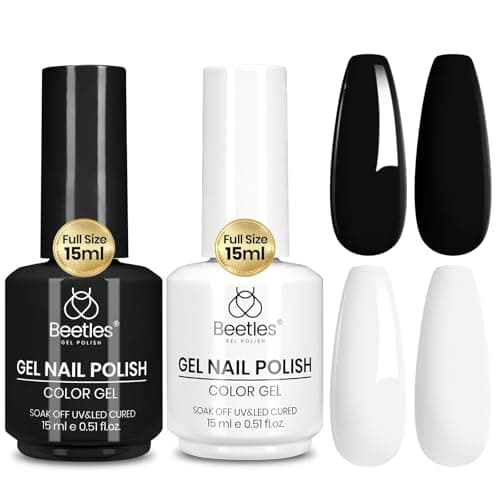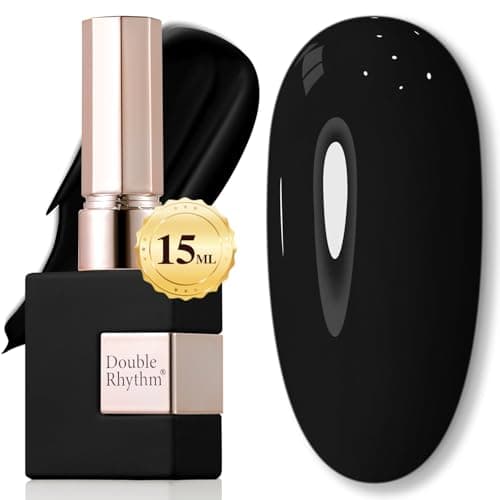
beetles Gel Polish
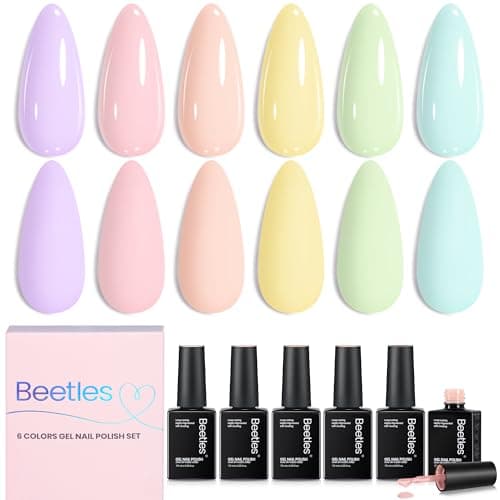
Beetles 'Afternoon Desserts' Pastel Set
$12.30
The spring setSix macaron pastels in one box — the spring tip wardrobe, every one of which wants the white underlayer this page describes.
Shop on AmazonSpring french tip nails — the pastel tips that define the season, why each needs a white underlayer, and the base that stops lilac going grey.
Spring french tip nails are pastel tips, and pastel tips are the hardest French to paint well — which is why so many spring manicures look streaky in a way a white or a red never does. The colour is not the problem; the pigment is. A pastel is a colour cut with white, so a thin line of it shows the base through, and there is no second coat on a tip. Everything that makes a spring French work follows from that one fact.
Six macaron pastels in one box — the spring tip wardrobe, every one of which wants the white underlayer this page describes.
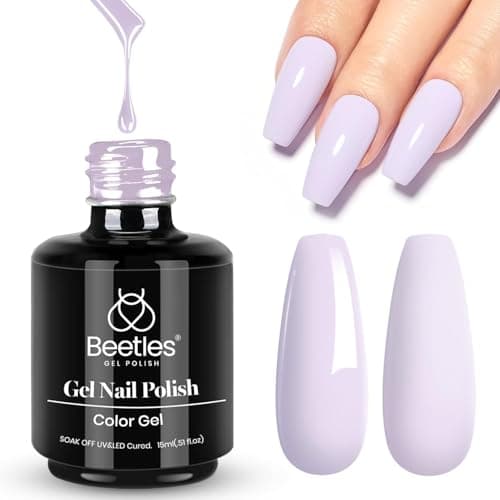
Shop on AmazonThe lilac from Beetles' main line — spring's most-requested pastel tip, and the one that greys under warm indoor light without a white underneath.
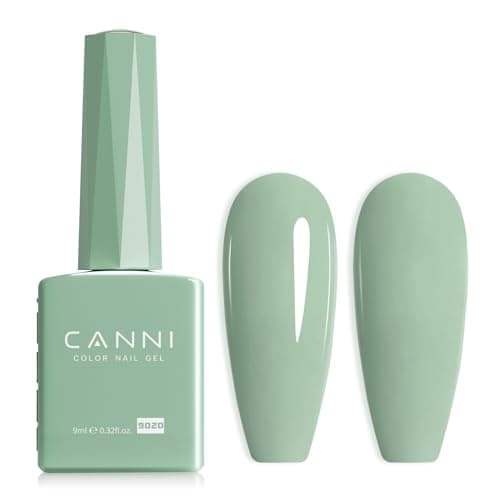
Shop on AmazonThe sage single — the most wearable green, muted enough to behave like a neutral.
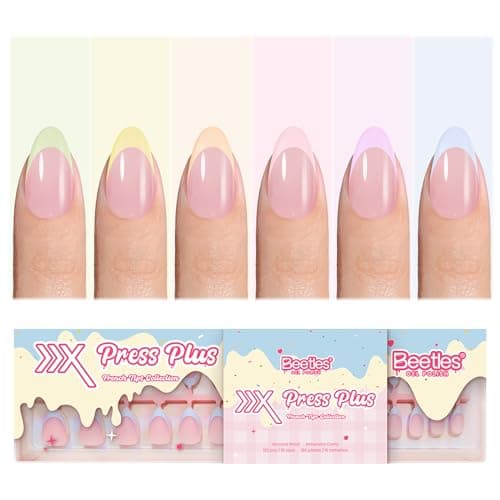
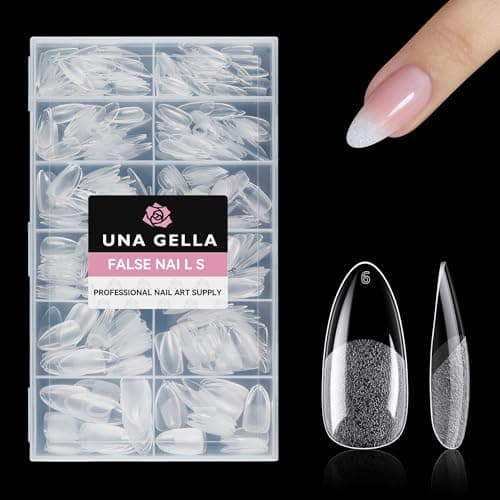
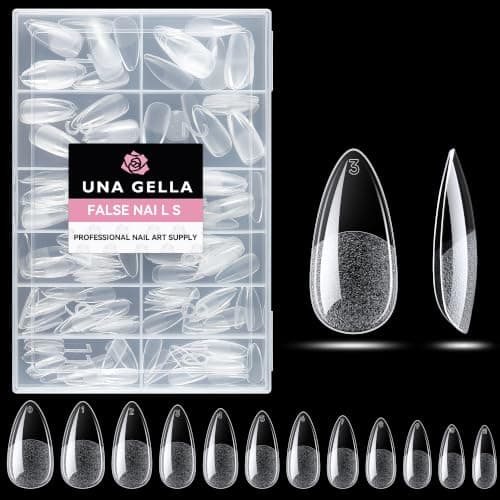
Shop on AmazonSix soft tip colours on a short almond, sixteen sizes each — the spring French without painting a pastel, which is the hardest tip to paint.
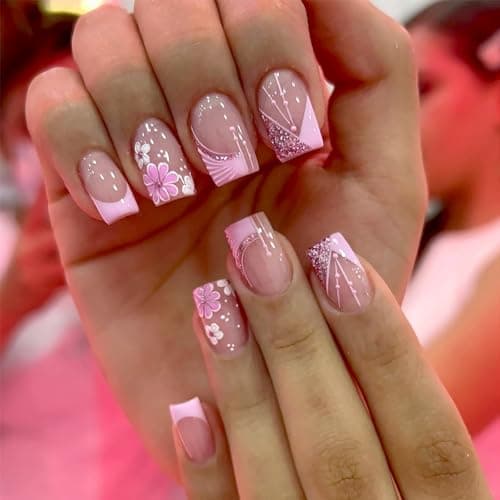
Shop on AmazonA pink French with cherry-blossom line art on the accents — spring's motif at small scale, on the shape short nails already have.
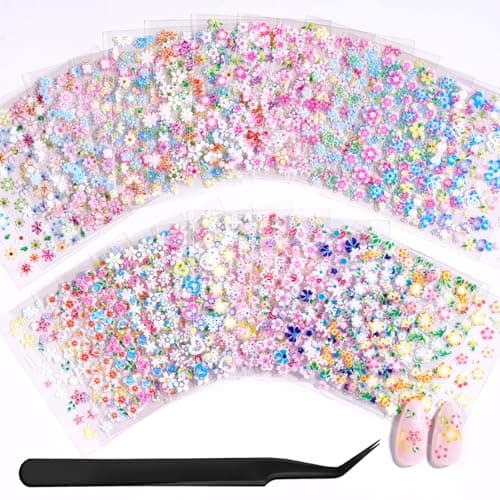
Shop on AmazonThirty sheets of small flowers and hearts for the one-nail floral accent — a daisy at the tip corner over a pastel line.
Shop on AmazonProduct prices and availability are accurate as of October 29, 2026 and are subject to change. Any price and availability information displayed on Amazon at the time of purchase will apply. As an Amazon Associate we earn from qualifying purchases. Star ratings reflect Amazon customer reviews at the time of our last check.
Five pastels carry the season, and they are not interchangeable.
| Pastel | Reads as | Base | White underlayer? | Suits |
|---|---|---|---|---|
| Lilac, lavender | The spring tip; greys under warm light | Milky white | Yes | Cool and neutral skin |
| Mint, sage | Fresh; clinical over pink | Milky or neutral | Yes | Fair-cool skin (mint), warm skin (sage) |
| Butter yellow | The modern pastel neutral | Sheer pink or milky | Usually | Warm and olive skin |
| Baby blue | Crispest against pink | Milky white | Yes | Cool skin |
| Peach | Warmest; the deep-skin pastel | Warm nude | Sometimes | Warm and deep skin |
The fourth column is the whole technical story. The pastel French tips page covers the shades in more depth; the yellow and green pages cover butter and sage on their own.
A pastel tip painted straight onto a base reads translucent and patchy, and the second coat floods the edge. The fix is one cured layer: draw the tip in an opaque white liner exactly where the pastel will go, cure it, then lay the pastel over it in a single pass a hair inside the white's edge. The white does the covering; the pastel brings only colour. Every clean pastel French in a photograph was built this way, and it adds about two minutes to a set.
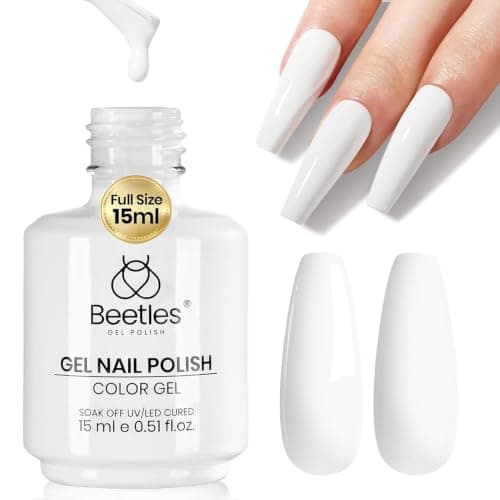
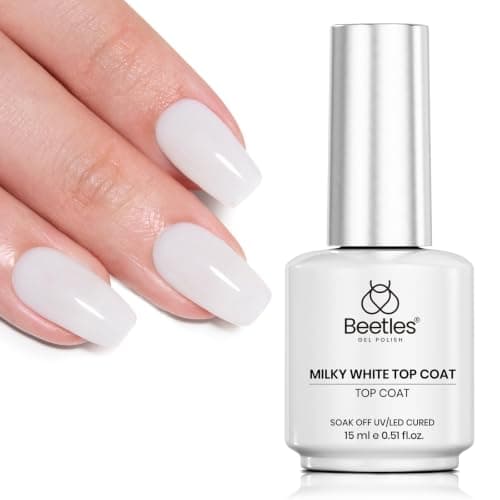
That makes the white the real purchase. The liner whites in the white gel polish category are the ones with the thin brush; the pastel set in the picks above is the spring wardrobe that goes over them.
Spring's second trap is the base. Pastels borrow tone from whatever sits behind them, and a warm beige base turns lilac and mint grey at the join. Milky white is the safe base for the cool pastels — it isolates the colour and keeps it bright — and a sheer warm pink works under butter and peach. Save the warm nudes for autumn. The nude bases page sorts the bottles by undertone, and the milky whites are their own row.
Florals are spring's motif, and the same rule applies as to every motif on this site: one, small, on one nail. A single daisy or cherry-blossom sprig at the tip corner of the ring finger, over a pastel line, reads as spring; flowers on every nail read as a theme. The 3D flower sheets in the picks above are the no-drawing route — pressed on over a cured tip, edges down, two top coats because they sit proud. For a hand-drawn version, five dots in a ring with a sixth in the centre is a daisy, and the dotting tools on the brushes page make it a thirty-second job.
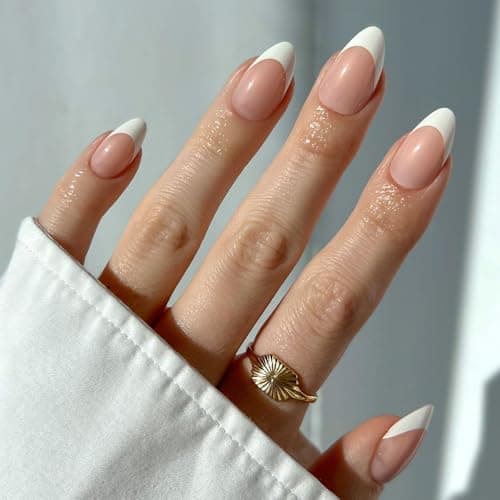
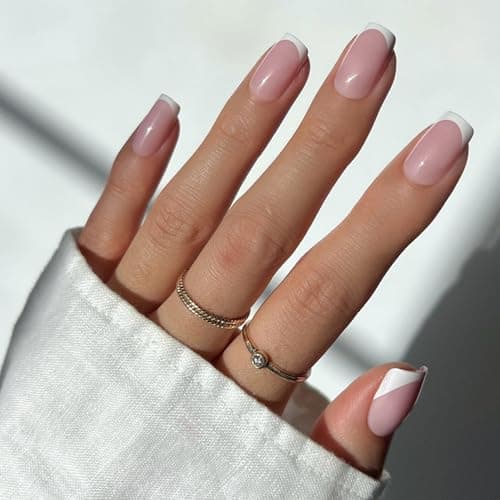
Pastel has low contrast, and low contrast interacts with shape more than most colours do. On almond and oval the soft colour and the taper work in the same direction and the tip looks cohesive. On square pastel reads more graphic than expected — the flat edge gives a soft colour a hard boundary, and the contrast between soft hue and sharp geometry is striking. On short round nails a pale pastel can vanish; pick the most saturated pastel in the range or lean on the white underlayer for definition. Length-wise, spring is a short-nail season for practical reasons — gardening, spring cleaning — and a thin pastel line on a short squoval is the version most people actually wear.
The five-nails-five-pastels set dominates spring feeds and it works for a specific reason: the shared softness holds the set together even though no two nails match. Two things keep it from looking accidental. The same base on all ten nails, so there is a common thread; and the same tip width on every nail — varying the colour is fine, varying the proportion is what makes a set look like a mistake. The six-colour press-on set in the picks above does exactly this from a box, on a short almond, if painting five pastels is more than a Sunday evening allows.
Pastels are the tip colour most prone to visible change. Yellows and peaches warm up under UV, chips show more because the exposed nail is a different hue from the colour, and regular pastel polish scuffs as well as chips. A top coat with UV inhibitors slows the first; capping the free edge addresses the second; gel rather than polish handles the third. Spring light is bright and direct, which flatters glossy pastels and flattens matte ones — keep the top coat glossy until autumn.
Ask for the shade by name — lilac, mint, butter — and ask for the white underlayer explicitly; it is not a standard step and most technicians will not add it unprompted, which is the single thing that most improves a pastel tip. Bring the bottle if you own the pastel you want, because salon pastel ranges are thin. The wording script is on how to ask for French tips at the salon; pastel tips price as a colour choice within the standard French tip rates.
Because spring is when many people buy their first pastel gel, one outside reference: the gels, the HEMA-free alternatives and the UV lamps are cosmetics and devices under US law, and the FDA's overview of nail care products is the plain-language account of what that does and does not guarantee.
Of the five, butter yellow is the odd one out in two ways. It is the only spring pastel that reads as a neutral — pale enough to sit beside a nude base without competing — and it is the pastel most sensitive to base colour, because a yellow over a pink base drifts towards peach and a yellow over a milky white stays yellow. It is also the one that warms up fastest in sunlight; a butter tip that looked cool on day one can be a shade darker by day ten of a bright March. That argues for a milky base, a UV-inhibiting top coat and a slightly cooler yellow in the bottle than you think you want. The full undertone chart is on the yellow French tips page.
Spring is a short-nail season by default: the weather turns, hands are in soil and washing-up water, and the long winter almond gets filed back. That suits pastels, because the low contrast that vanishes on a long nail reads as intentional on a short one where the whole nail is in view at once. On a natural nail of 8–10 mm, the pastel line should be the thinnest the liner brush can draw over a white underlayer of exactly the same width — any wider and the tip becomes a colour block. A short squoval takes a straight pastel line well; a short round wants the line curved to follow the free edge. Technique is on how to do French tips on short nails; length options on the short French tips page.
The first sandal weekend is when a pedicure French returns, and pastels are a better choice on toes than they are on hands. The toenail is smaller, so a lilac or mint tip that would read pale on a fingernail reads as a clean accent on a big toe, and the white underlayer is less necessary because the tip is shorter and the pastel goes on in a single thicker pass. Match the hand and foot in family but not shade — lilac hands, a slightly deeper lavender on the toes — and the two read as a set without looking matched. The pedicure method, including the wide-toe proportions, is on French tip toe nails.
The standard spring palette was written for fair skin, and on deep or olive skin two of its five shades go chalky: baby-blue and the palest lilac read as a film over the nail rather than a colour. The fix is saturation, not a different family — a lilac one step deeper, a mint one step greener, and peach or butter yellow, which are the two pastels that flatter deep skin without adjustment. Olive skin takes sage and butter best and fights pink-based lilacs. The milky base still applies; a warm nude under a pastel on deep skin muddies the tip at the join the same way it does on fair. The undertone charts on the nude French tips page apply to the base; for the tip, go one shade more saturated than the swatch suggests.
For anyone who changes their set every fortnight and wants the season to progress rather than repeat:
Each is a new colour, not a new technique, so the second and third sets get faster; by the fourth, the white underlayer is a two-minute habit rather than a step to remember.
Pastel French tips for the palette in full. An Easter French tip page follows this one later in the season and takes the pastels to the one weekend they are literal. Cute French tips for the floral accent. Summer French tip designs for where the palette goes next. Technique on how to do French tips at home, and everything else from the french tip nails homepage.
What French tip shoppers are buying this week, across every category.
Want to see this on real nails?
Every style page shows the finish close up, a creator video, and the products used to get it.
Valentines Day French Tip Nails: Red, Pink and One Heart
Valentines day french tip nails that look intentional rather than themed — red or pink tips by skin tone, the one-heart rule, and the press-on route.
New Year French Tip Nails: The One Night Glitter Is Correct
New year french tip nails for the night and the weeks after — where metallic and glitter genuinely belong, and what you'll regret on January 2nd.
Christmas French Tip Nails Without the Costume
Christmas french tip nails that read festive rather than novelty — the colours and finishes that work in low winter light, and when to book.
Black Friday Nail Deals: What Is Actually Worth Buying
Black friday nail deals, filtered — which nail products genuinely discount, which never do, and how to build a French tip kit without buying filler.
French Tips for Kids: Safe, Simple and Actually Doable
French tips for kids on short little nails — which products are safe at which ages, the peel-off polishes, and a method for nails that won't sit still.
Thanksgiving French Tip Nails: Warm, Simple and Photograph-Ready
Thanksgiving french tip nails in the warm neutrals that suit the table and the photos — why to book earlier than you think, and what survives cooking.