Best French Manicure Kit: What Belongs in One (and What Doesn't)

Most French manicure kits solve a problem you do not have while leaving the one you do have untouched.
The genuinely hard part of a French manicure is the smile line. The easy part is owning two bottles of polish. Yet the majority of kits are two bottles of polish, and the tool that would actually help is sold separately.
So the useful question when comparing kits is not what is in the box — it is which of the three real decisions the kit makes for you.
Four kits, four different assumptions
These are not competing versions of the same thing — each one assumes something different about what you already own.
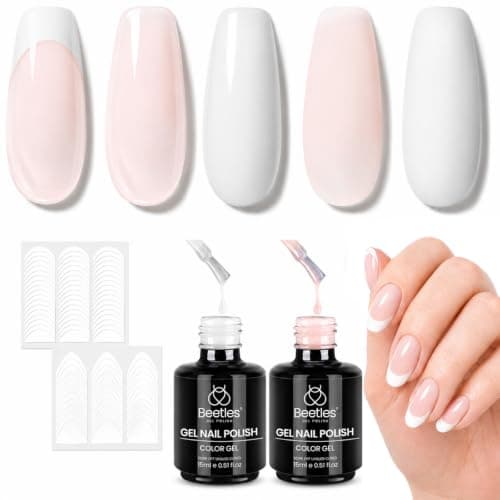
Beetles French Tip Gel Polish Set
White, nude and pink together covers classic, nude-on-nude and ombre French without a second purchase — the three looks that account for most of what people actually want.
Gel only. You still need a lamp.
Check price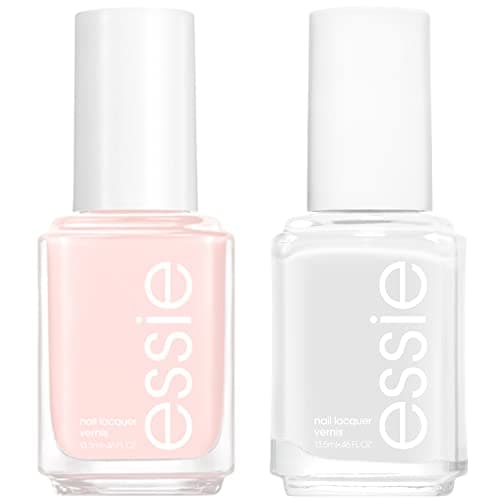
essie Ballet French Manicure Kit
Regular polish, no curing equipment, from the brand whose Ballet Slippers is the reference sheer pink for French manicures. The right kit if you are not committing to gel.
Regular polish means days of wear, not weeks.
Check price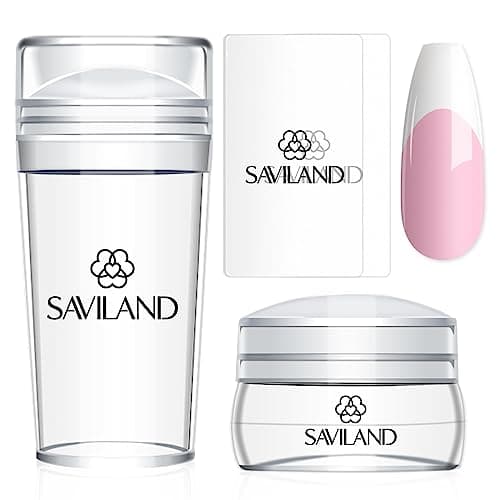
SAVILAND French Tip Silicone Stamper, 4 pcs
Stamping presses the curve on in one motion instead of drawing it, which sidesteps the steadiness problem entirely. The most underrated tool for anyone who cannot pull a clean arc freehand.
Stamped lines are uniform by design. Less control over depth per finger.
Check price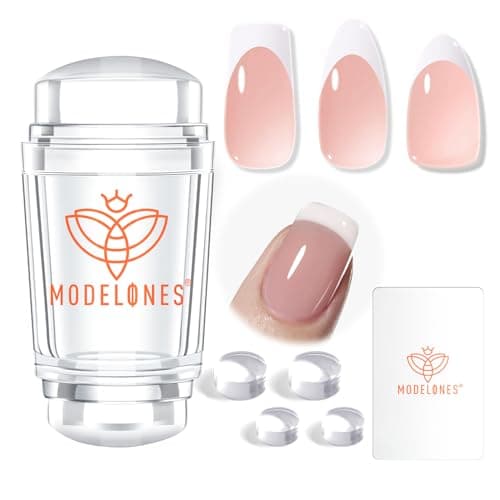
modelones French Tip Stamper, 6 pcs
Six heads covers more curve depths and nail widths than the four-piece sets.
More pieces to clean between colours.
Check priceProduct prices and availability are accurate as of July 29, 2026 and are subject to change. Any price and availability information displayed on Amazon at the time of purchase will apply. As an Amazon Associate we earn from qualifying purchases. Star ratings reflect Amazon customer reviews at the time of our last check.
The three decisions a kit can remove
Base-and-white matching. A sheer pink that is too warm under a cool white looks off in a way that is hard to diagnose. A matched pair removes that risk entirely. This is the most valuable thing a kit can do.
Gel or not. A gel kit commits you to owning a lamp. A regular-polish kit does not. This is the biggest fork, and it should be decided before you compare anything else.
How the curve gets made. Freehand, guide, or stamp. Most polish kits ignore this completely, which is why people buy a kit and still cannot get a clean line.
A kit that resolves two of these is worth buying. One that resolves none is just polish in a box.
If you are not ready for gel
The essie Ballet kit is the honest answer here. Regular polish, no lamp, no curing, and Ballet Slippers is the reference sheer pink that a great many French manicures have been built on for decades.
What you accept is wear time — days rather than weeks, and the tip chips first because that is where the impact lands. For an occasional manicure that is a perfectly reasonable trade. For a fortnightly habit it becomes annoying.
If you have a lamp
The Beetles three-bottle set is the more complete answer, because white plus nude plus pink covers the three looks people actually want: classic contrast, nude-on-nude, and ombre French. One purchase, three styles.
It still does not include a brush or guide. Budget for that separately.
If the line is your problem
Here is the case for treating a stamper as the kit.
If you have tried French tips freehand and produced a wobbly line, more polish will not help. A silicone stamper presses a pre-shaped curve onto the nail in one motion, which removes hand steadiness from the equation altogether. It is the single highest-impact purchase for anyone who has already failed at this once.
SAVILAND's four-piece rates 4.0 across ten thousand ratings; modelones' six-piece offers more curve depths for varying nail widths. Neither includes polish, which is the point — pair it with a white you already trust.
What kits consistently leave out
Even good kits rarely include: a dehydrator or alcohol wipe for prep, cuticle oil for afterwards, a clean-up brush, or a lamp. The first is genuinely important — skipping the alcohol wipe is a common cause of early lifting — and costs almost nothing.
The order to buy things in
If you are assembling rather than buying a boxed kit, sequence matters — some purchases make others unnecessary.
First, the white. It is the constraint on everything else. A sufficiently opaque white makes a mediocre brush workable; a sheer white makes an excellent brush useless. This is the one place to spend properly.
Second, the line tool. Buy exactly one and learn it before buying another. The common mistake is owning a brush, a sticker pack and a stamper while being fluent with none of them. Pick the method that suits your temperament: patient and precise, buy a brush; impatient, buy a stamper.
Third, prep supplies. Alcohol wipes and cuticle oil cost very little and prevent the most common failure modes — lifting from oil, and cracked skin from acetone.
Last, and only if you use it, a lamp. Buying the lamp first is how people end up with a curing device and no confidence in their line.
When a kit is genuinely the right call
There is one scenario where a boxed kit clearly beats assembling: buying for someone else.
A kit is a coherent gift in a way that four separately-chosen items is not, and the matched base-and-white pairing means the recipient cannot get the combination wrong. The essie Ballet kit in particular works well here because it needs no equipment at all — nothing to buy afterwards, nothing to learn about curing.
The second scenario is travel. A two-bottle kit and a stamper fits in a wash bag; a full gel setup does not.
What "salon quality" claims are worth
Very little, in this category. There is no certification behind the phrase and no manufacturer is prevented from using it. What actually correlates with a good result is pigment density, brush shape, and whether the base and tip colours were designed to sit next to each other — none of which appear on the front of a box.
Read the negative reviews rather than the marketing. In this category the complaints are unusually informative, because they cluster around specific, checkable properties: streaking, shrink-back, brush width, and adhesive failure.
Building your own instead
For most people the better route is assembling rather than buying a box:
- A trusted opaque white — see white gel polish for French tips
- A sheer pink or nude base you like
- One line-making tool — a brush or a guide or stamp
- Alcohol wipes and cuticle oil
That comes to roughly the same money as a mid-range kit and every item is one you chose deliberately.
If you would rather skip application entirely, press-on French tips get you the look in fifteen minutes.
How long a home French manicure actually takes
Worth calibrating before you start, because underestimating the time is how manicures get rushed at exactly the stage that needs patience.
Prep — pushing back cuticles, shaping, buffing off shine, wiping with alcohol — is ten minutes and cannot be usefully hurried. Base coat and two colour coats with curing between each is roughly fifteen minutes for gel, or considerably longer for regular polish because you are waiting on air-dry rather than a lamp.
The tips themselves take fifteen to twenty-five minutes for a first attempt and settle to about ten once the motion is familiar. Then top coat and cure, five minutes.
So: forty-five minutes to an hour for a first gel French, dropping to around thirty-five once you have done a few. A salon does it faster because the technician has done thousands, not because they have better equipment.
The practical consequence is scheduling. Attempting a French tip in the twenty minutes before you need to leave is how you end up with a smudged line and a bad mood. Do it when you have the evening.
Storage and shelf life
Gel polish does not last indefinitely. Pigment settles, and after twelve to eighteen months a white in particular can separate enough that shaking no longer redistributes it evenly — which shows up as streaking exactly where you least want it.
Keep bottles upright, capped tightly, and away from windows. Ambient UV through glass will slowly cure gel in a partially-empty bottle, and a bottle that has begun to thicken at the neck is on its way out.
If you only make a French manicure occasionally, this argues against buying the largest kit available. A 15ml white used for tips alone will almost certainly expire before you finish it, so a smaller bottle of something good beats a big bottle of something adequate.
For technique, start with how to do French tips at home, and French tips on short nails if that is your starting point. Weighing DIY against booking in? What French tip nails cost has the current salon ranges, and acrylic vs gel covers the durability difference.
Common questions
- What do you need for a french manicure at home?
- At minimum: a sheer pink or nude base, an opaque white, and a way to make the curve — a liner brush, a guide, or a stamp. For gel you also need a UV/LED lamp, base coat and top coat. Most 'kits' supply the polishes and assume you own the rest, which is where the disappointment comes from.
- Is a french manicure kit cheaper than buying separately?
- Usually marginally, and the real saving is decision cost rather than money. A matched base-and-white pair removes the risk of buying a pink that fights your white. Where kits stop making sense is when they bulk out the box with a lamp or brushes you already have.
- Do I need a UV lamp for a french manicure?
- Only for gel. Regular polish needs no equipment at all — the essie Ballet kit exists for exactly this. Gel lasts two to three weeks against a few days, so the lamp pays for itself if you do this regularly, but it is not required to start.
- What is the easiest way to do a french manicure at home?
- Stamping. It removes hand-steadiness from the equation entirely — you press the curve on rather than drawing it. If you have tried freehand and been frustrated, a silicone stamper is the single change most likely to fix it.
Keep reading
- Chrome Powder for French Tips: Getting the Mirror Finish Right
- The Best French Tip Nail Brush for a Clean Smile Line
- French Tip Nail Guides vs Stamps: What Actually Works
- Best Press On French Tip Nails: 6 Sets Worth Your Money
- Best White Gel Polish for French Tips: Opacity Is Everything
- Almond French Tip Nails
- Black French Tip Nails
- Blue French Tip Nails
- Brown French Tip Nails
- Chrome Coffin French Tip Nails
- Chrome French Tip Nails
Back to French tip nails or browse all our picks.