Chrome Powder for French Tips: Getting the Mirror Finish Right

Chrome French tips are one of the few nail trends where the difficulty is entirely in the sequence rather than the skill. The rubbing motion takes about twenty seconds to learn. Getting the layers underneath right is what separates a mirror from a smudge, and it is not intuitive.
Five chrome powders for tip work
White and pearl shades dominate here because they are the ones that read as a French tip rather than as full metallic nail art.
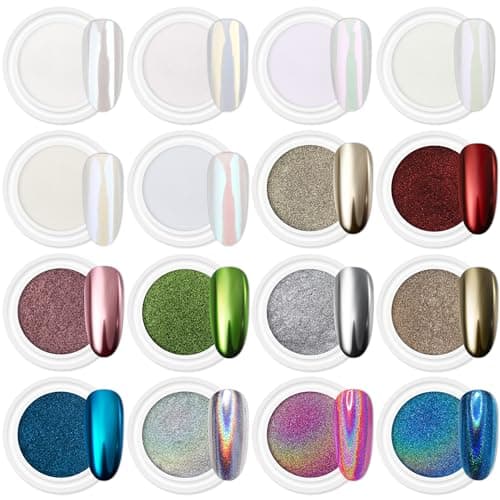
Artdone Chrome Nail Powder, 16 jars
Sixteen shades is the sensible way into chrome, because the finish shifts dramatically over different base colours — the same powder over white and over nude are two different looks. Buying one jar means guessing right first time.
1g jars. Plenty for a chrome tip, not enough for full-nail chrome across many sets.
Check price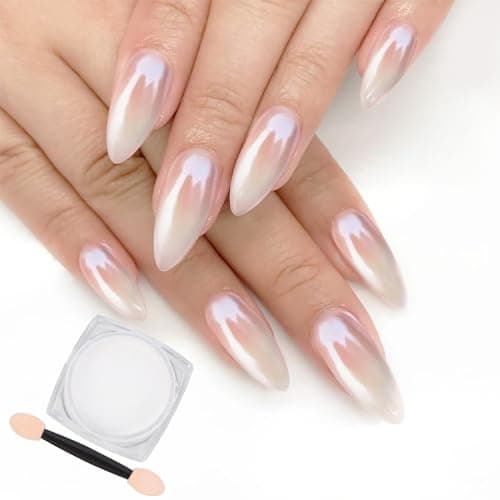
Artdone White Pearl Chrome Powder
The iridescent white pearl is the shade that reads as a modern French tip rather than as metallic nail art. If you buy one chrome, buy this one.
Needs a no-wipe top coat underneath. Over a tacky layer it goes patchy.
Check price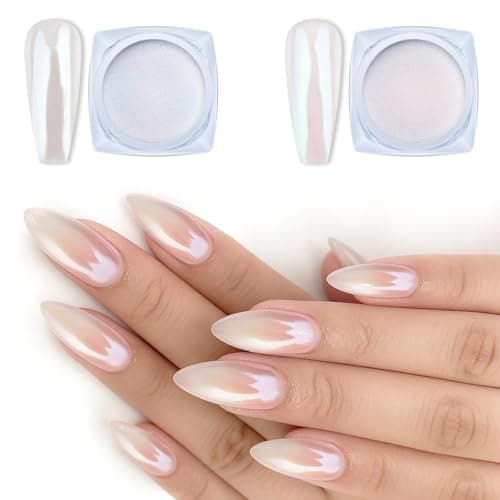
Artdone Chrome Powder, White and Red Aurora
White for everyday, red aurora for a seasonal tip, without committing to a 16-jar set.
The red aurora is much more demanding to apply evenly than the white.
Check price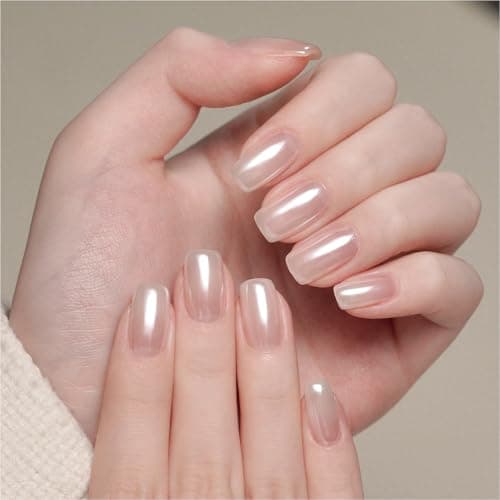
GAOY White Pearl Chrome Powder
Under four dollars to find out whether chrome tips suit you before spending more.
Single small jar — expect it to run out fast if you like it.
Check price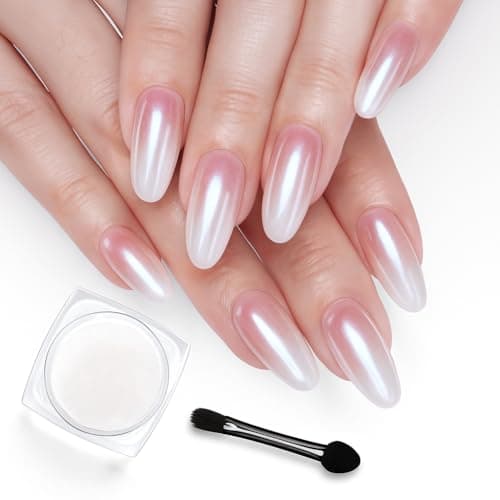
Beetles White Chrome Powder
Leans mirror rather than pearl, which is the sharper, more graphic version of a chrome French tip.
Mirror finishes show every ridge underneath. Buff the base smooth first.
Check priceProduct prices and availability are accurate as of July 29, 2026 and are subject to change. Any price and availability information displayed on Amazon at the time of purchase will apply. As an Amazon Associate we earn from qualifying purchases. Star ratings reflect Amazon customer reviews at the time of our last check.
The order, exactly
- Base colour, cured.
- Draw the tip in whichever colour you want the chrome to sit on.
- No-wipe gel top coat over the tip. Cure fully.
- Do not wipe the surface. Do not add anything else.
- Burnish the powder on with a silicone applicator, firm pressure, ~30 seconds.
- Brush away the excess.
- Seal with another no-wipe top coat and cure.
Step three is the one people get wrong. A regular top coat leaves a tacky inhibition layer, and powder pressed into tack becomes a grainy paste rather than a mirror. It must be no-wipe, and it must be cured hard.
The base colour changes everything
The same jar of chrome produces genuinely different finishes over different bases, which is why buying a single jar and hoping is a gamble.
Over white, a pearl chrome reads as a bright, icy modern French — the version that shows up most in salon photos. Over nude or sheer pink, the same powder is far subtler, closer to a glazed-doughnut effect than a metallic one. Over black, it goes dramatic and mirror-like, which is striking but stops reading as a French tip and starts reading as nail art.
This is the argument for a multi-shade set over a single jar: the variable you are actually experimenting with is the pairing, not the powder.
Pearl versus mirror
Two families, often confused in listings.
Pearl / aurora powders are iridescent and shift colour with the light. Softer, more forgiving, and less demanding of a perfect base — the iridescence disguises minor unevenness. This is the safer choice for a French tip.
Mirror chrome is a hard reflective silver-like finish. Sharper and more graphic, but it reflects every imperfection underneath. A ridge you cannot see on a matte base becomes visible through mirror chrome.
If your nail plate is not perfectly smooth, choose pearl and save yourself the buffing.
The burnishing motion
Small circles, firm pressure, and longer than feels necessary. Most people stop at about ten seconds; thirty is closer to right. You will feel the moment the finish shifts from powdery to reflective — it is quite distinct, and if you have not felt it, you have not rubbed enough.
Use very little powder. The instinct to load the applicator is wrong; a tap of powder burnished thoroughly beats a heap applied lightly.
Sealing without killing the shine
Chrome dulls slightly under top coat — this is unavoidable, but it is minimised by using a no-wipe top coat and applying it in a single floating pass rather than working it back and forth. Dragging the brush across un-sealed chrome disturbs the powder layer and creates streaks.
Some people skip sealing entirely to keep maximum shine. That works for an evening and wears off within a day or two. Seal it.
Why chrome fails on French tips specifically
Chrome over a full nail is comparatively forgiving. Chrome confined to a tip is harder, and the reasons are worth understanding before you blame the powder.
The edge is the problem. When you burnish powder over a tip, the rubbing motion carries a little of it past the smile line onto the base colour underneath. On a full-nail chrome there is no line to smudge across; on a French tip there is, and a fuzzy chrome edge undoes the crispness that made the manicure worth doing.
The fix is to burnish inward, always. Work from the free edge toward the smile line, never across it. When you reach the line, lift the applicator rather than pulling through. Any stray powder on the base wipes away easily with a dry brush before you seal — but only if you have not already burnished it in.
Making it last
Chrome is more fragile than the gel underneath it, and the failure point is almost always the very tip of the nail where impact concentrates.
Cap the free edge with your sealing top coat deliberately — run the brush along the end of the nail, not just the surface. Chrome that stops short of the edge starts wearing there within days.
Expect a chrome French to hold its full mirror for roughly a week and to dull gradually after that, even when the gel underneath is still perfect. That is normal. A refresh coat of no-wipe top coat restores some of the shine but not all of it.
A note on lamp compatibility
Chrome sits between two cured layers, and both need to cure properly for it to work. If your lamp is underpowered or the bulbs are old, the top coat under the chrome may look dry while remaining slightly soft — and slightly soft is enough for the powder to sink in rather than sit on top.
If your chrome consistently goes dull and grainy rather than mirrored, and you are confident about the no-wipe step, suspect the lamp before the powder. Cure for longer than the stated time and see whether the result changes.
What we would buy
Artdone's 16-jar set is the sensible first purchase precisely because the base-pairing is the real variable — sixteen shades means you can find the combination you actually like rather than guessing once. If you want one jar only, Artdone's white pearl is the shade that reads most clearly as a modern French tip. For a sharper, more graphic finish, Beetles' white chrome leans mirror. GAOY's jar is the cheapest way to find out whether you like the look at all.
Chrome sits on top of a tip line you still have to draw — see the best French tip nail brush and white gel polish for French tips for the layers underneath, or guides and stamps if freehand is not your thing.
For the finished look across shapes and colours, see chrome French tip nails, and for the technique fundamentals, how to do French tips at home. Our chrome French tips guide covers the styling side in more depth.
Common questions
- What do you put chrome powder on top of?
- A fully cured no-wipe gel top coat. Not a tacky layer, not a regular top coat, not bare colour. The powder needs a hard, glossy, non-sticky surface to burnish against. This single detail causes most chrome failures — on a tacky layer the powder clumps instead of mirroring.
- Why is my chrome powder patchy?
- Three usual causes: the surface underneath was not fully cured, you did not rub long enough, or the base was not smooth. Chrome is a mirror, and a mirror reflects whatever is beneath it — including ridges and brush strokes. Buff smooth, cure hard, then burnish for a full thirty seconds per nail.
- Do you need a special applicator for chrome powder?
- A silicone-tipped applicator or a dense eyeshadow-style sponge applicator. A brush will not work — chrome needs firm burnishing pressure, not brushing. Most powders ship with an applicator; if not, they cost very little.
- Does chrome powder work over regular polish?
- Not reliably. The effect depends on burnishing against a hard cured gel surface. Regular polish stays comparatively soft and the powder drags into it rather than sitting on top as a mirror layer.
- How much chrome powder do you actually need?
- Far less than people use. A 1g jar covers dozens of French tips, because you are only chroming the tip rather than the whole nail. Tap a tiny amount out — dipping the applicator straight into the jar wastes most of it.
Keep reading
- Best French Manicure Kit: What Belongs in One (and What Doesn't)
- The Best French Tip Nail Brush for a Clean Smile Line
- French Tip Nail Guides vs Stamps: What Actually Works
- Best Press On French Tip Nails: 6 Sets Worth Your Money
- Best White Gel Polish for French Tips: Opacity Is Everything
- Almond French Tip Nails
- Black French Tip Nails
- Blue French Tip Nails
- Brown French Tip Nails
- Chrome Coffin French Tip Nails
- Chrome French Tip Nails
Back to French tip nails or browse all our picks.